
The Land is the Teacher
Jim Reding blends land restoration and instruction. He leaves a lifelong impact on his students.
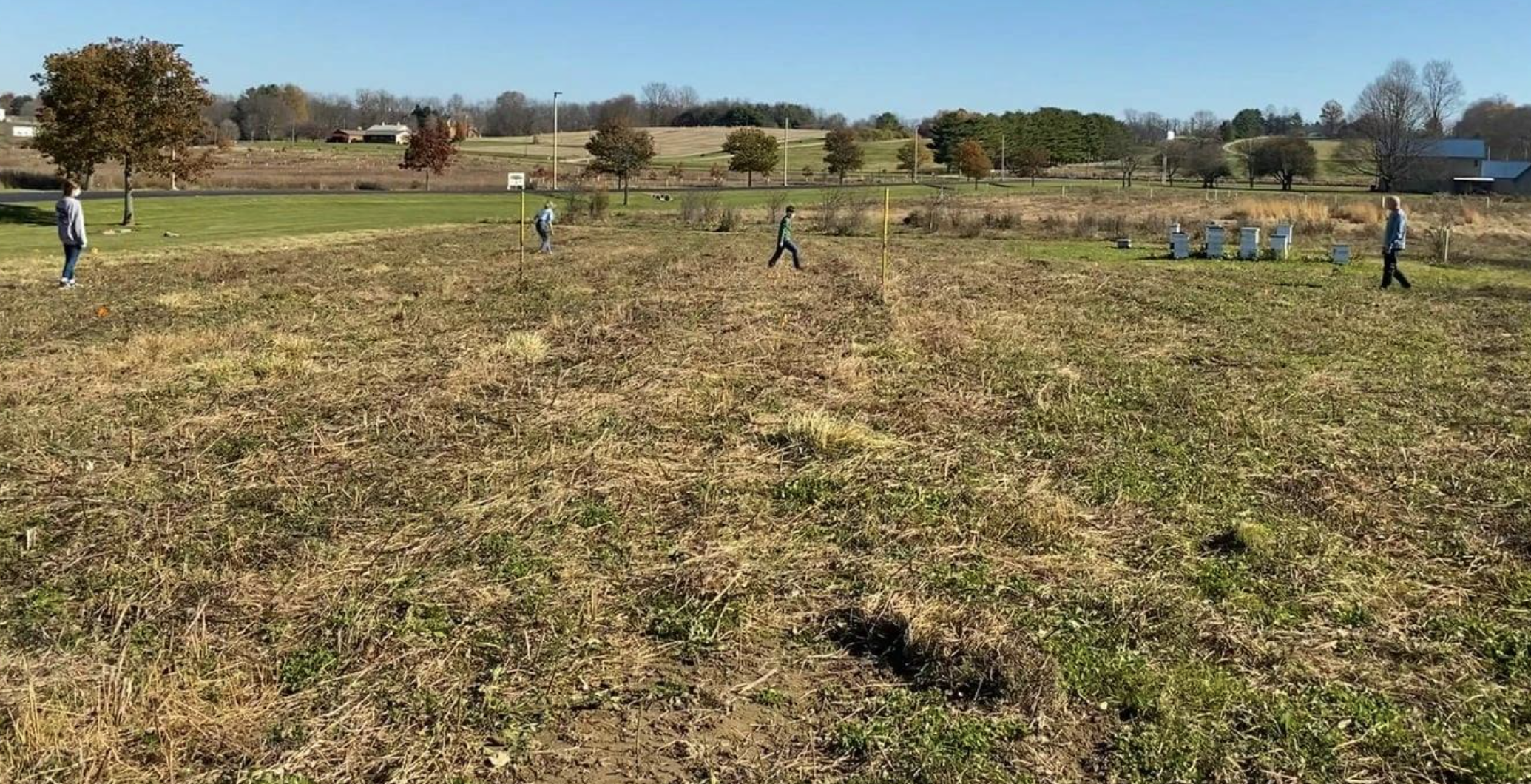

The first deer tick latched onto the fabric before the group reached the tree line. It was barely visible, no bigger than a freckle, but it held tight to the strip of white cloth that students dragged over the forest floor, exactly as their teacher, Jim Reding, instructed: fifteen strides, steady pace, “walk with a purpose.”

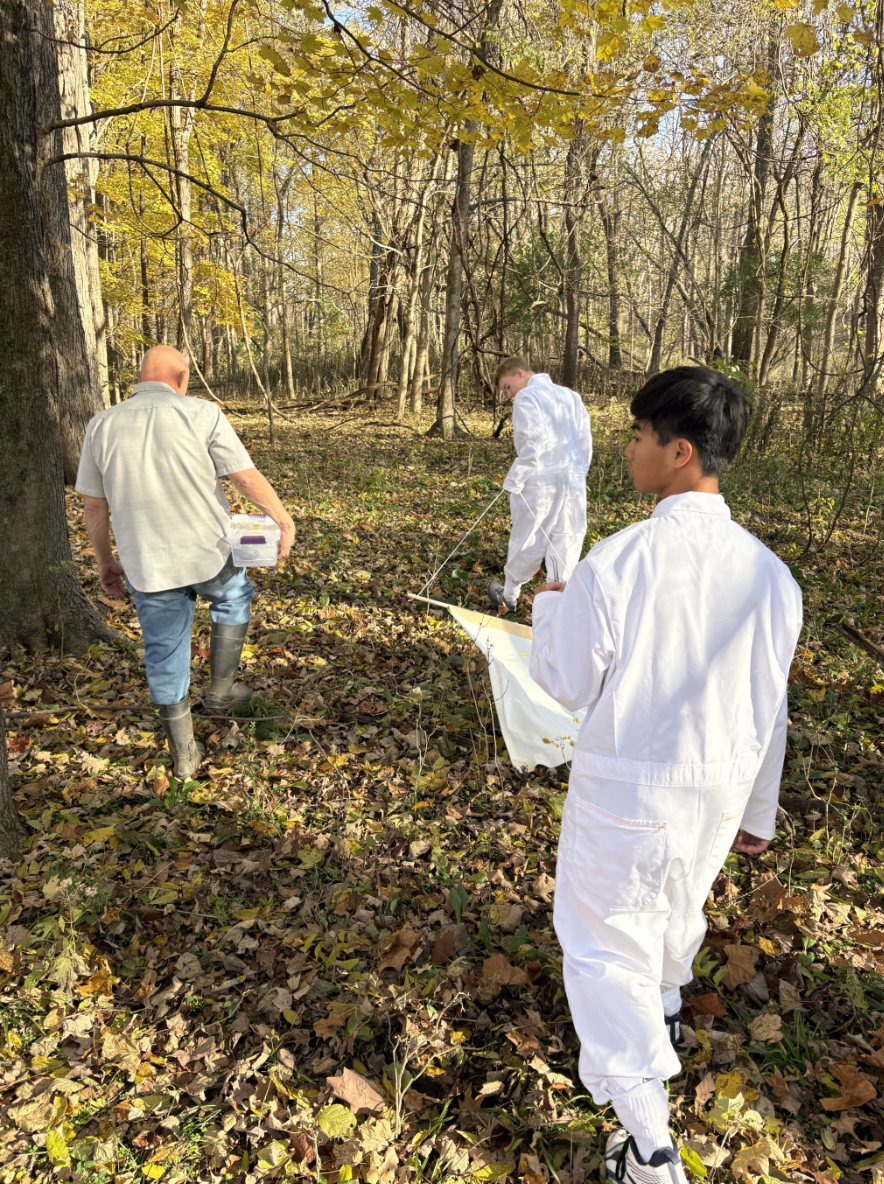
Jim Reding, left, and students collecting deer ticks. Credit: Patrick Fitzgerald.
Jim Reding, left, and students collecting deer ticks. Credit: Patrick Fitzgerald.
Within minutes, the students pulled out tweezers, vials of ethanol, and a surprising amount of excitement. DNA results would come later. For now, gathering ticks was the assignment.

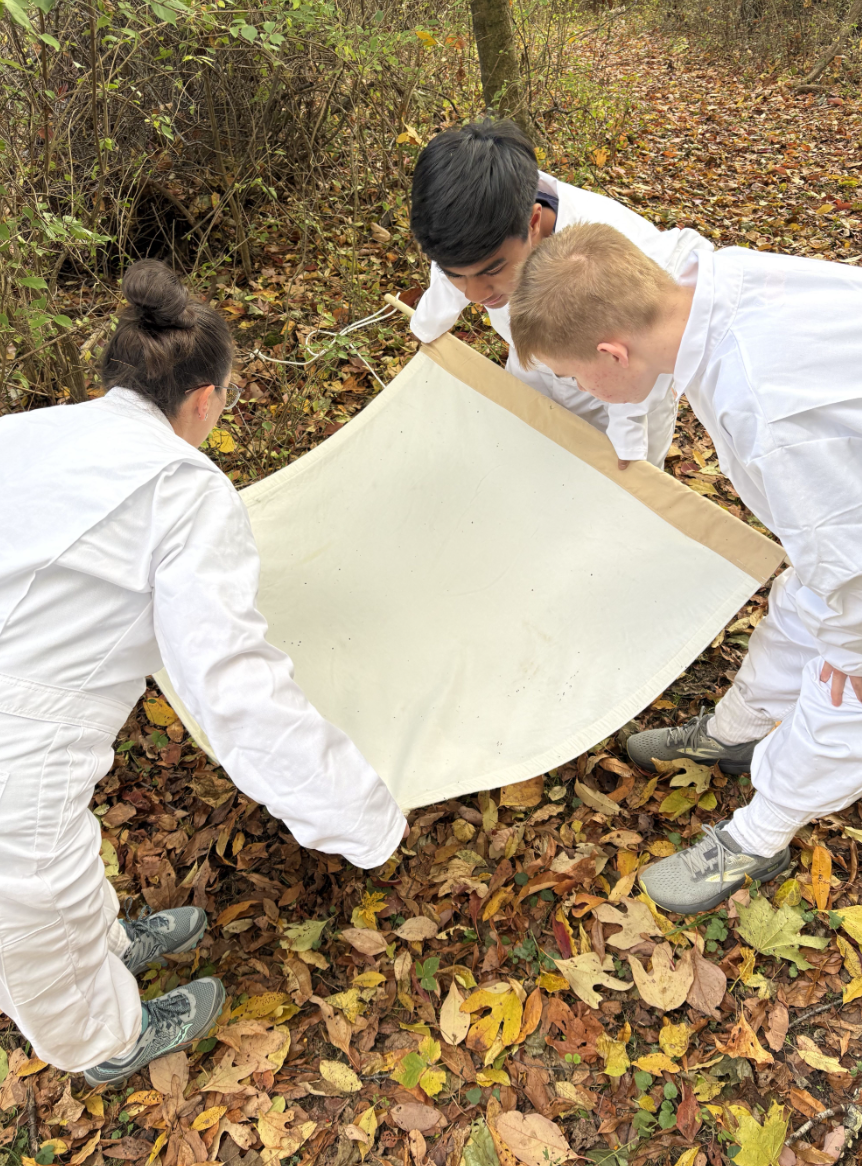
Jessica Newell, left, and students pick ticks off of cloth. Credit: Patrick Fitzgerald.
Jessica Newell, left, and students pick ticks off of cloth. Credit: Patrick Fitzgerald.
This project came up because some parents expressed concern about their students spending time in this "outdoor classroom." What about ticks? What about Lyme disease?
Good questions. Good opportunity for a study.
It's a day in the life at the Granville Land Lab, and for the Granville High School ecology and environmental science teacher most instrumental in creating it, Jim Reding.
The study will also benefit the community. "The Tick Project has become a joint project," said Reding, "between the high school, Denison University and the LCHD [Licking County Health Department]."
Students will test tick populations throughout the county and relate that data to environmental factors such as small mammal populations.
"We are also planning several events to increase community awareness and safety when in the field," Reding said.

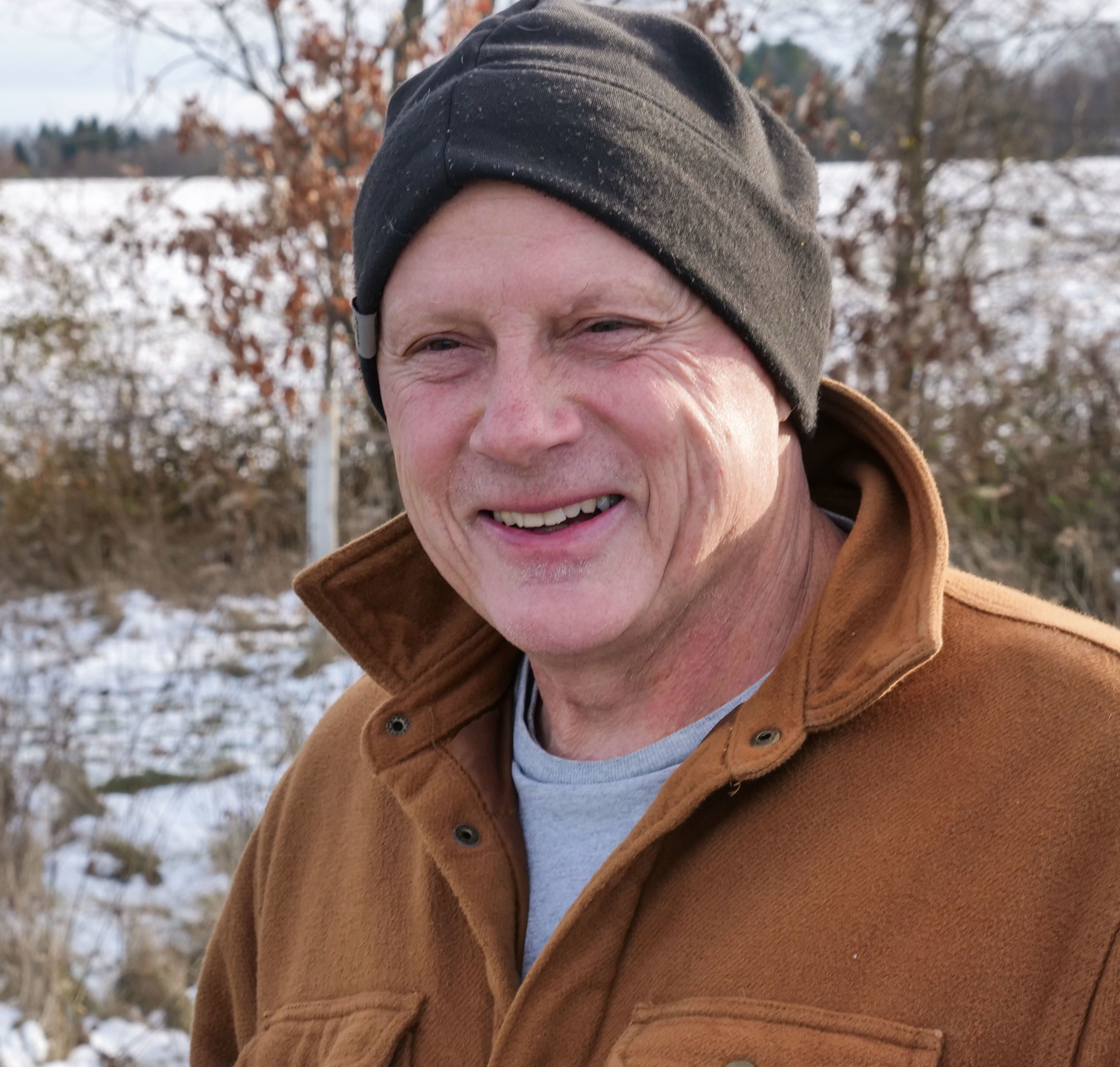
Jim Reding, ecology and environmental science teacher at Granville High School. Credit: Doug Swift
Jim Reding, ecology and environmental science teacher at Granville High School. Credit: Doug Swift
What the tick study has in common with all of Reding's teaching is his objective "to get students outside; to give them a place where they could reconnect to the natural world."
That's why, following the lead of students, he's been instrumental in creating the Land Lab, a nearly 100 acre outdoor biology reserve in front of the Granville Middle School, just down the road from the high school. Once farmland, it has been restored into a patchwork of prairies, wetlands, riparian zones, thermal pools, and forest, according to the Granville Schools Sustainability Project.
“We are connected to nature,” Reding said. “We are dependent on nature.”
He speaks about this as plainly as a math teacher might describe multiplication tables, calmly and methodically, gesturing with his hands. Creating this learning environment "is our best defense against an ever decreasing biodiversity."
The Birth of a Living Classroom
The Land Lab opened in 2013 and was completed in three phases over five years. Granville students, Denison University, and the U.S. Fish and Wildlife Service contributed to the effort, each group seeing a unique opportunity to convert former agricultural land into a biodiverse ecosystem.
Reding recalls that the students who launched the project didn’t want a quick assignment. They wanted something that “would not be completed in four weeks, but forty years.” That kind of long horizon shaped the Land Lab into more than an outdoor space. It became a sustained environmental restoration effort and a public resource.
What sets this lab apart from other school-based ecology projects is that anyone can enter. Local residents walk the trails. Classes from across Ohio make field trips. Teachers from around the country visit to see how Granville built an outdoor classroom that functions like a nature preserve. Some schools have even attempted to replicate it.
“It shows that biodiversity can be restored,” Reding said, noting how quickly birds, insects, small mammals, and wetland species moved into the area once habitat restoration began.

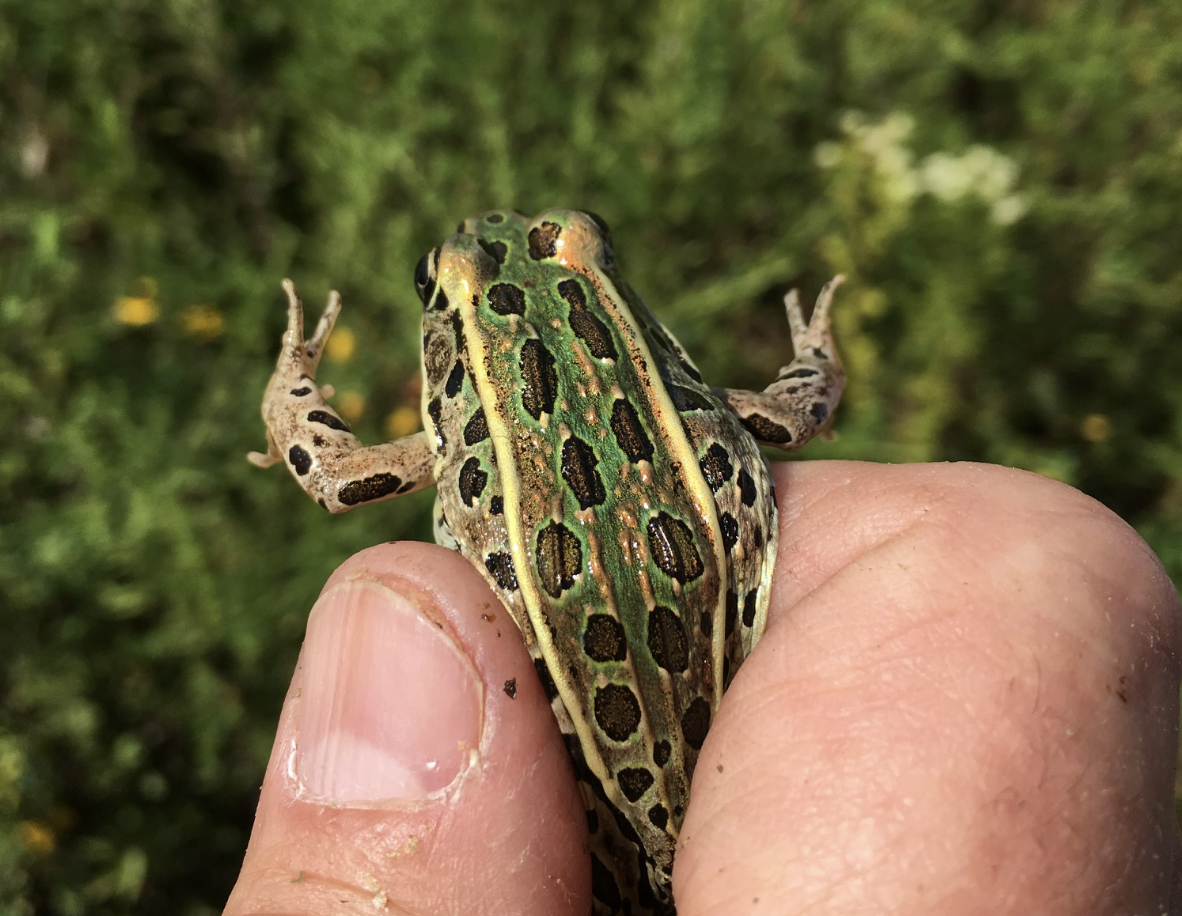
"Biodiversity can be restored." A frog in the wetland. Credit: Granville Schools Sustainability Project.
"Biodiversity can be restored." A frog in the wetland. Credit: Granville Schools Sustainability Project.
But restoring the land was only one purpose. Restoring the relationship between students and the land was the other.
"The students have a sense of ownership when it comes to the Land Lab," says Reding. "They built it, they monitor it, and they do the hard work of maintaining it; and that forms a bond to the land. A bond like that has the power to change you."

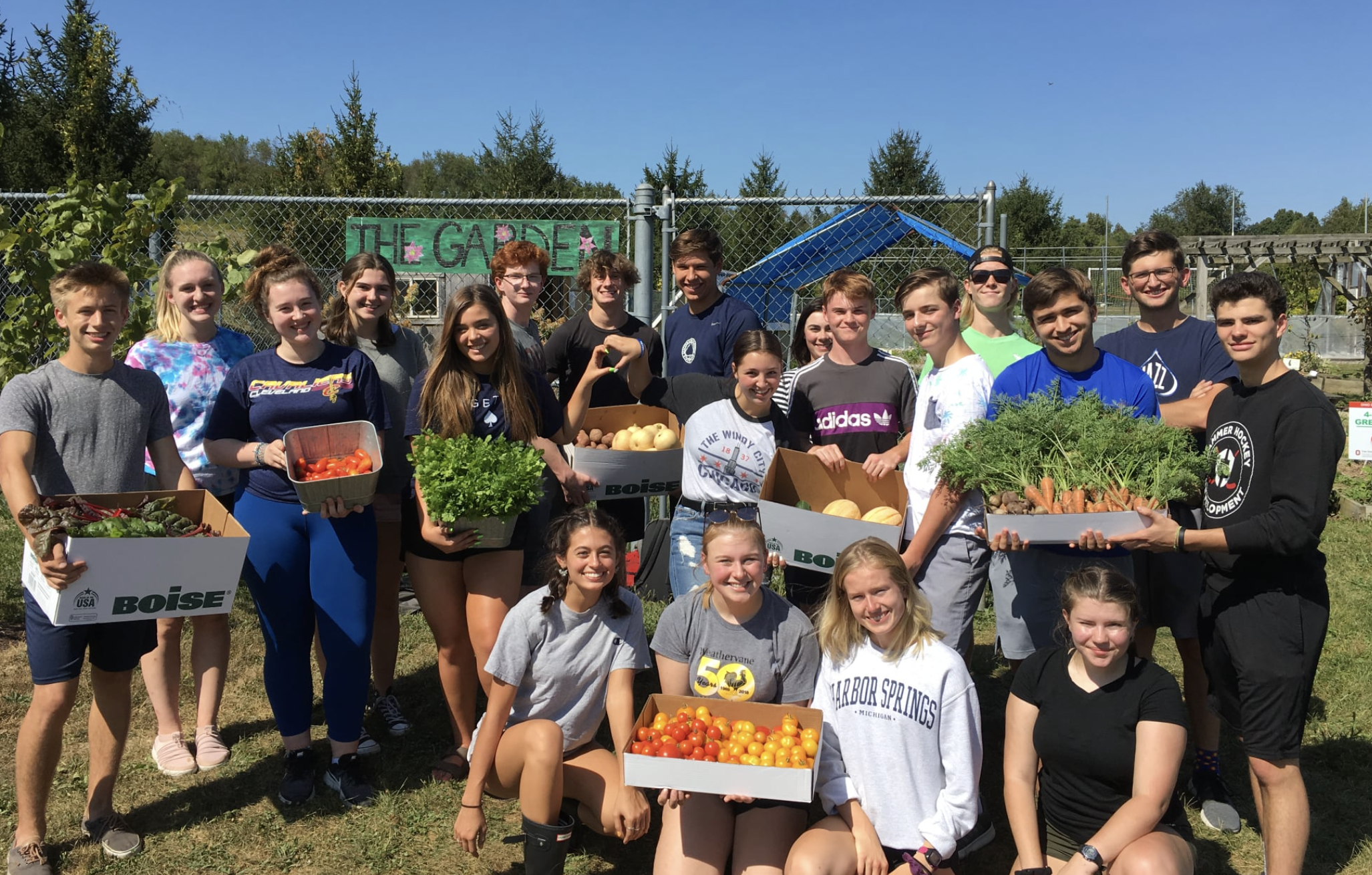
Part of the Land Lab is a garden that produces a variety of food. Credit: Granville Schools Sustainability Project.
Part of the Land Lab is a garden that produces a variety of food. Credit: Granville Schools Sustainability Project.

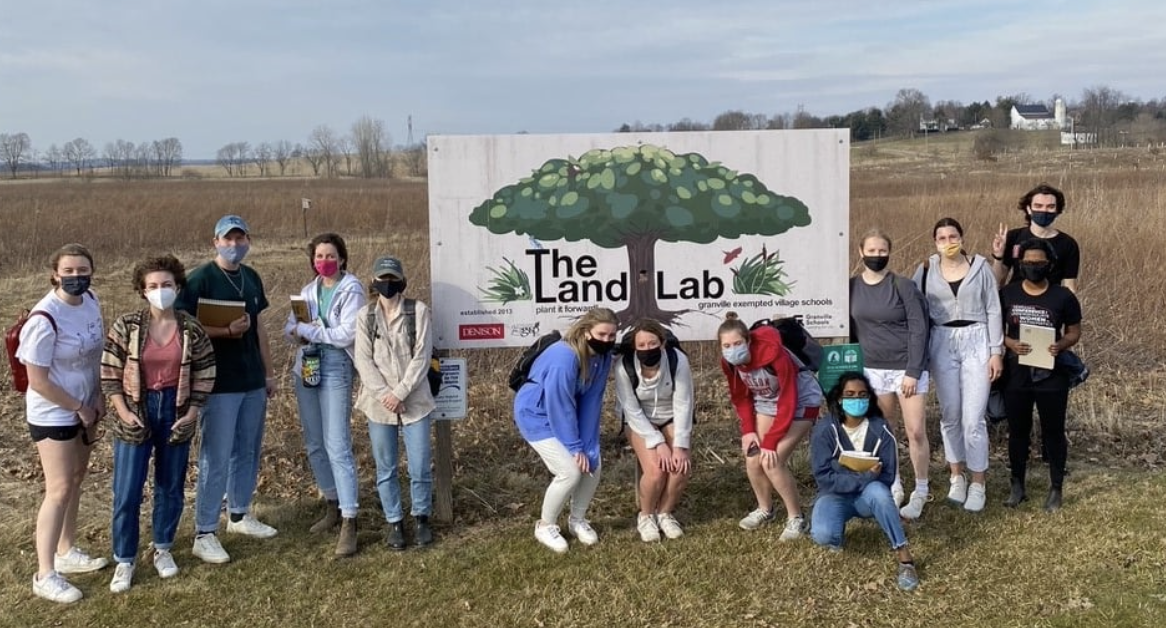
Students gather by the Land Lab sign during the COVID-19 pandemic. Credit: Granville Schools Sustainability Project.
Students gather by the Land Lab sign during the COVID-19 pandemic. Credit: Granville Schools Sustainability Project.
Below is a timeline of the history of the Land Lab. Press the arrows on the sides of the screen to explore.
Teaching the Future of Licking County
Inside his classroom, Reding uses specific local examples to teach ecological concepts. During a morning class, students matched cards showing animals to the correct fur, skull, and tracks. Reding wasn’t just teaching identification. He used the exercise to show how species interactions in Licking County have changed over time.
He explained how fluctuations in mink and muskrat populations created challenges for wetland stability. He described how deer in the county no longer behave like their predecessors, relying heavily on suburban food sources.
His approach is rooted in a simple idea: students care more when what they learn appears in their own backyard, according to Reding.
Jessica Newell, an AP Biology teacher whose classroom shares a wall with Reding's, describes him as her “teaching idol.” She takes many cues from his approach.
“Watching him with the environmental studies and ecology courses inspired me to try to integrate that even into biology,” she said. She now brings her students outside regularly to connect lessons to the natural features of Licking County.
The goal, she said, is scientific literacy, but also environmental responsibility. “It helps them understand the material in a real-world context. That leads to positive behavioral change.”
Reding encourages that mindset with his guiding principle: “Lead with the why.” It’s a phrase Newell repeats often.
Newell is heading up the tick study for the high school along with fellow science teacher Mara Hoover.

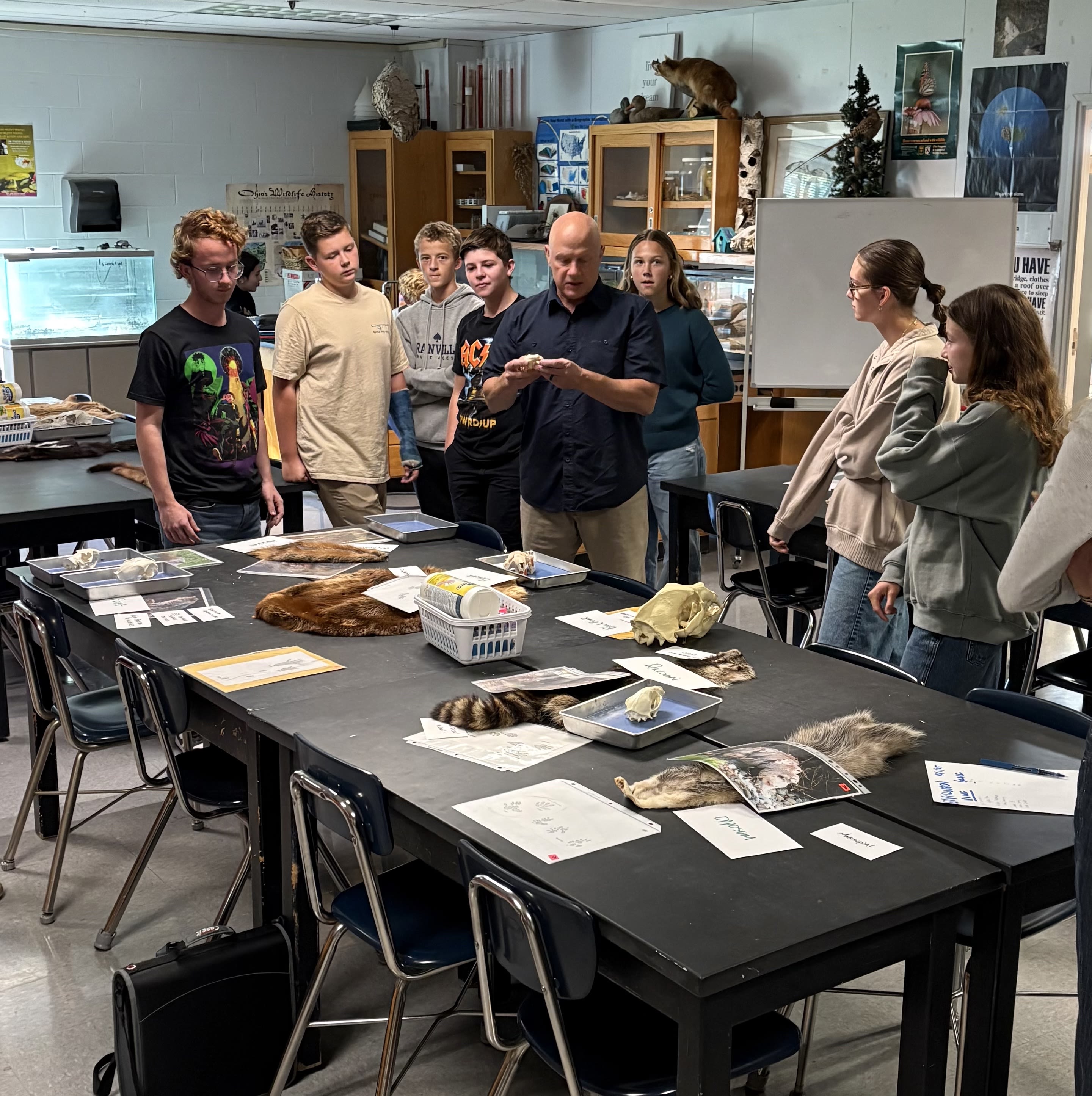
Reding leading class. Credit: Patrick Fitzgerald.
Reding leading class. Credit: Patrick Fitzgerald.

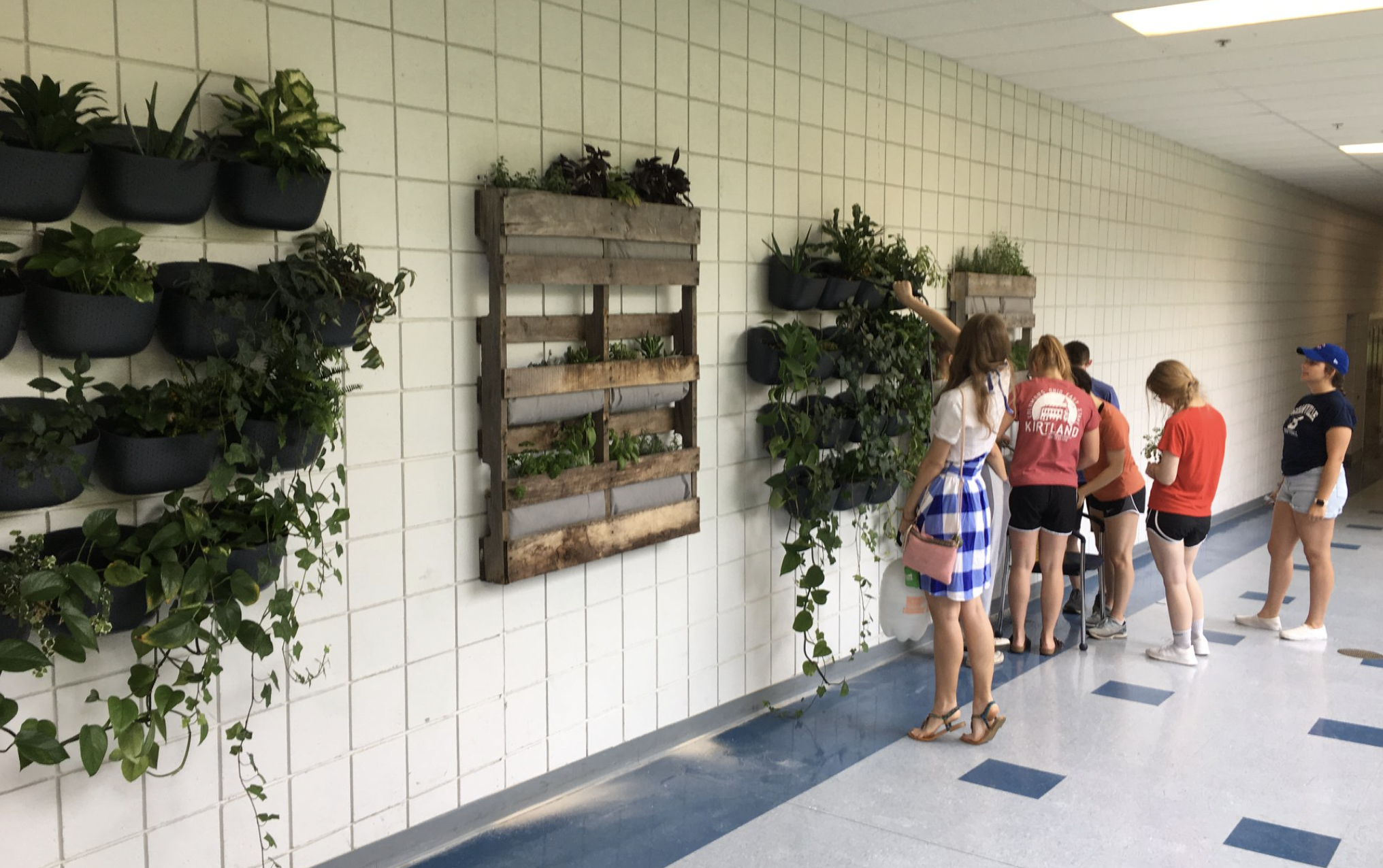
The outside comes inside the school. Credit: Granville Schools Sustainability Project.
The outside comes inside the school. Credit: Granville Schools Sustainability Project.
A Pipeline That Starts Earlier Than High School
The Land Lab’s influence begins before students ever reach Granville High School. At the intermediate school next door, science teacher Dustin Grime also uses the lab extensively.
During the first week of school, he takes students into the lab for a guided visit. “This is your Land Lab,” he tells them. Then he sends them outdoors without a teacher, encouraging them to explore independently, get lost on the trails, and build comfort with the environment.

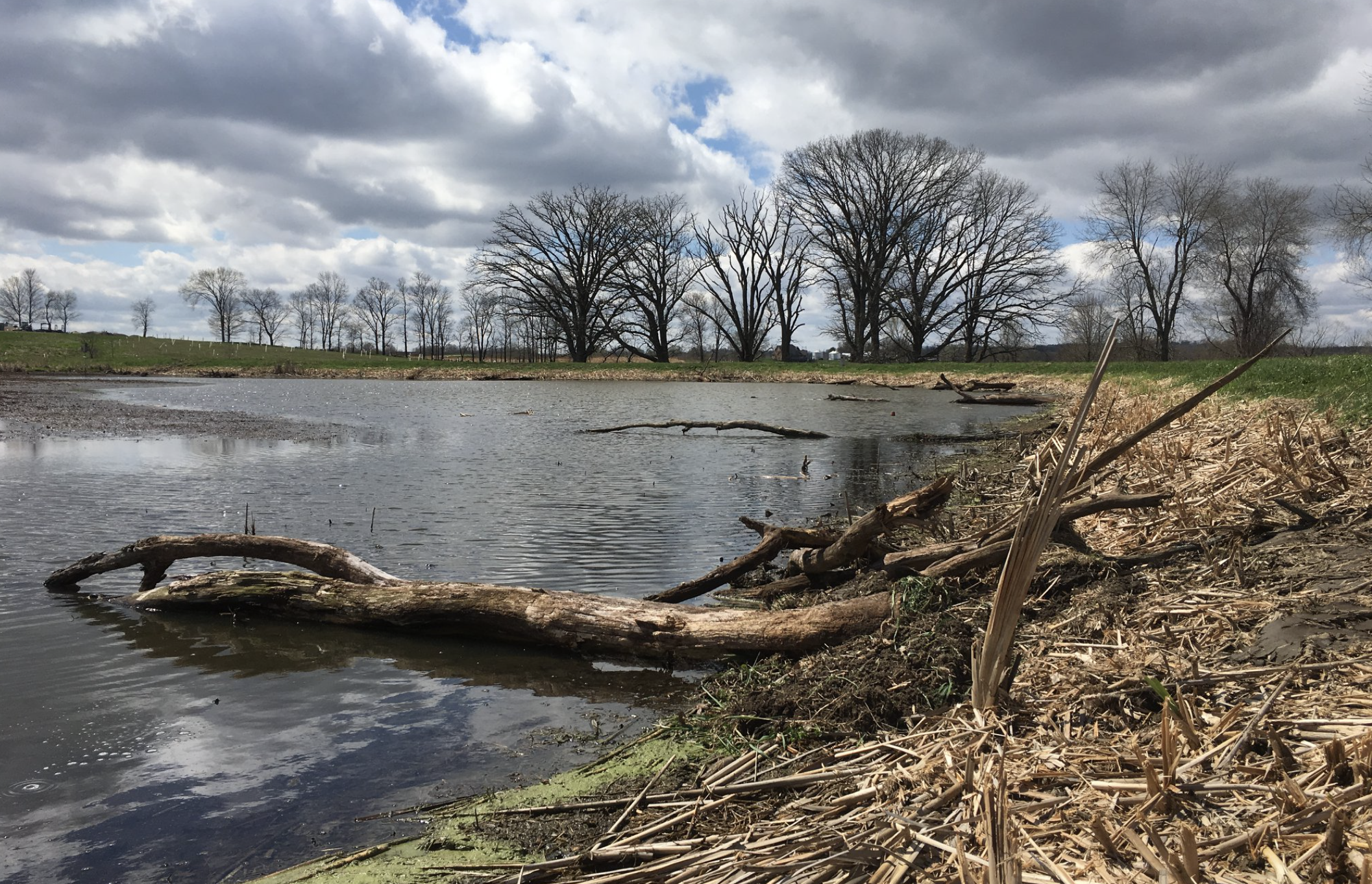
The wetland area of the Land Lab. Credit: Granville Schools Sustainability Project.
The wetland area of the Land Lab. Credit: Granville Schools Sustainability Project.
Grime credits Reding for shaping that philosophy. “Jim is just a guy that never says no to an idea,” he said.
Students arriving at the high school already have years of outdoor learning behind them. By the time they reach Reding or Newell, they know local species, understand basic ecological systems, and are used to walking away from the classroom walls.
Dustin Braden, a former student of Reding who graduated from Granville High School in 2017, entered Reding's class wanting to be a photojournalist. He was introduced to "take action" projects and he fell in love. He said that Reding "encouraged us to swing for the fences and be okay when you miss sometimes." Braden's "take action" projects included an environmental publication called Greenprints magazine, and Phase 3 of the Land Lab.

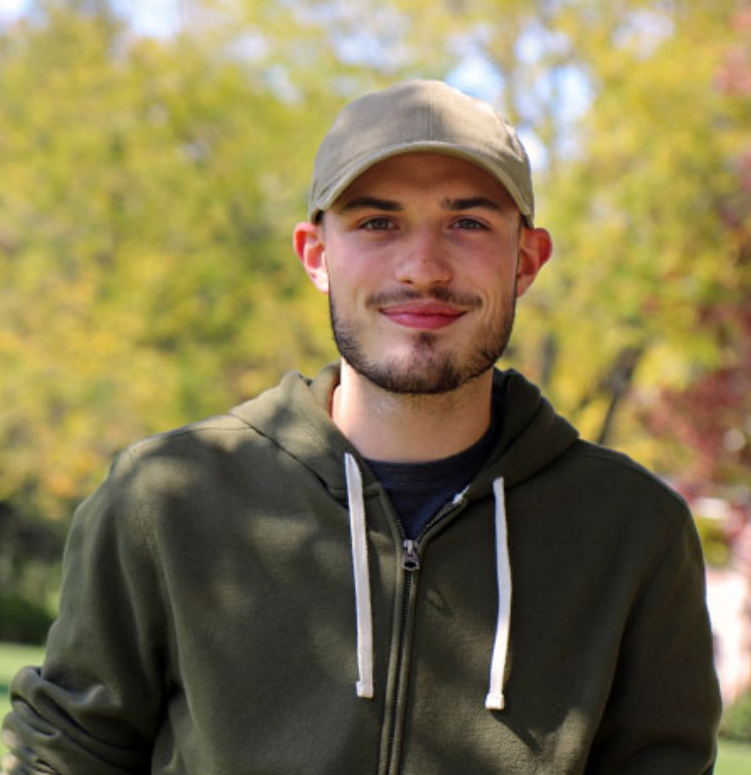
Dustin Braden. Credit: Cole Hatcher.
Dustin Braden. Credit: Cole Hatcher.
It was Reding's class that opened his mind up to environmental sciences. It led him to study environmental sciences at Ohio Wesleyan and eventually receive a master's degree in geography.
"There is a natural curiosity embedded in us as humans, that you see especially in kids. The first thing they do is (point to a plant), 'What's that?,'" Braden said.
Braden's own curiosity is still very much alive. He talked to The Reporting Project just before leaving for Belize to study its backcountry geography using drones.

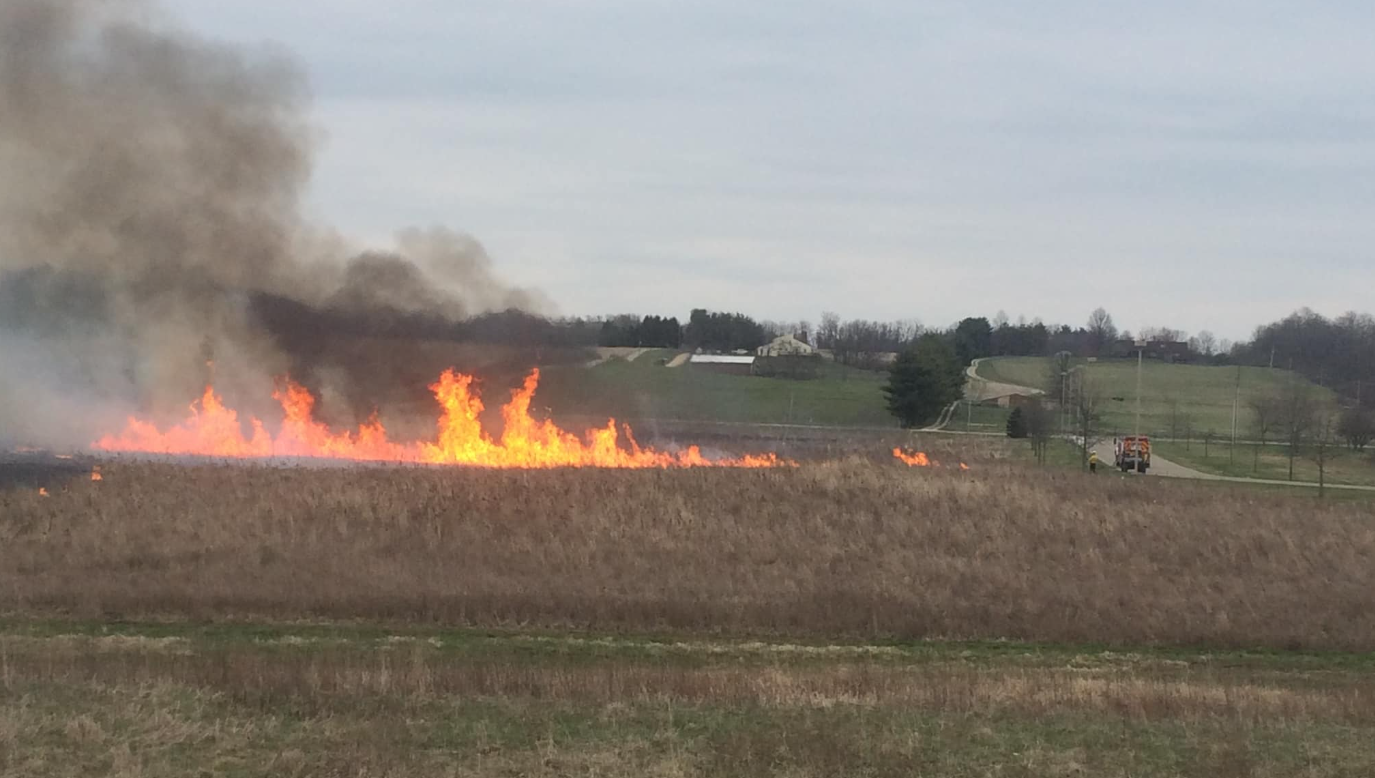
Part of the Land Lab has been the establishment of a prairie, which is maintained by controlled burns, supervised by Tim Mason, Brent Sodergren (USFW, Ohio’s partners program director) and the Granville VFD. Credit: Granville Schools Sustainability Project.
Part of the Land Lab has been the establishment of a prairie, which is maintained by controlled burns, supervised by Tim Mason, Brent Sodergren (USFW, Ohio’s partners program director) and the Granville VFD. Credit: Granville Schools Sustainability Project.
Taking Action
The tick DNA initiative that brought students to the woods is an example of how students learn from taking action.
In the fall of 2025, Reding and Newell, along with several of their students, were invited to the Ohio Regional Tick Symposium Their research examined local deer ticks for signs of Lyme disease. Lyme cases have risen across Ohio in recent years, and Licking County is no exception. For students, the work connected directly to local public health concerns.
Another "Take Action" project is Greenprints, a student-created magazine highlighting ecological issues at the Land Lab and in the community. Reding hopes the school will publish multiple editions and turn it into an ongoing publication.
Through these projects, Reding sees a pipeline of students who turn curiosity into long-term engagement. “A lot of my former students are in college studying environmental science, ecology, or biology,” he said. Others are already in environmental careers.
Julia Lerner, managing editor of The Reporting Project, was a student of Reding's in the early years of the Land Lab. She credits his influence with making her an environmental journalist during her time reporting in the northwest.
Along with “take action” projects, Reding conducts class-wide and school-wide projects that play a role in strengthening the biodiversity and transformation of the lab. There have been many batches of trees planted that have created stronger biodiversity. In late 2020, bird diversity reached 166 unique species sighted in the Land Lab.

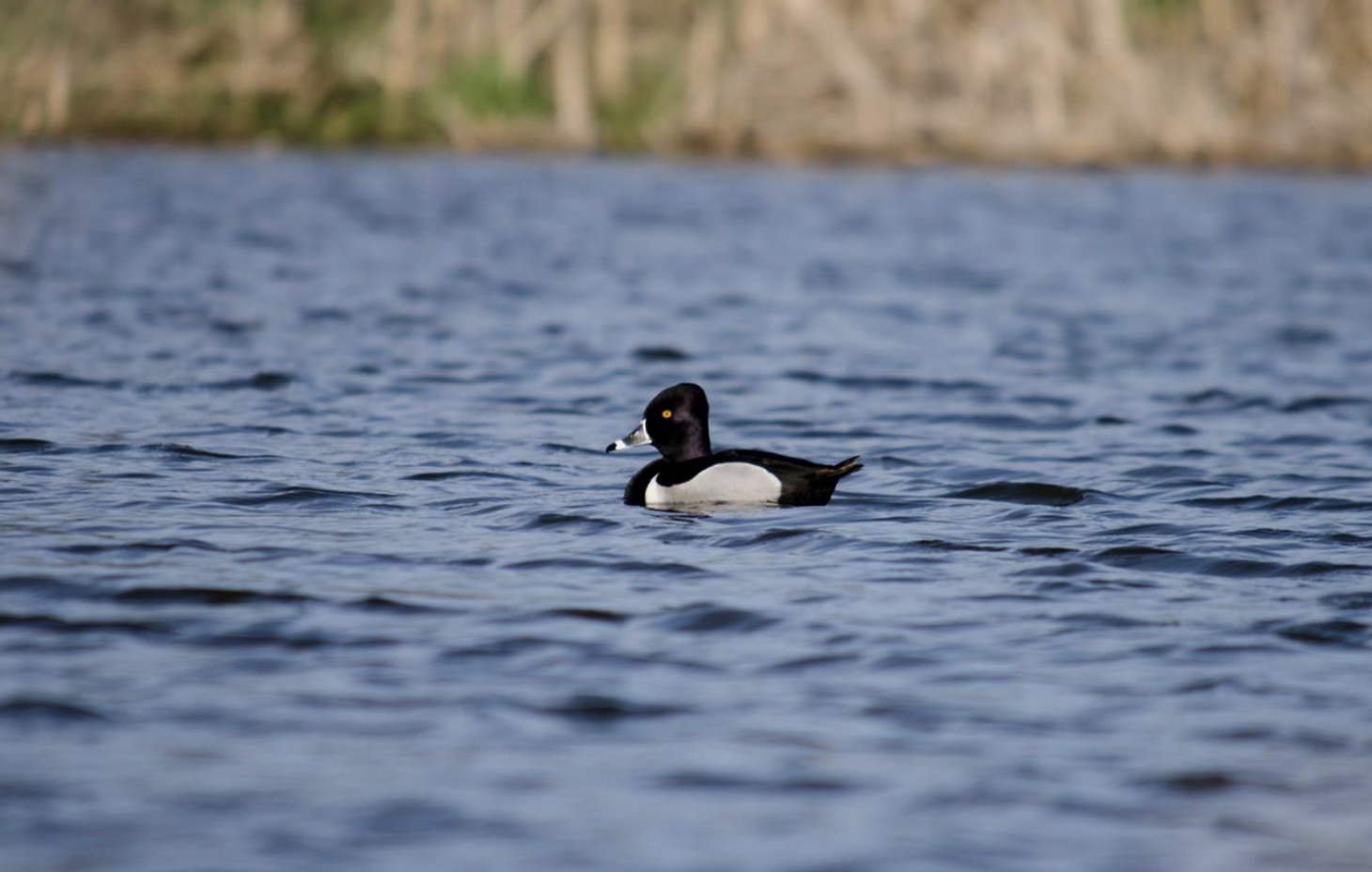
Ring-necked duck. Credit: Granville Schools Sustainability Project.
Ring-necked duck. Credit: Granville Schools Sustainability Project.
He has recently incorporated goats into the project. And even before the Land Lab was established, a school garden was begun as a Take Action project. It continues today and is integral to Reding's classes. He even teaches an entire summer class based on the garden. The food is grown in a sustainable way and is sold out of a summer market.
Reding paraphrases a famous Jane Goodall quote, saying “the more we know, the more we care. The more we care, the more likely we are to protect.”

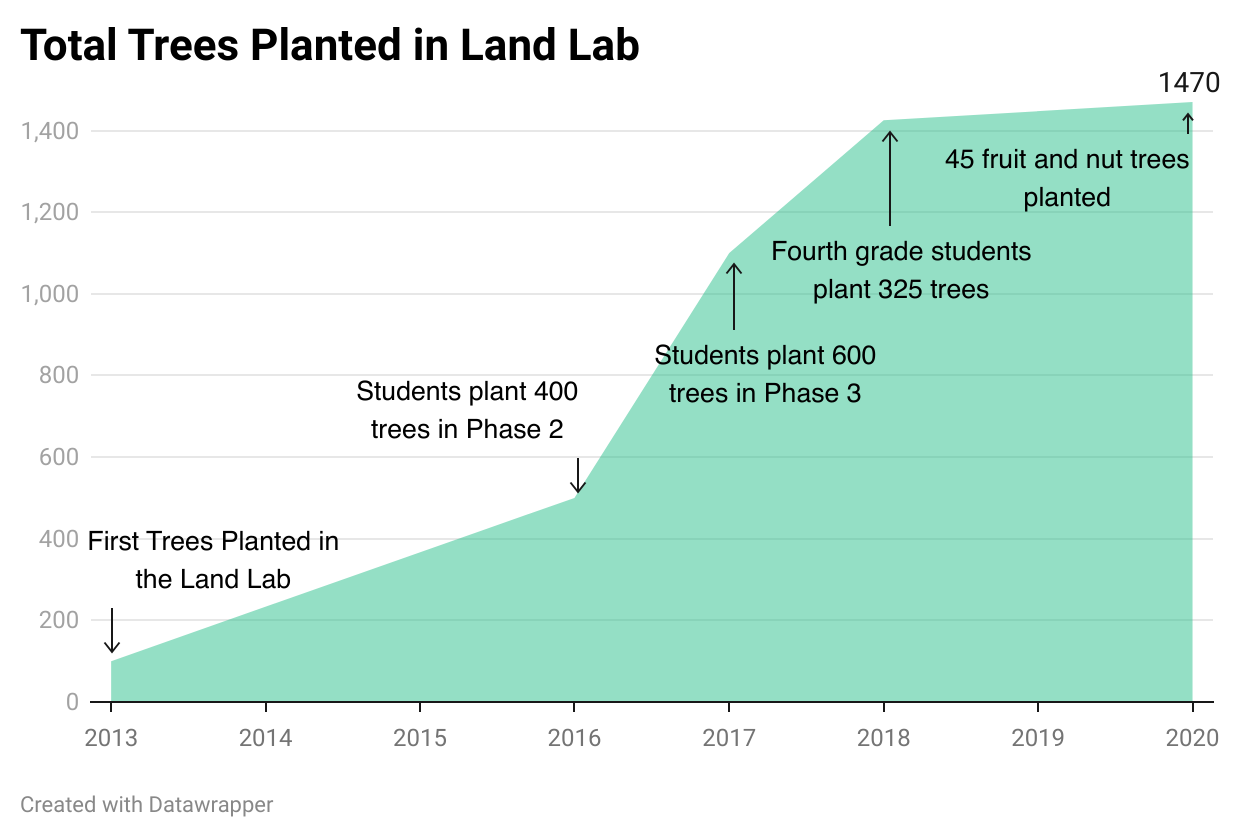
Data from Granville Schools Sustainability Project
Data from Granville Schools Sustainability Project

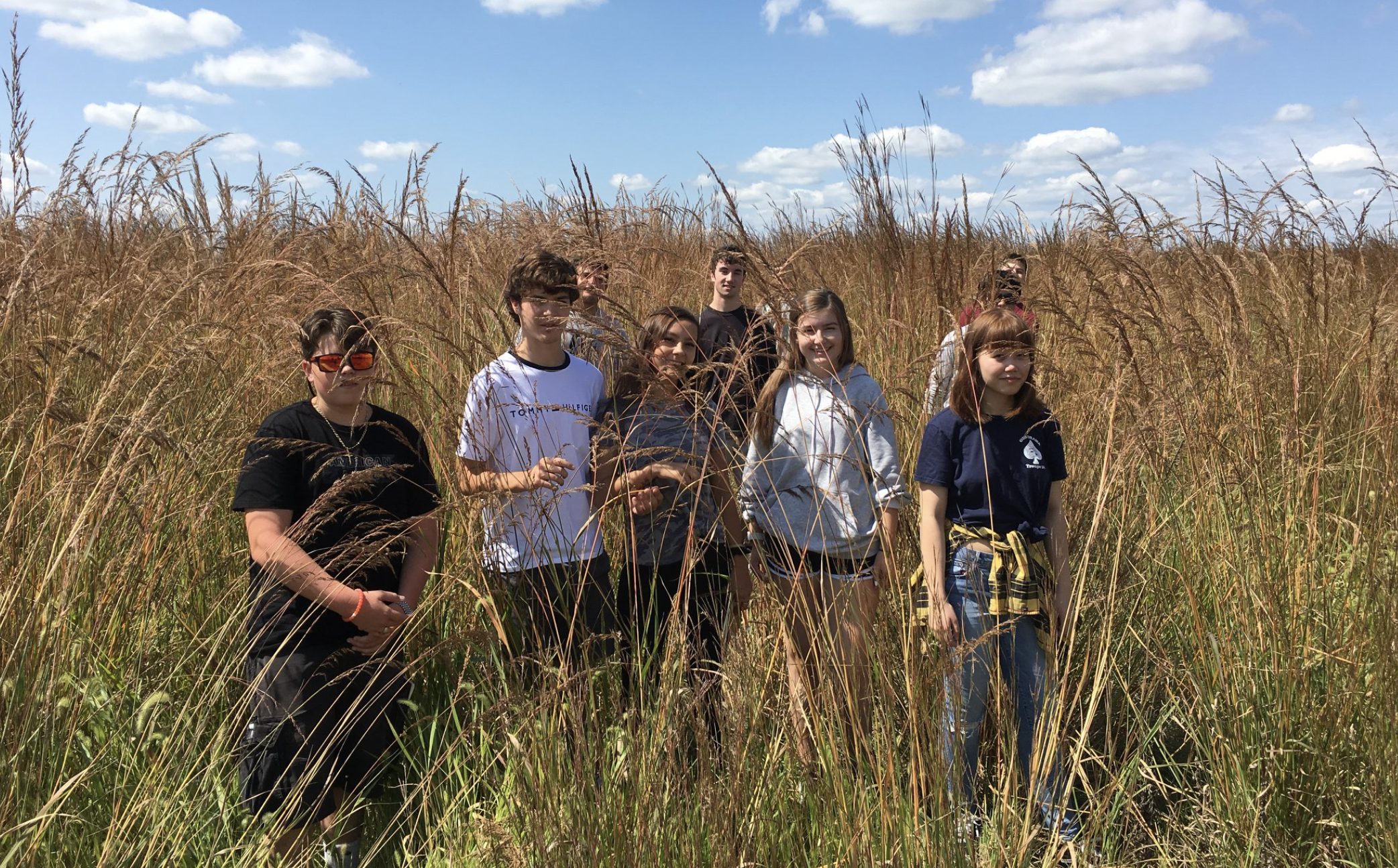
Students collecting seeds in Indiangrass. Credit: Granville Schools Sustainability Project.
Students collecting seeds in Indiangrass. Credit: Granville Schools Sustainability Project.
Safety Concerns
There are occasional questions about student safety, though Reding is clear: in decades of outdoor teaching, he has never had a student endangered by wildlife.
The concerns highlight the natural history of Licking County, in which we vanquish nature in the name of safety, comfort, and economic growth.
The work of Reding and his colleagues is a counter-response. There is a cost to separating ourselves from nature, both physically and in terms of mental health.
That's the result of a comprehensive study published by the National Institutes of Health. Results were drawn from 147 studies of school programs, such as outdoor adventure education, school gardens, and more. The conclusion: "Nature-specific outdoor learning has measurable socio-emotional, academic and well-being benefits, and should be incorporated into every child's school experience with reference to their local context."
The Land Lab is unusually large and complex for a school project. It is a restoration project and an educational experiment. It is a case study in what happens when a community invests in early environmental literacy.
For Reding, “That was my goal when I came into teaching. To get people who felt the way I did, and were capable and could really make a difference.”
It's also a gift to the community. Says Reding, "Rarely does a summer evening go by without at least a few visitors. The real advantage of the Land Lab is the ability to immerse yourself in it and not just visit it, as you would a metro park or state park."
“We are connected to nature... We are dependent on nature.”
- Jim Reding

 Built with Shorthand