
Compassion in its Simplest Form

On a chilly afternoon in early December, Brandon Kozak and a group of his friends gathered to celebrate the end of a hard semester. As they threw darts, played pool, and drank beer, they laughed and reflected on how impactful this one semester of school has been for them.
Brandon is a graduate student at Ohio Dominican University, in Columbus, Ohio. He is studying to get his masters degree in physician assisted studies to become a Physician's Assistant in the future. Although he is pursuing a path in medicine in urban Columbus, his passion for helping people began a couple hours away in rural Ohio.
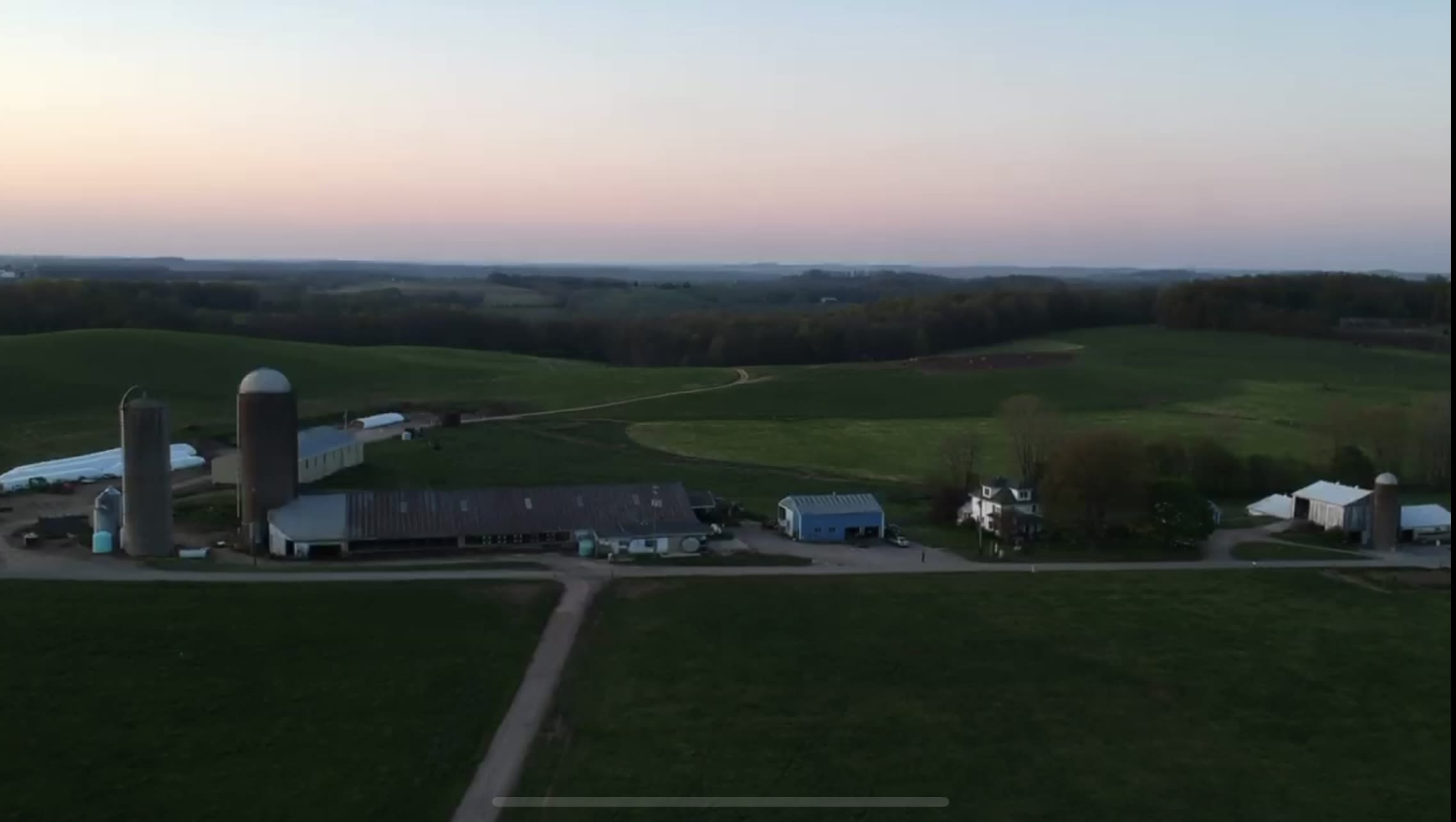
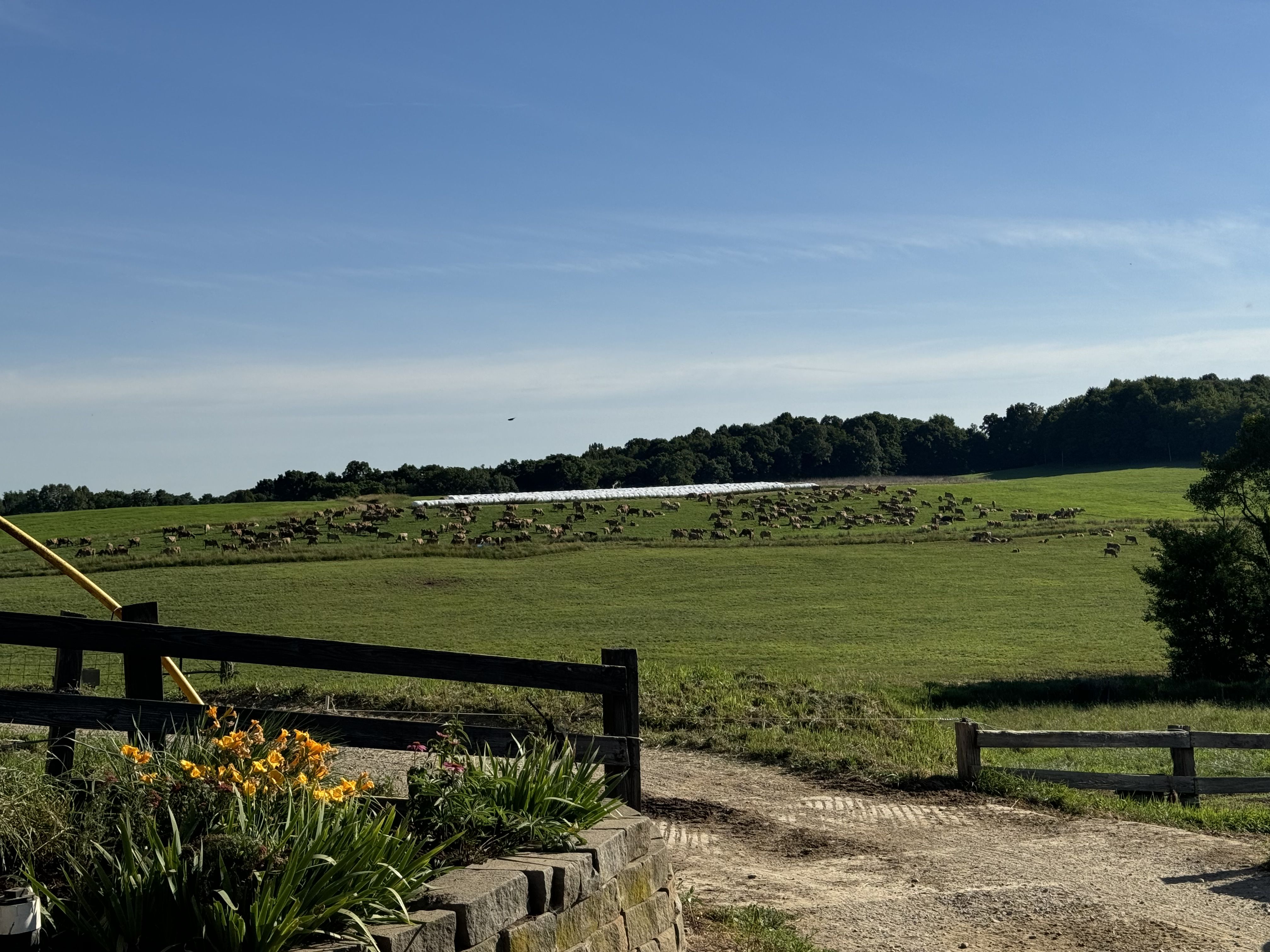
The 27 year old grew up on the Clover Patch Dairy farm in Millersburg, Ohio, with his parents, Alan and Sharon, and older sister, Courtney. Over one hundred acres of sprawling green farmland is home to 500 jersey dairy cows and 500 calves and heifers. These brown cows spend their days munching on grass and basking in the sun, until winter comes around.
Brandon and his sister helped with everything from feeding baby calves to helping give immunization shots to the animals, and milking the cows. As he got a little older, his dad let him help with tractors and other heavy machinery.
“If you asked Brandon, when he was in high school, it was ‘I don’t like farming, and I don’t like all of the work that I put into it,’” he said. “But as I grew up, and went on to college, and then on to work, it has taught me everything I needed to know about working.”
It was his dad that instilled in him the desire to help people.
“My dad cares about animals as much as he cares about people. I know that every person says that, but my dad genuinely does,” he said.
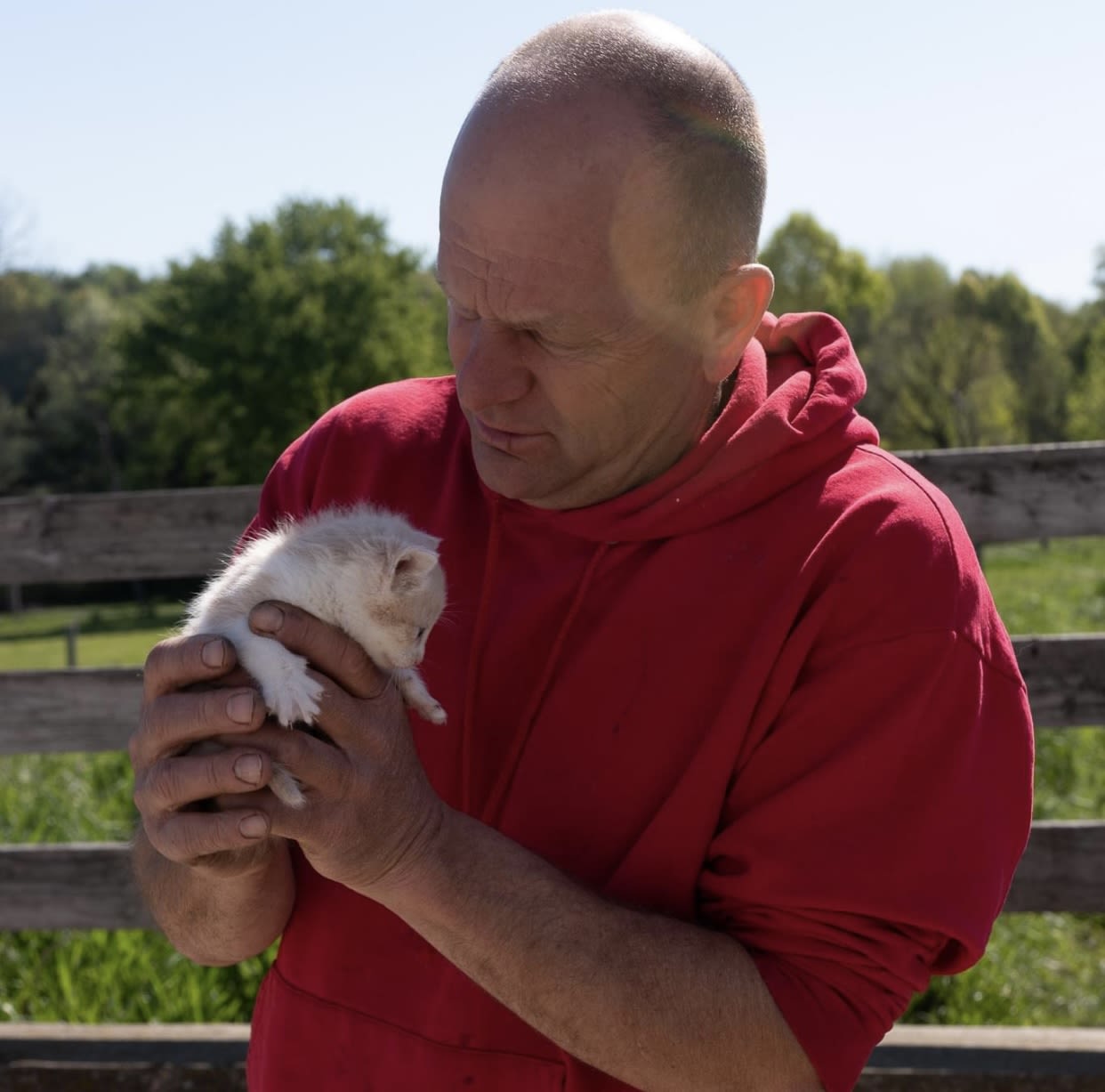
When Brandon was younger, he watched how his dad treated the cows. He would watch as his dad patiently gave the cows their medicine. They were clearly upset and unwell, as the brown cows kicked, headbutt, and did all sorts of crazy things. But his dad always finished treating the cows. Brandon watched in awe as his dad gave each cow a big hug and a kiss on the nose, and gently walked them out.
“Just seeing how he interacted with animals, I thought of how he would interact with people,” Brandon said. “I thought the same way about myself. If I can take the skills that my dad has shown caring for animals, then I can care for people. My dad really shaped that mentality of just treat them. Whatever it is, treat them how they are supposed to be treated. Everything’s supposed to be treated with some kind of respect, some appreciation to what they give to the world.”
For years he watched his dad treat these animals, living creatures that cannot talk back, complain, or whine, and still have the heart and desire to take care of them. His dad takes care of them not because of what they give him, but what they can give to other people. Watching these selfless acts of kindness is what shaped Brandon’s passion for medicine. Compassion, patience and respect for all beings was the example.
“It’s our job as people to always reach out a hand to help get people and those things back to the feeling of that sense of contribution and positive impact,” he said. “When people can see that you care about them, I think that is something that has a lasting effect on people and helps people in their journey of seeking out care and getting better.”


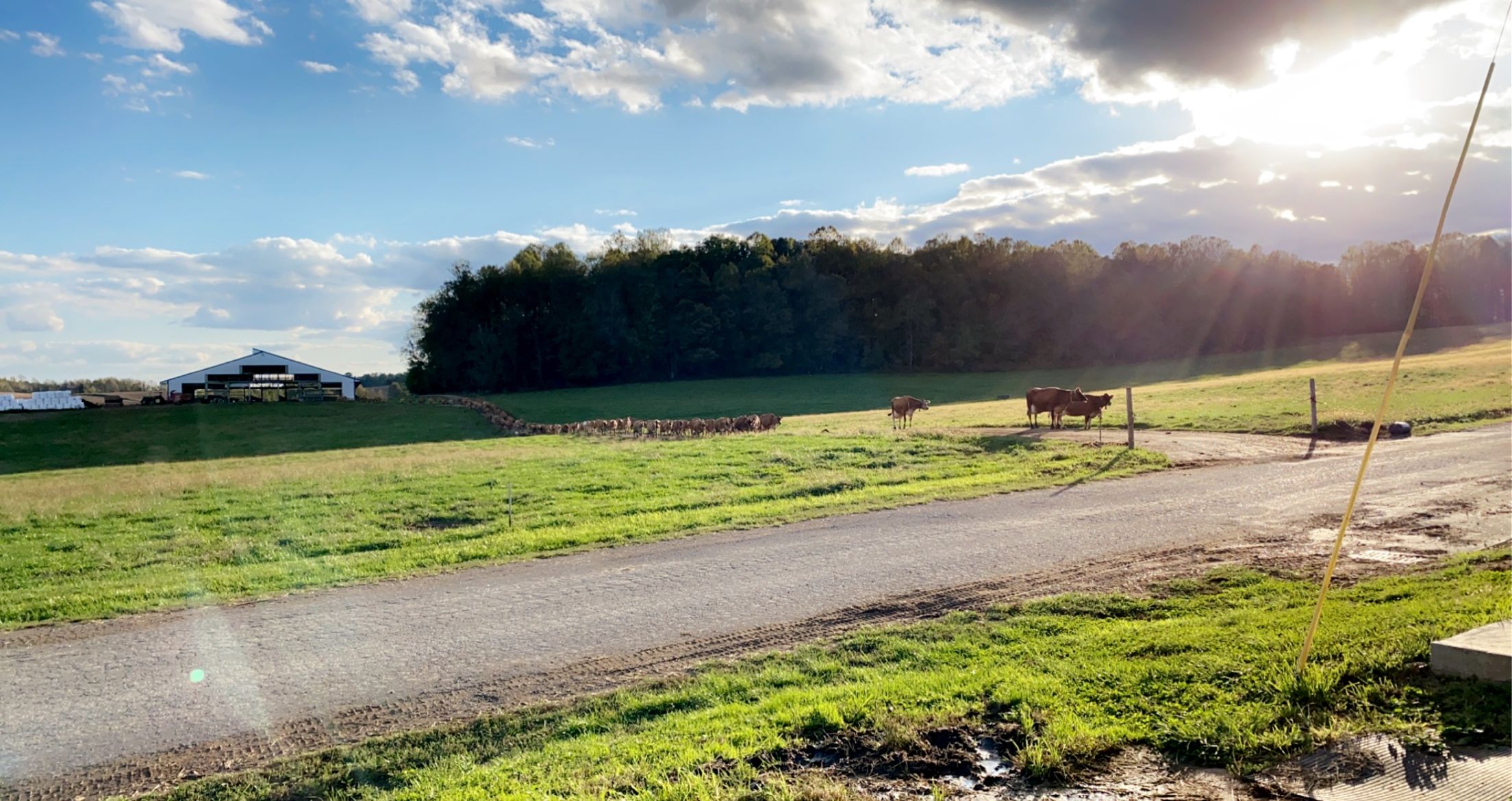
On a particularly rainy afternoon, Brandon and his dad, Alan, were coming home from a soccer game that was up north. As they were rounding a bend in the road, about a tenth of a mile from the farm, they heard the clomping of an army of hooves. A whole herd of cows were running down the road straight toward them. Then the cows turned, and ran off of the road.
“Oh my gosh, I was gonna have a heart attack, it was horrible stress,” Alan said.
Father and son jumped out of the car to run after the herd of escaped cows. After some time, the pair finally got most of the cows turned around to head back to the barn, where they found the source of the commotion. A high school worker had left the gate open, allowing the cows to make their grand escape.
At this point, Sharon and Courtney, mother and daughter, had arrived home from Courtney’s soccer tournament. The whole family worked to rein in the remaining cows as the rain continued to pour. The herd of cows trampling through the yard in the rain tore up the grass, leading to scores of mud everywhere. It was caked onto the sidewalk.
“We had to chase them back through the yard to get them to the barn. That was the year that Courtney graduated, and we were gonna have the graduation here at the farm. I had to shovel mud off the sidewalk. We had to re landscape,” Alan said. “It’s a crazy life.”
There was another time where Courtney was late to soccer practice because the heifers were out.
“Everybody else gets stuck in traffic or has a flat tire. Not Courtney, she’s late because the heifers were out,” Alan said with a laugh.

Even though their parents had the farm to run, they always made sure their children got to do what they were passionate about. Even if the cows broke free, Brandon and Courtney were still going to get to soccer practice, no matter what.
“We might have missed one of their games. I think Sharon missed one of Brandon’s games because she was at Courtney’s game, and I missed one of Courtney’s games because I was at Brandon’s,” Alan said.
Watching his parents work through all the daily challenges on the farm, and still finding time to always be there for their children, even when things got hard, taught Brandon a valuable lesson.
“That was the thing I picked up from the farm, you don’t choose the things that are dealt to you, but you have to work through it,” he said. “You have to.”
Growing up he played a variety of different sports, from dance and gymnastics to soccer. His dad recalls him, when he was younger, putting on all his basketball gear, and running out and shooting a basketball for a while. Then he ran back into the house and put on his baseball gear, and went out and hit baseballs off of a little post.
“I think he came back inside and put on his football stuff after that, and then he’s kicking a football, all in like a couple of hours,” Alan said.
In the end, it was soccer that held a special place in his heart.
“I really enjoyed soccer because it was one of those things where, physically, [size] didn’t really matter. As long as you tried, you could find some success with it,” he said.
Three or four times a week the Kozaks would drive an hour and a half to soccer practice in the evenings, and would not return home until much later at night. This was on top of going to school, and helping out on the farm. Every day was farm, school, soccer, and repeat.
“I really just enjoyed playing soccer a lot. That’s where I just kind of felt confident. Was one of the few places I did [feel confident], one of the places that I could just be me,” he said.
Brandon remembered the fun he would have at away tournaments. The long days were full of games, running around the hotel hallways with his teammates, and watching television during the extra nights they had in the hotel. The television was a big deal for him.
“We didn’t have a TV at my house, so being able to stay extra nights, get a TV and watch like Nick at Night as a kid, those were some fun times,” he said.
Halloween, 2017, a time when most college students are out partying and drinking away their livers, Brandon was receiving news no one ever wants to hear.
The tumor he had in his foot was cancer.
The first thing that went through his head was absolute panic. His grandfather on his dad’s side had just passed away from cancer three months before that same year.
“Cancer, when you first hear it, not when you’re diagnosed, is a scary thing to face. Anyone that’s ever heard cancer always wonders what would happen to me if I was diagnosed with cancer? How would I feel? What would go through my head?” Brandon said. “And you don’t really know until it happens, and even then, when it happened, I had no idea. I felt ashamed. I did not feel special at all. I didn’t even really feel hope. I honestly just went to the worst case scenario.”
The doctors gave him a run down of the different types of diagnoses it could be. The worst one given was osteosarcoma, a type of bone cancer that forms in the cells that make up the bone, according to the MayoClinic. In this case, they discussed doing a surgery to amputate his leg from below the knee down to prevent spreading.
“I immediately thought that my career in soccer was over, and that I was probably going to die,” he said.
Fortunately, it was not as serious as osteosarcoma, and it was treatable. There was even a study going around that aided with the treatment, and the outcome. Even though the situation was not the doomsday scenario he was imagining, Brandon still struggled with his diagnosis.
“I barely went to class. I also didn’t tell any of my teammates, and I didn’t tell any of my coaches,” he said. “I didn’t even tell my parents.”
The straw that broke the camel's back was the excessive drinking he began to do. One night, in the weeks following his diagnosis, Brandon came back to his dorm room, and his roommate began hounding him with questions.
Why was he acting this way? What was he not telling him?
“I finally just broke down and told him what was going on, it was him and another girl that I was really close with on the girl’s soccer team that I ended up telling about it. They were really the only people that knew that I was struggling, and that I went through chemotherapy.”
Even as everyone came back for the spring semester in January of 2018, Brandon still did not tell anyone else. For six months he endured chemotherapy through The Ohio State University Wexner Medical Center, the only people aware being the two he told previously.
“I should have probably taken a medical leave of absence, but the connections at Denison felt a lot more of a need than going back home and sitting at the farm, not able to work, not able to do school, and not able to do soccer,” he said.
When the world shut down in 2020, Brandon was forced to tell his family about his cancer because the cancer came back. The second diagnosis was impossible to hide.
This time it was Ewing sarcoma of the mobile spine. Ewing sarcoma is a rare malignant tumor that can occur anywhere in the body (Columbia University Irving Medical Center.) Sarcoma of the spine often causes pain at the site of the tumor, and if large enough, can cause neurological symptoms such as weakness, clumsiness, and tingling in the arms and legs (Columbia.)
He spent his days getting treatment, and going to work. His family stayed away out of concern that if he were to catch Covid-19 he would get devastatingly sick, more so than he already was. He would call his friends and former teammates, FaceTime with them constantly, and play video games.
“I tried to keep my mind as distracted as possible, in or out of the hospital. I made sure to always have somebody available to talk with during this because of how negative it seemed. I just wanted to distract myself with other people and what they were doing with their lives,” Brandon said. “People were struggling, and they did share that with me, I made sure that people could share that with me. It at least took the conversation off of me to help me understand that I’m not doing this alone.”
Through the moments of watching his dad growing up, and opening up to those who cared about him, he learned how to treat his patients. Humans, like animals, need interaction, touch, to be heard and seen. He understands that people do not want to talk about their illness every single day, but he also understands there are some days when that is all they want to talk about. It is all they can think about.
“Finally understanding that there’s just some days where people want to feel like they’re just part of the group, part of your daily conversation,” he said.
Just as Alan met the cows where they were, Brandon does this with the people he helps, compassion in its simplest form.
*Photos courtesy of Brandon and Alan Kozak*

 Built with Shorthand