
Insect Apocalypse
One out of every three bites of food we take is thanks to a pollinator. Why are we letting them die?
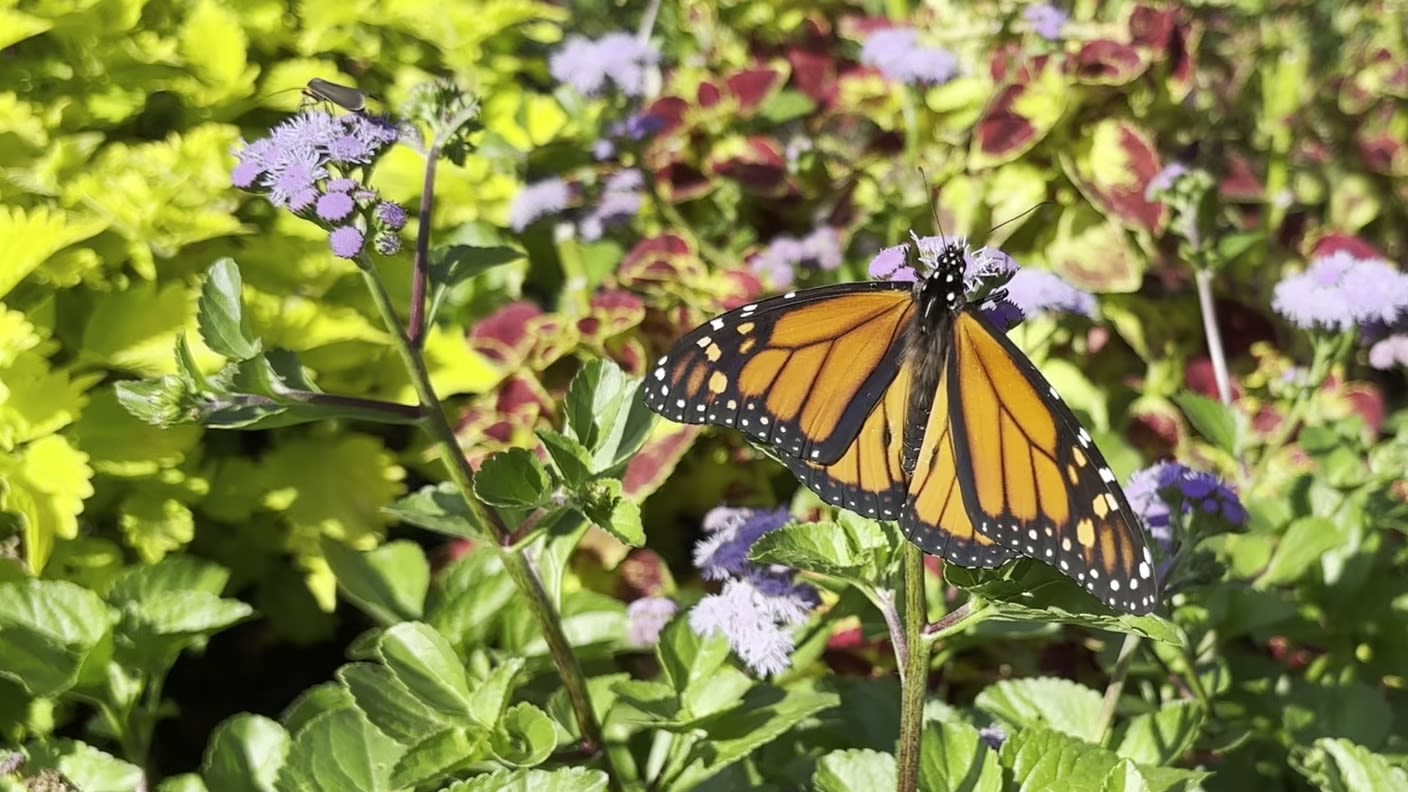

“Look at that one,” Susan King says as she points to a golden yellow butterfly that is floating through her garden. It lands on an aster.
“Oh boy,” she says. “Wow. It’s a fritillary."
The butterfly whisks from flower to flower. “Hey there guy, come back.”
She follows the fritillary to another plant a few feet away. With soft feet, she approaches and snaps a photo so she can identify it: A great spangled fritillary.
A car drives past. She smiles and says to herself, “Just a weird neighbor out chasing butterflies. Don’t mind me.”

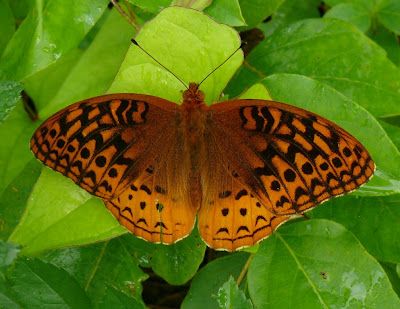
Great Spangled Fritillary Credit: Jim McCormac
Great Spangled Fritillary Credit: Jim McCormac
The great spangled fritillary butterfly was once found in abundance across Ohio and in many regions across North America. But according to a study published in Science, the species has declined 72.59% between 2000 and 2020.
It’s not the only butterfly species facing significant decline.
Butterflies are the easiest of the pollinating species to observe and study. That led to a major study published in the science journal PLoS One, in 2019, which monitored butterfly populations in Ohio over a 21-year period. The study observed a 33% decline over that period.
The authors of the report suggest such a deep decline is cause for concern for all insects. The report concludes, "As butterflies are the best-monitored insect taxa, they are the best indicator of the baseline threat to the 5.5 million insect species, the most diverse group of animals on earth."
The study concludes that the biggest threats to insect populations are habitat loss and fragmentation, climate change and agricultural intensification.
According to the USDA, “35% of the world’s food crops depend on animal pollinators to reproduce.” Using this data, scientists estimate that one out of every three bites of food we take is available because of pollinators.
And an analysis published in Ecological Economics estimates that pollinators contribute over $15 billion annually to North American agriculture.
“We would not have life on earth if it weren't for insects, period,” King said. “If you don't have the plants, you don't have the caterpillars. If you don't have the caterpillars, you don't have the butterflies. If you care at all about birds, you should care about pollinators. If you care at all about clean water. There's just so many things it's tied to.”

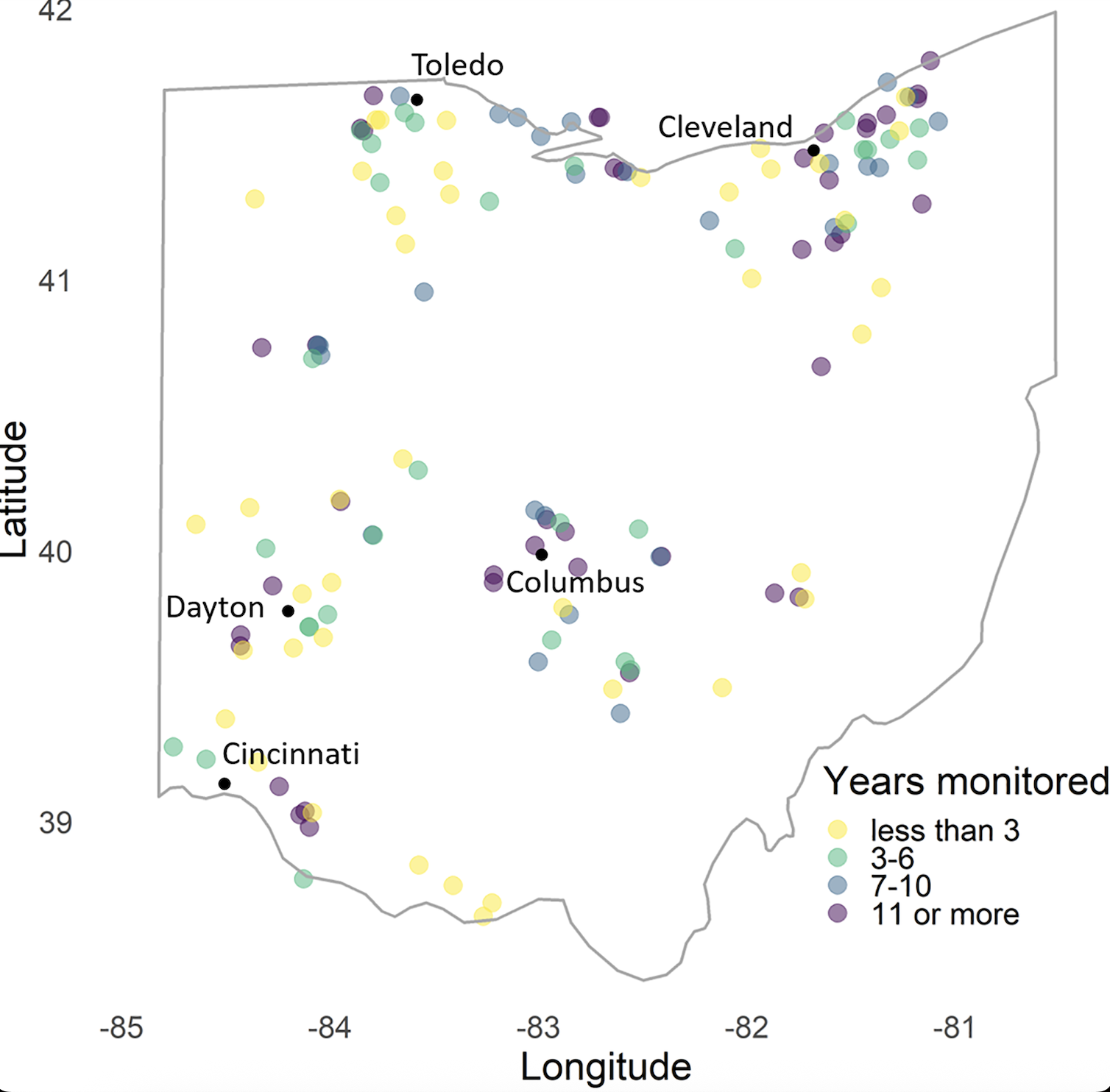
Testing sites of a 21 year butterfly survey that found over 80 species had a net population decline of 33%. Ohio was chosen for the study because it has "a mosaic of habitat types due to its partially glaciated history and its place at the confluence of Midwestern prairies, the Appalachian Mountains, and the boreal forest." Wepprich T, Adrion JR, Ries L, Wiedmann J, Haddad NM (2019) Butterfly abundance declines over 20 years of systematic monitoring in Ohio, USA. PLoS ONE 14(7): e0216270. https://doi.org/10.1371/journal.pone.0216270
Testing sites of a 21 year butterfly survey that found over 80 species had a net population decline of 33%. Ohio was chosen for the study because it has "a mosaic of habitat types due to its partially glaciated history and its place at the confluence of Midwestern prairies, the Appalachian Mountains, and the boreal forest." Wepprich T, Adrion JR, Ries L, Wiedmann J, Haddad NM (2019) Butterfly abundance declines over 20 years of systematic monitoring in Ohio, USA. PLoS ONE 14(7): e0216270. https://doi.org/10.1371/journal.pone.0216270

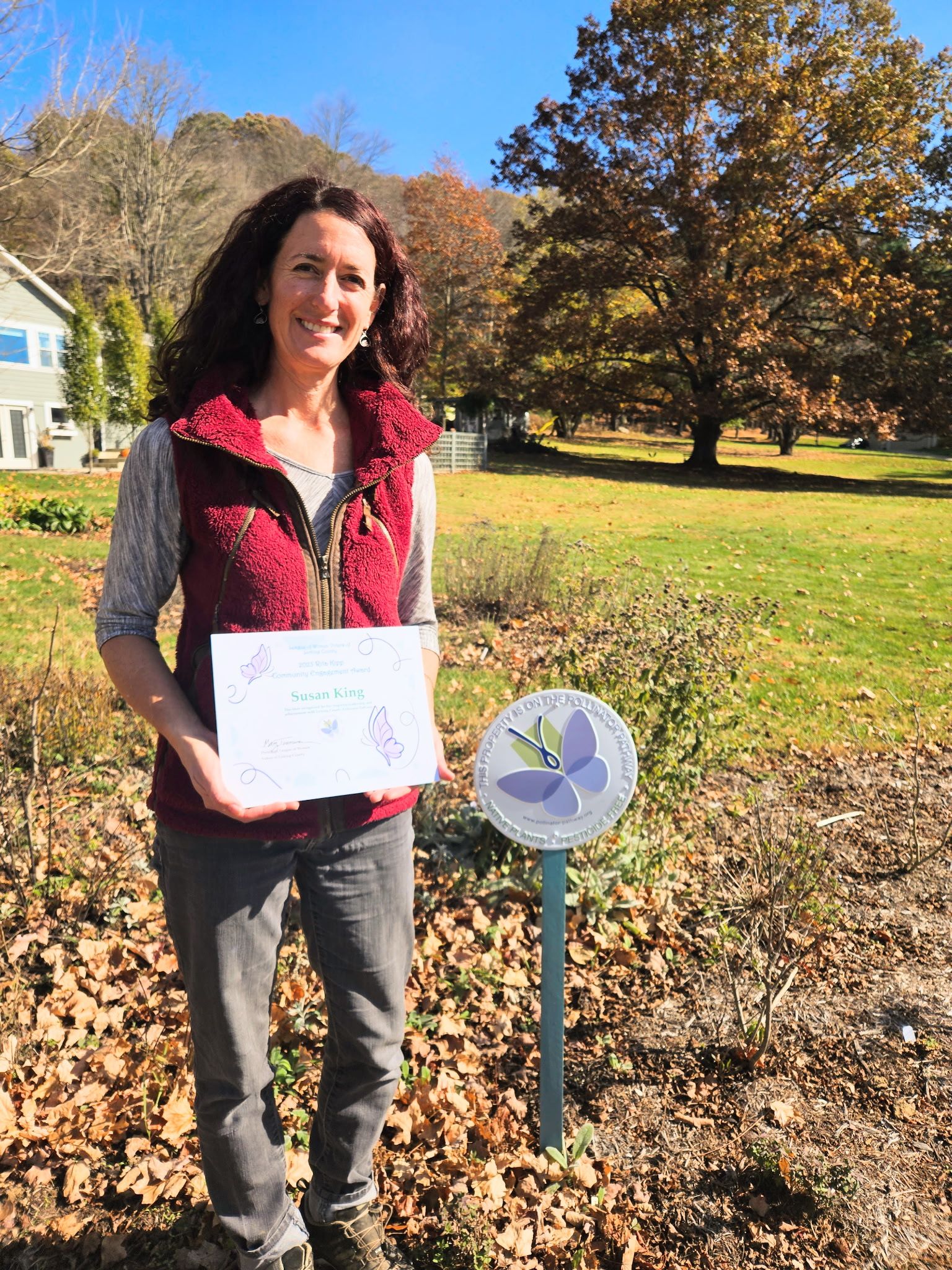
Susan King receives the Rita Kipp Community Engagement Award for her service to the environment. Credit: TRP.
Susan King receives the Rita Kipp Community Engagement Award for her service to the environment. Credit: TRP.
King is able to find butterflies in her yard, like the fritillary, because she has curated her garden as a habitat to support them.
The larvae of most species of lepidoptera—butterflies and moths—are specialists. Essentially, this means that the caterpillars are “picky eaters.” The caterpillars of butterflies and moths native to Ohio feast only on certain native plants.
“Monarchs are probably the most well-known. They're the poster child for plant and animal interactions, right? They're just one of many. No milkweed, no monarchs. That's probably the best known example. There's so many more,” King said, gesturing to her garden filled with native plants.

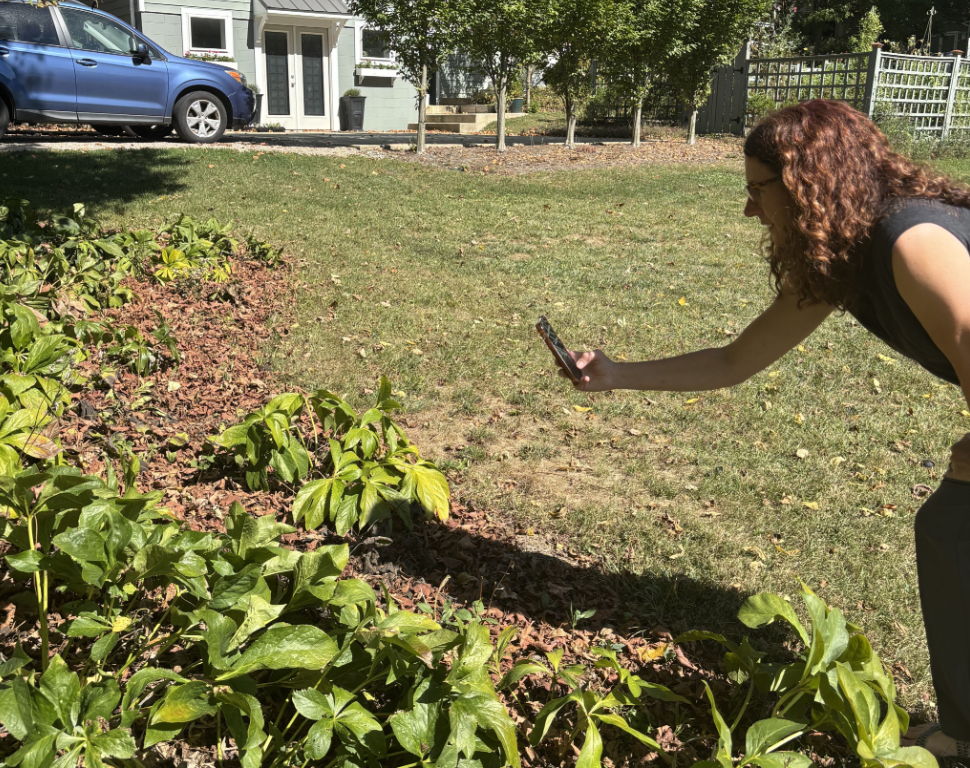
King takes a photo of a butterfy she found in her yard. Credit: Ella Diehl.
King takes a photo of a butterfy she found in her yard. Credit: Ella Diehl.
“If you get rid of all the little violets then you don't have fritillary butterflies. If you don't have pawpaw trees, you don't have zebra swallowtails. If there's no golden-alexander flowers, you don't have the golden-alexanders mining bee. When your yard looks like just a carpet of grass, then it's no wonder that you don't have fireflies anymore, and you don't see monarchs anymore, and you don't see any number of butterflies or birds for that matter.”
Butterflies are declining, says naturalist, author and photographer Jim McCormac. He calls it “the insect apocalypse.”
“It's just death by a thousand cuts. It's all this habitat loss that we're experiencing almost everywhere,” McCormac said.
“They're going to take that old meadow out with goldenrod and all that and put houses in. One of those incidents on its own doesn't seem like a big deal, but it's going on everywhere.”
And it's not just housing developments: in Central Ohio, development related to data centers, manufacturing and Intel's $28-billion computer chip facility has converted thousands of acres of meadow, prairie and agricultural land into construction zones.

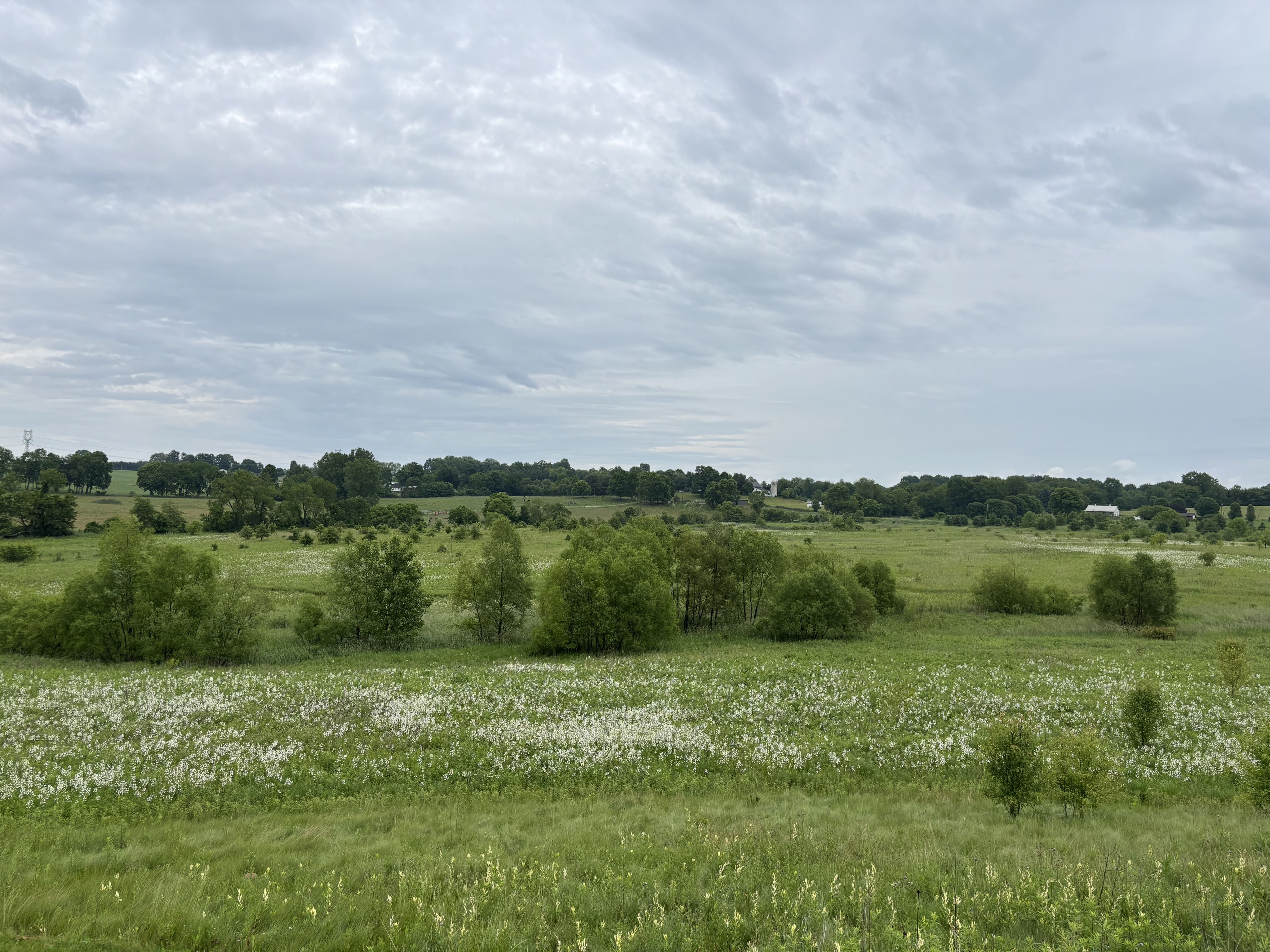
Another reason for the drop in insect population is the advance of invasive plants, McCormac said.

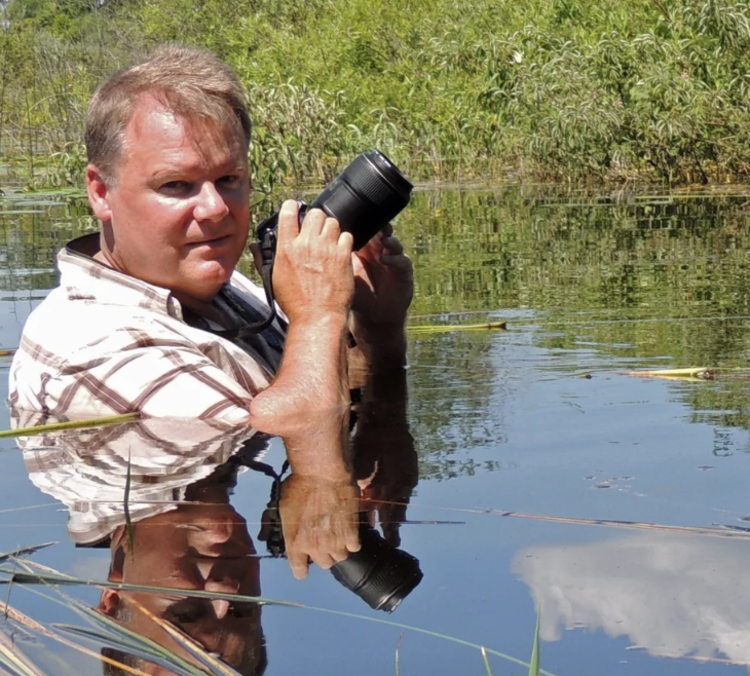
Jim McCormac, naturalist and author. Credit: Cheryl Erwin.
Jim McCormac, naturalist and author. Credit: Cheryl Erwin.
As King mentioned earlier, insects are "picky eaters." According to an article in Smithsonian magazine, insects evolved into their dietary requirements about 165 million years ago.
Commercial agriculture and turf grass have pushed out the plant species pollinators need to survive in cultivated areas. And now, in the wild, invasive species are squeezing out the native plants insects need to survive.
In October 2025, McCormac led a small group hike through the Denison University Bio Reserve, sponsored by the university's office of sustainability.
Throughout the day, McCormac would stop walking and tip his head. He learned his bird calls by the age of 8. He'd raise a finger and say, "There's an Eastern phoebe over there."

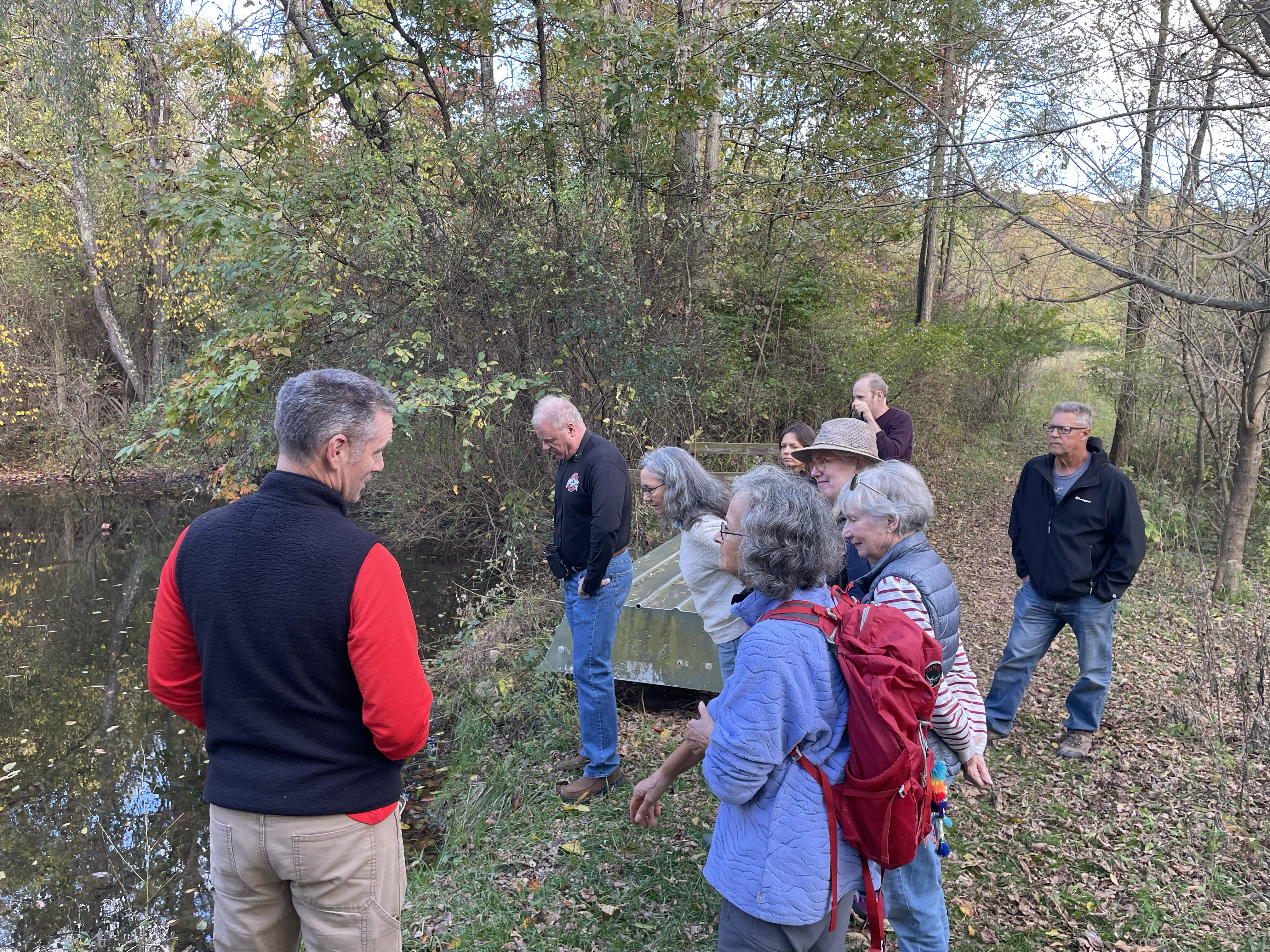
Jim McCormac, center back, leads a nature hike through the Denison Bio Reserve. Credit: Susan King.
Jim McCormac, center back, leads a nature hike through the Denison Bio Reserve. Credit: Susan King.
When he sees a caterpillar, he knows exactly what kind it is and what kind of moth or butterfly it will become. He knows what specific plant it needs to eat. And he knows that caterpillars are the primary protein source for birds.
When he sees a hedge of amur honeysuckle, a non-native invasive, he knows that it will not provide any food for native pollinators. He also knows it is squeezing out the plants that would.
This is a world where every piece is interconnected with another piece. And through McCormac's eyes we can see what may not be obvious to a general public: The natural order that supports all life is in trouble.

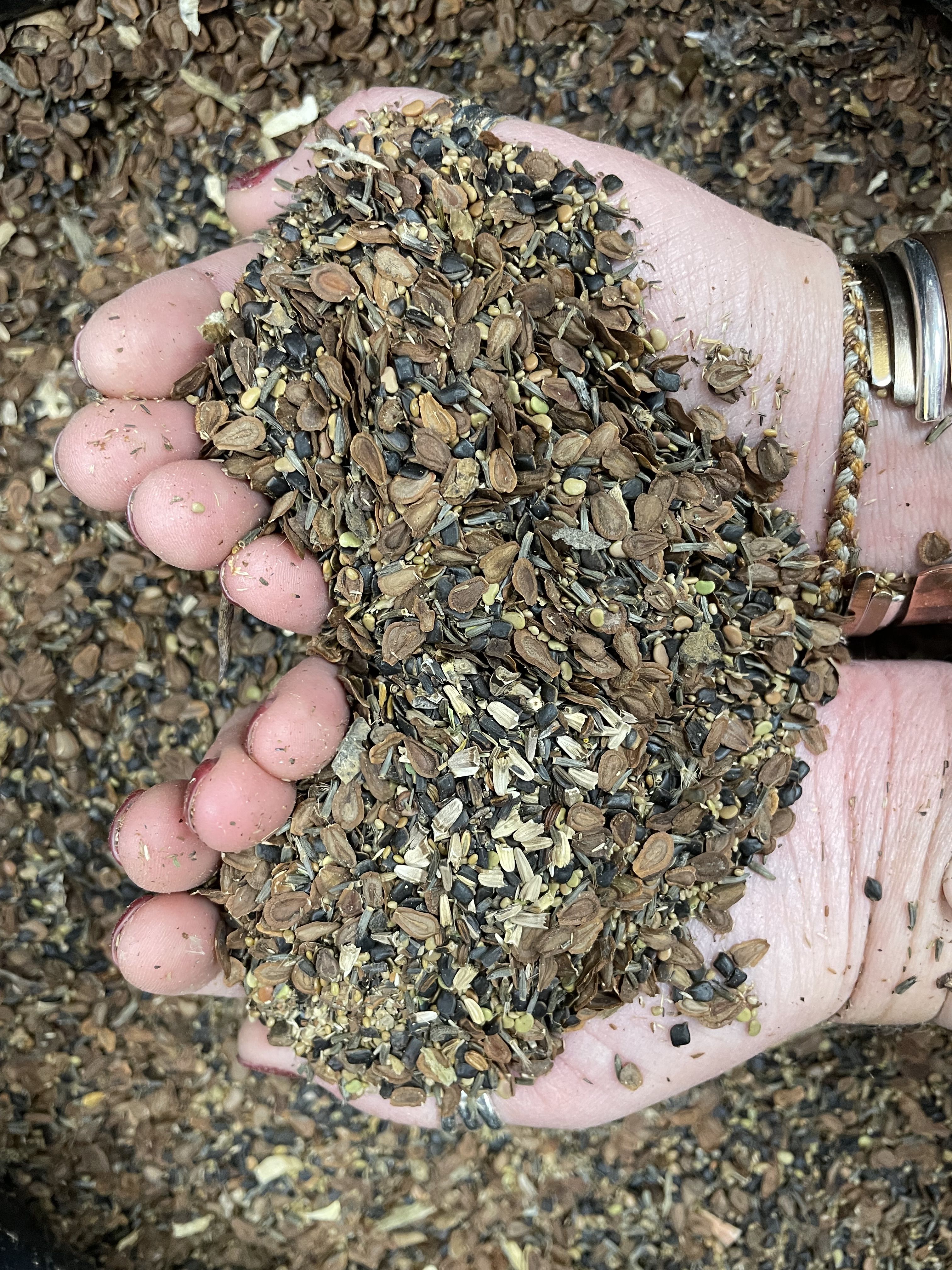
Native seed mix for distribution with the "Meadows for Monarchs" project. Credit: Susan King
Native seed mix for distribution with the "Meadows for Monarchs" project. Credit: Susan King
Entomologist Doug Tallamy argues that we can't afford to lose biodiversity.
“It is plants that generate oxygen and clean water,” he wrote on his website, Homegrown National Park. “It is insect decomposers that drive the nutrient cycles on earth, allowing each new generation of plants and animals to exist. It is pollinators that are essential to the continued existence of 80% of all plants and 90% of all flowering plants, and it is birds and mammals that disperse the seeds of those plants and provide them with pest control services.”
Homegrown National Park is a project he started that empowers individuals to take action, to plant native plants in their yards that are desirable for pollinators. And if enough people do that close enough to each other, that creates a pollinator pathway.
Tallamy came to speak in Granville in December, 2022. His visit inspired the creation of the Licking County Pollinator Pathway. Susan King is the coordinator.
In spring of 2025, the group launched a program called Meadows for Monarchs aimed at providing pollinator habitat by converting ordinary grasses into a space for native plants.
“The idea is that you create these little micro habitats all over the county, including at parks, including at Denison University, including at Otterbein SeniorLife,” King said.
King encourages homeowners to participate in this project. They may have a few pots of native plants on their porch, a full yard of native plants or anything in between. But she also wants to persuade more park and recreation districts to take part.
“It’s also really cost effective. There are lots of areas of publicly owned land that are mowed every week. You convert some of that into pollinator habitat, into these little meadows, you’re only having to mow it once a year.”
She acknowledges, however, that seed mixes are expensive and there is time and effort involved in killing the grass to make way for the native plants.


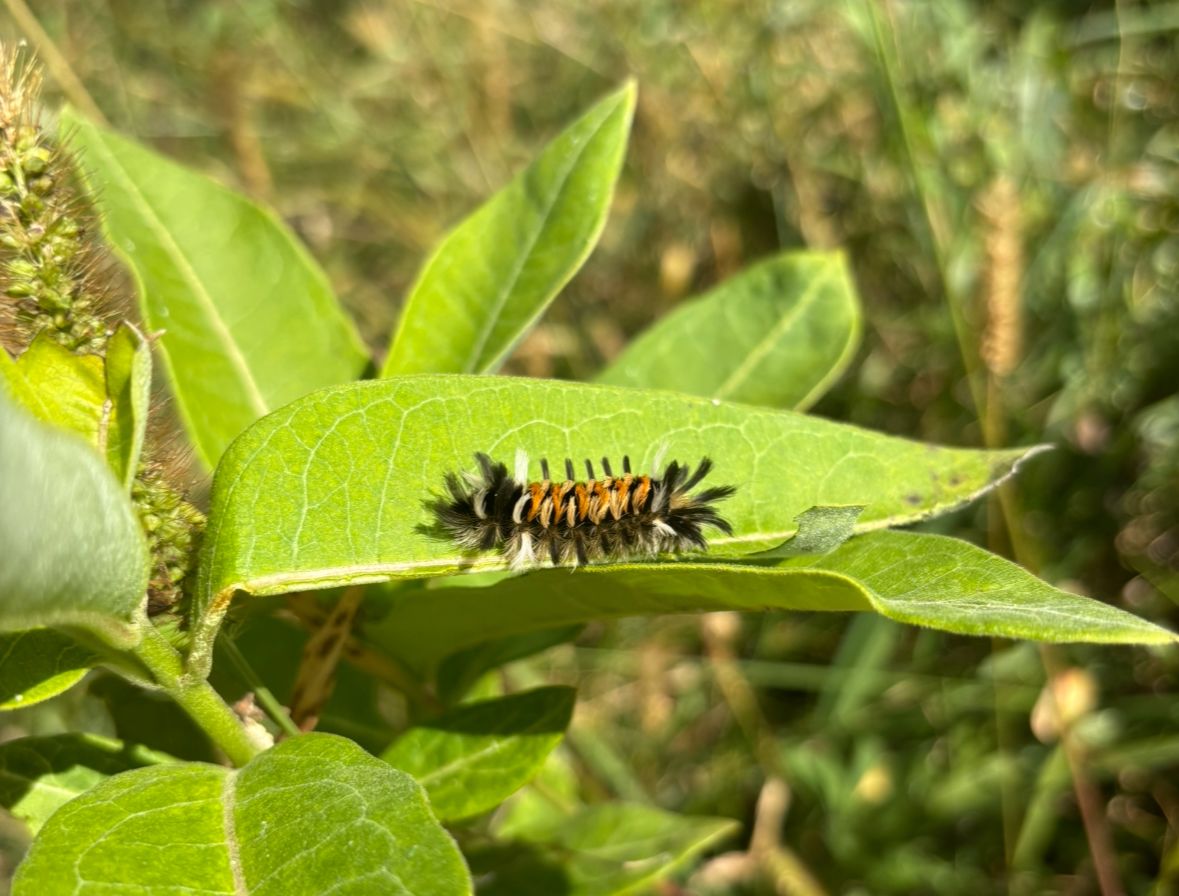
Milkweed Tussock Moth, a caterpillar that only eats milkweed.
Milkweed Tussock Moth, a caterpillar that only eats milkweed.
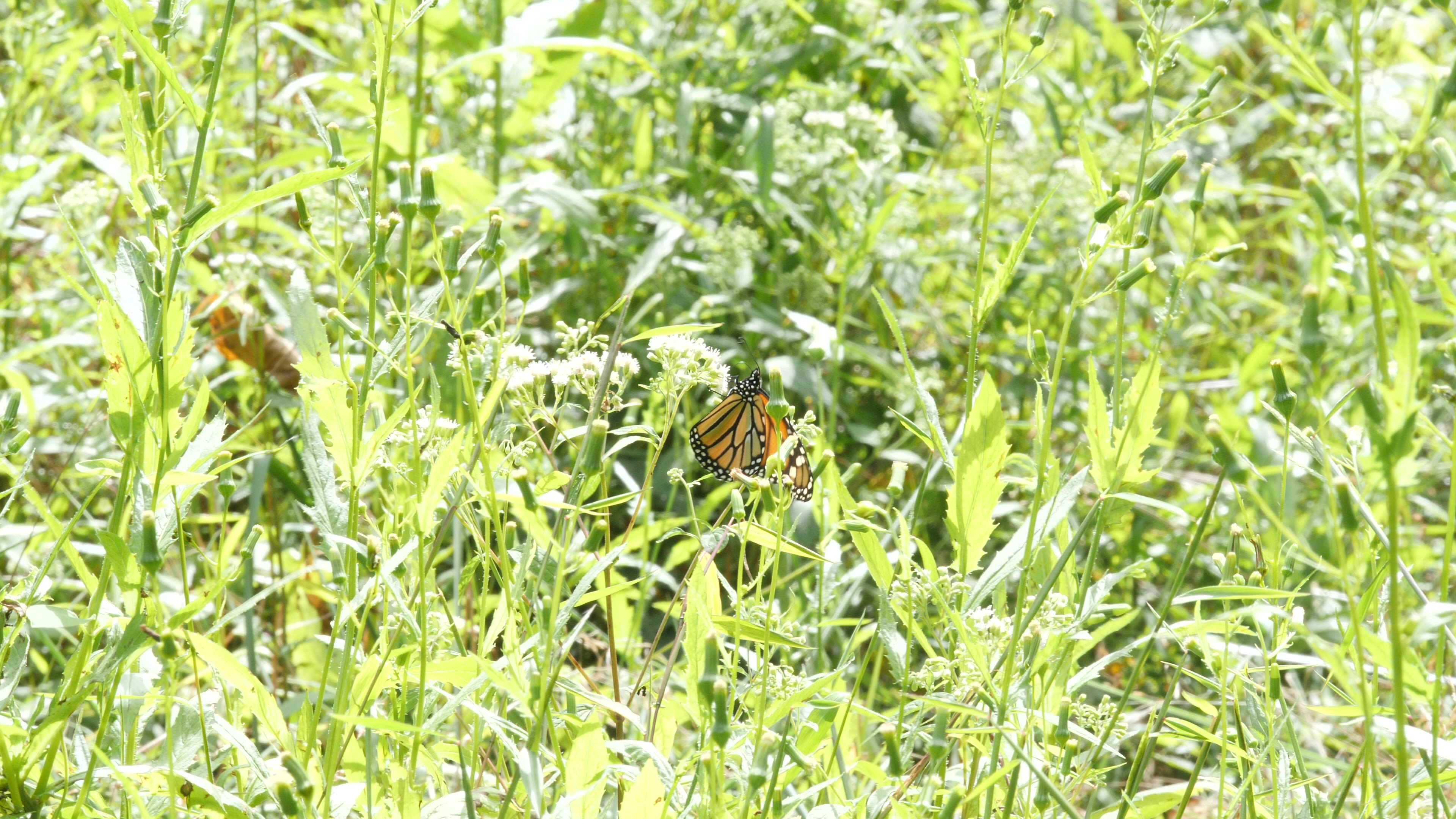
In 2024, the Eastern migratory monarch butterfly population decreased by 59%, according to a report from the World Wildlife Fund. The report explained the main threats to monarchs include decrease of milkweed plants, land use changes and climate change in their breeding sites.
Since 2016, Licking County Soil and Water has participated in a statewide milkweed pod collection run by the Ohio Department of Natural Resources (ODNR) Division of Wildlife and the Ohio Pollinator Habitat Initiative (OPHI).
Community members search for pods in their yards and other public spaces to drop off in the bin. The pods are sent to Ernst Seeds in Meadville, Pennsylvania, where they are converted to milkweed seeds and then transported back to Ohio.
The seeds are then distributed across the state to aid all pollinator populations. But specifically, the monarch butterfly.
Emilee Hardesty, Licking County’s wildlife management consultant at ODNR's Division of Wildlife, explained that the intention is to process the seed so it’s available statewide.
“State properties, landowners, church clubs, park districts, you name it – you could get some milkweed seeds to help not only the monarch butterflies, but all the pollinator populations,” Hardesty said.

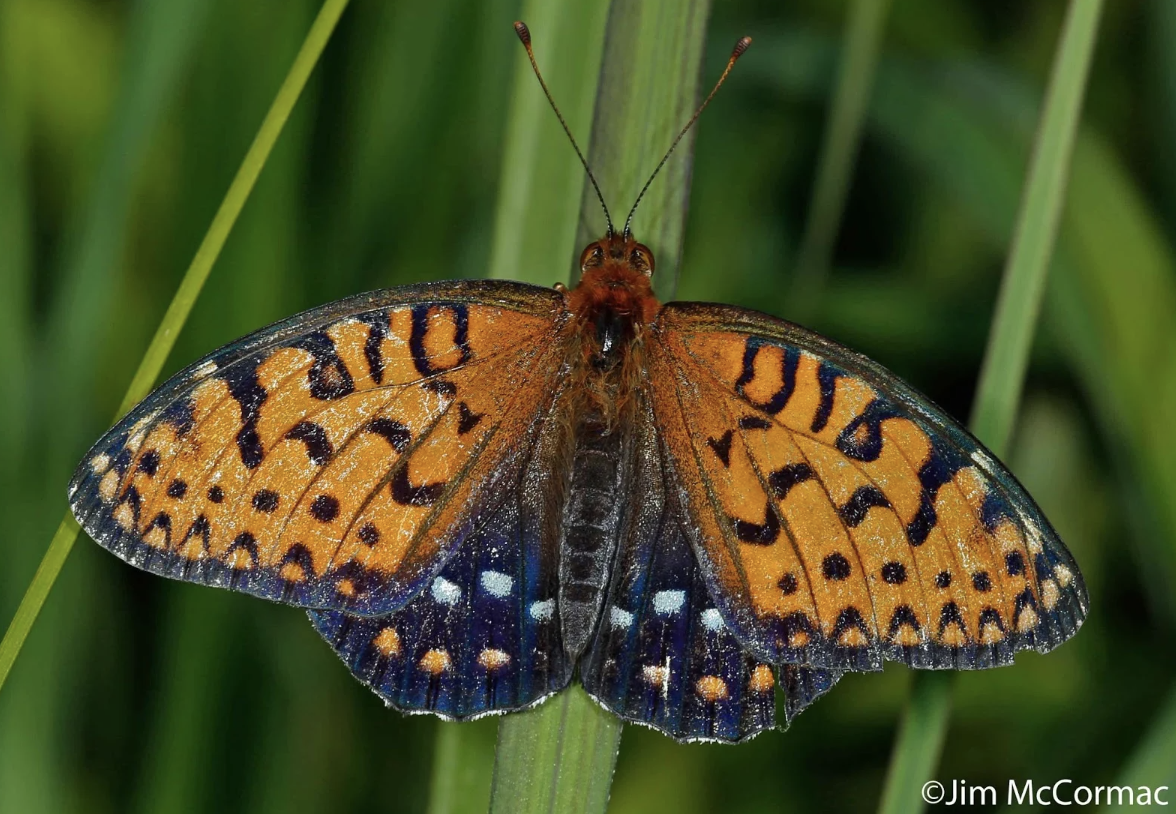

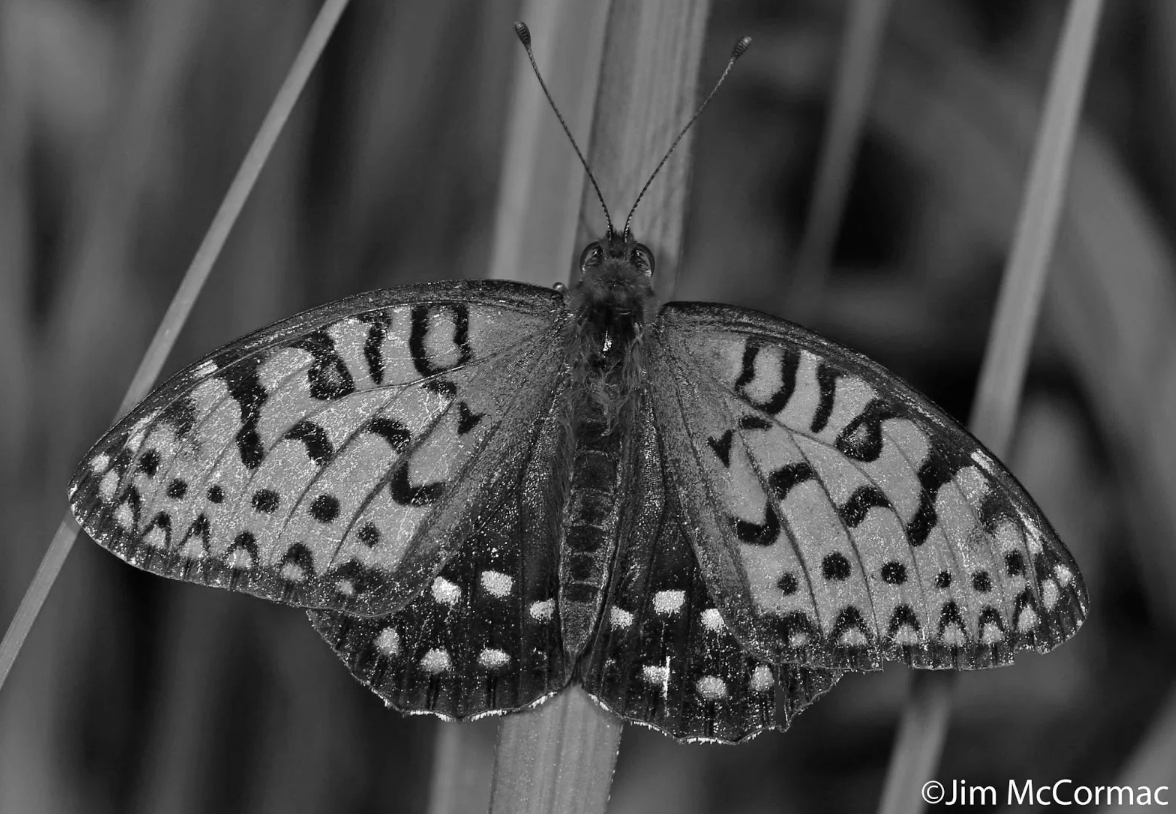
The Regal fritillary butterfly is now extirpated — fully gone — from Ohio.
The Regal fritillary is now extirpated from Ohio, and perhaps as many as 14 other states, according to McCormac. It is a tallgrass prairie species which he was able to see in the Kankakee Sands restoration project in Indiana.
According to McCormac, out of the 1,850 native plants in Ohio, one-third of them are listed by ODNR as endangered, threatened, potentially threatened or extinct, meaning they haven’t been seen in at least 20 years.
“That's why there's so much decline in insects, because we're getting rid of so many of the natives. Now we know better, and we know that all this acreage of non-native flora has really harmed our ecosystem and the animal life that's in it,” McCormac said.

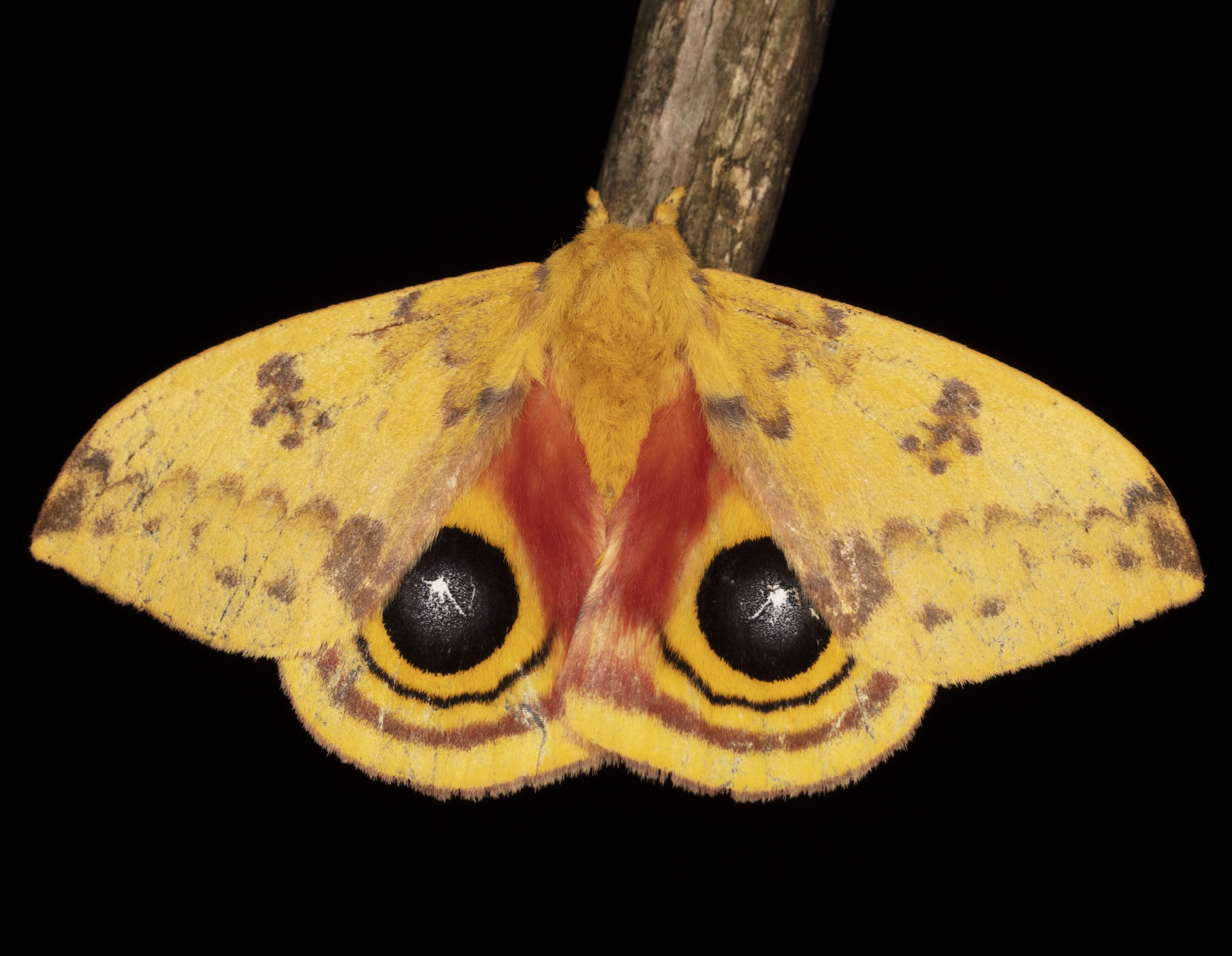
Io moth. Credit: Jim McCormac.
Io moth. Credit: Jim McCormac.

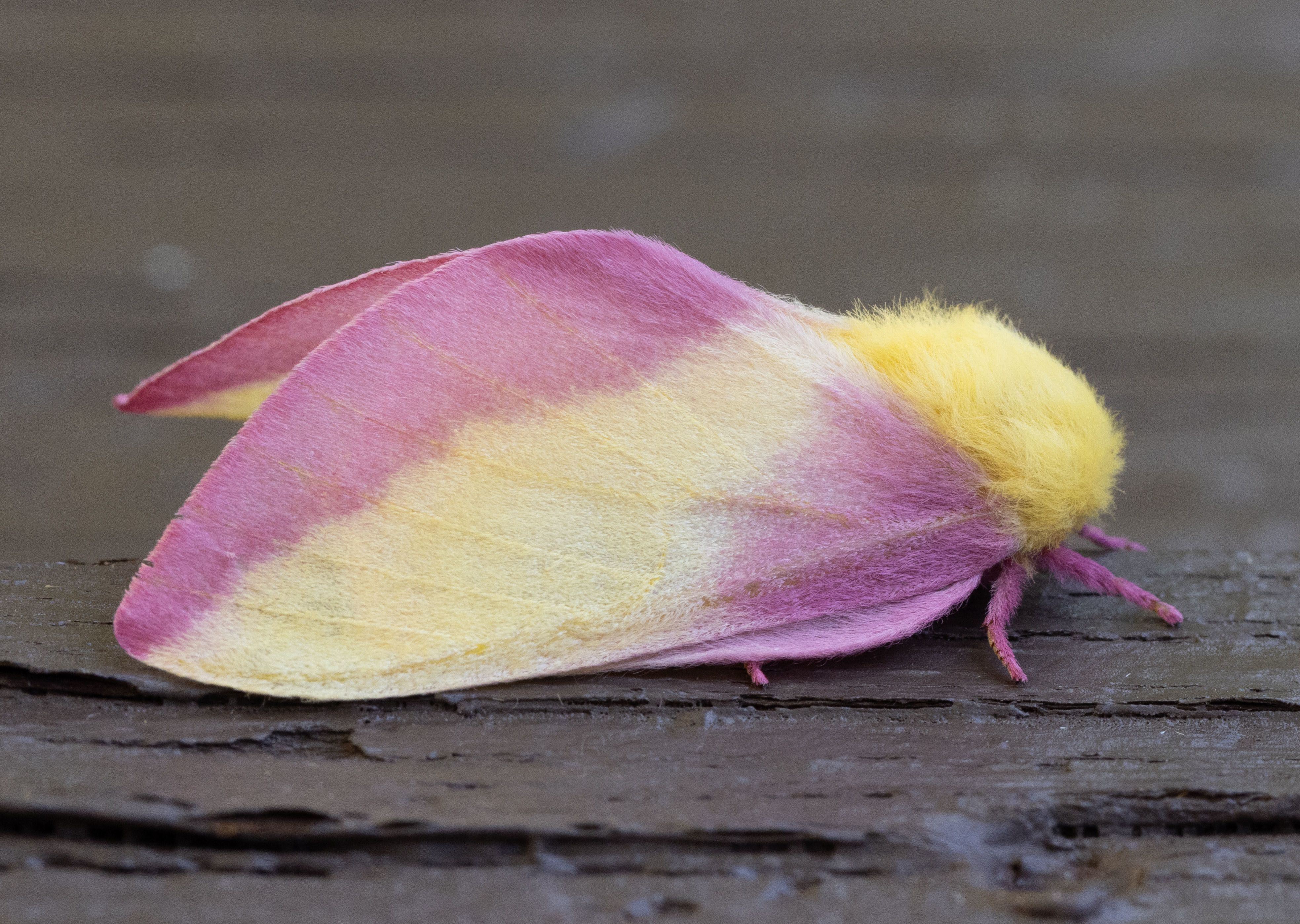
Rosy maple moth. Credit: Jim McCormac.
Rosy maple moth. Credit: Jim McCormac.

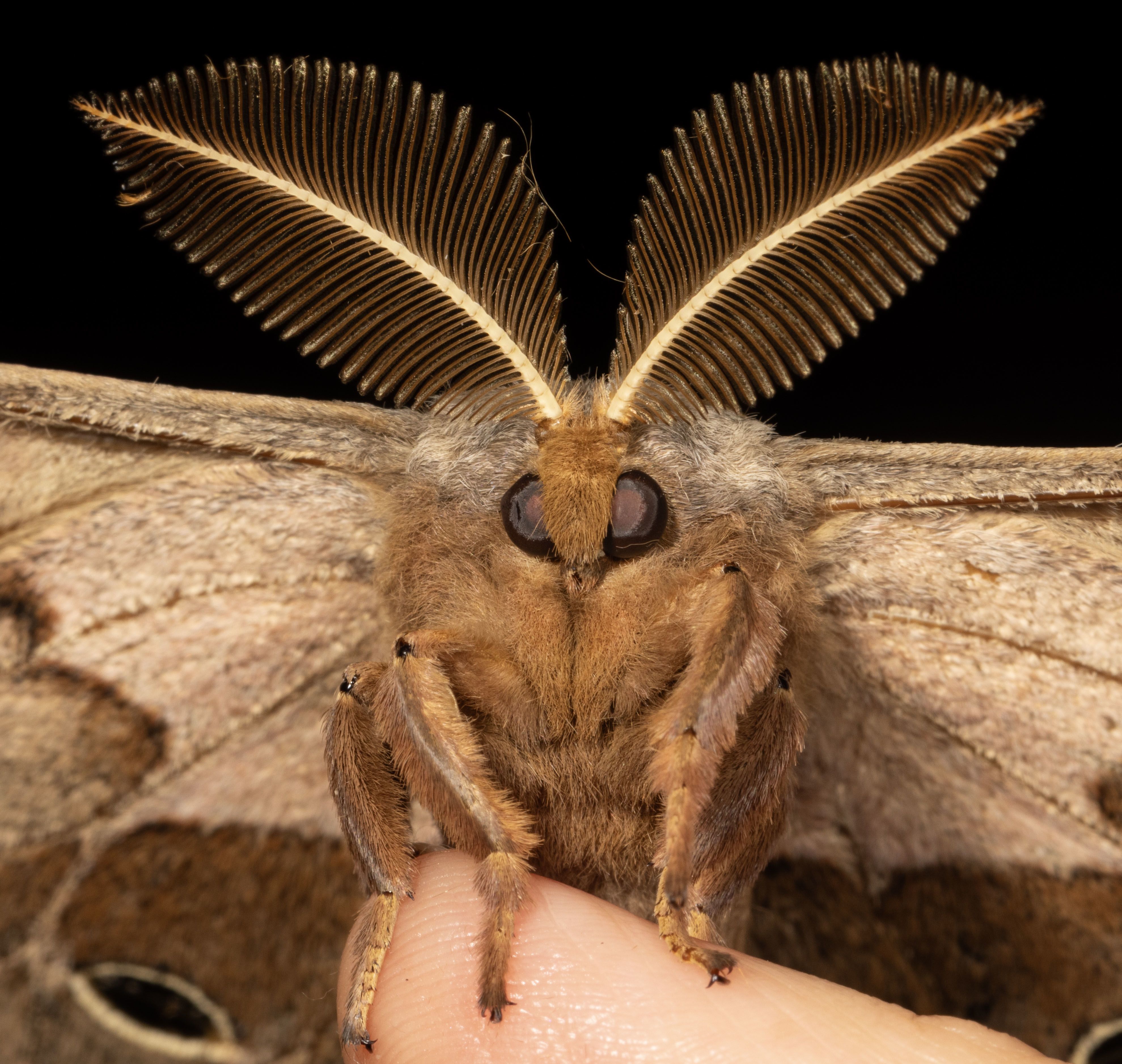
Polyphemus moth. Credit: Jim McCormac.
Polyphemus moth. Credit: Jim McCormac.
These days, McCormac is researching moths in preparation for a book on the subject.
“Butterflies we have a much better grasp on just because they are diurnal, they're much easier to see and identify. With moths, we don't even know how many there are. There's thousands of species in Ohio.”
He explains that caterpillars are the biggest group of herbivores by far, even bigger than deer. This is mostly moth caterpillars. Butterfly caterpillars are only a small percentage of that.
“If it weren’t for moths and their caterpillars converting plant material into a digestible protein for animals, we’d lose all our songbirds, among other things,” McCormac said.

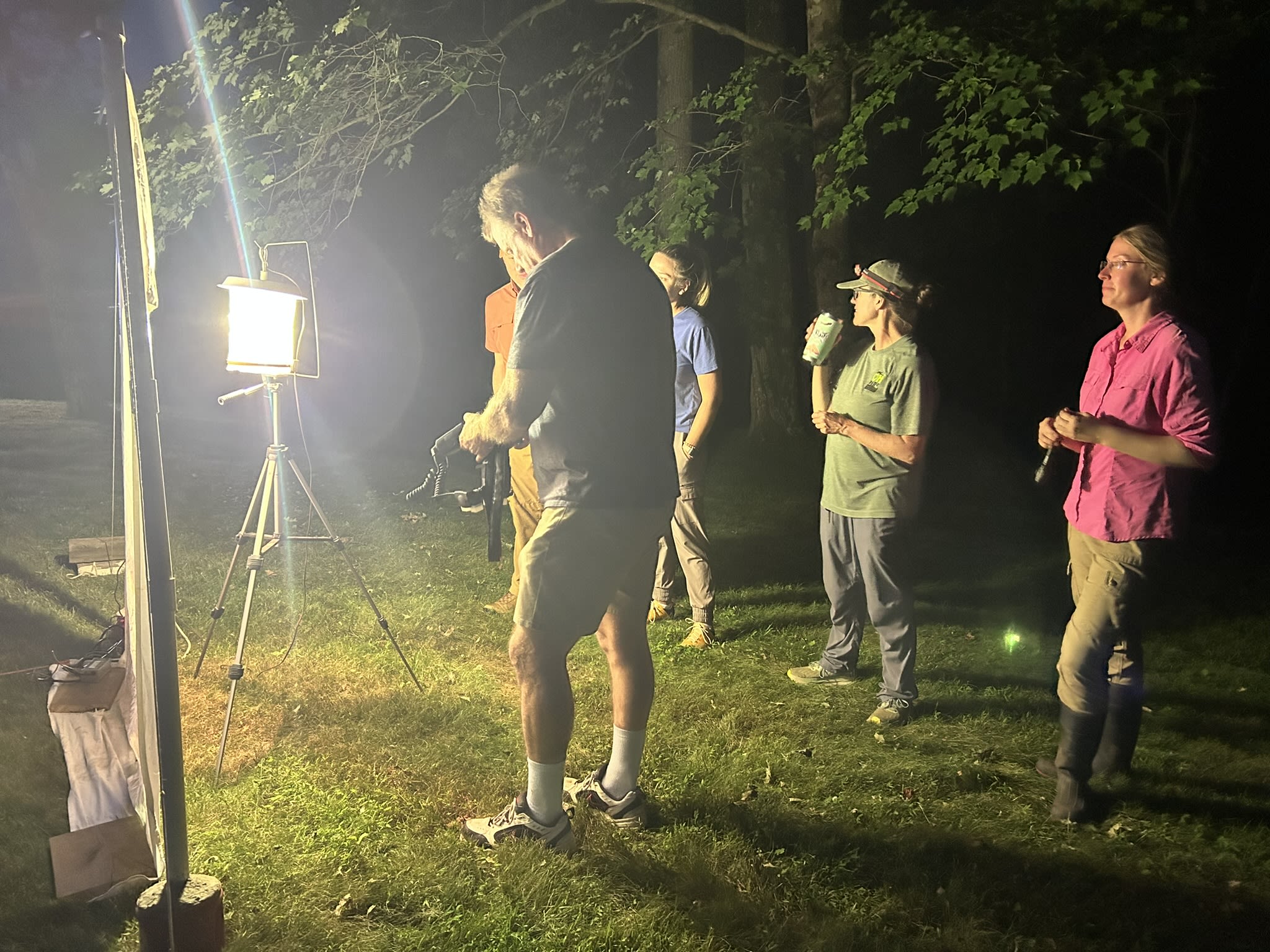
Jim McCormac, front center, photographing moths. Credit: Shauna Weyrauch.
Jim McCormac, front center, photographing moths. Credit: Shauna Weyrauch.
He explained we would likely lose a lot of non-songbirds, which would lead to the loss of predator birds that prey on smaller ones. The effect continues.
“It would be an incredible cascading effect that would be deleterious for everything, including us. We would be doomed without them,” McCormac said.
“It would affect a whole worldview from people down to things that no one's ever heard of. I don't know how a group of organisms can get much more important than that.”
He continued, “That's one of my problems with [humans] is we think we're very separate from all this. I think that's what I see at least, and we're really not, because it all affects us. Those insects go, we go eventually. Those plants go. We go, eventually. I just would like to see people put themselves into that system a little more than we do because it affects us too."
McCormac describes himself as an optimist by nature, but he struggles to be optimistic on this front.
“It almost strikes me as most of the things we do, like planting native plants in our yards are just Band-Aids for something that's a much, much bigger problem that's not going to be solved,” McCormac said.
“But we need to be optimistic. That’s why I work with trying to get people to grow native plants. I want people to do good things, and I want to do 'em too. We can do good.”
King is hopeful for the future, due to the success she has seen in her yard alone.
“What’s beautiful about this movement is that unlike so many other environmental issues, it is something you can do in your own yard and see the benefits directly. You plant milkweed, you're going to get monarchs. You plant mountain mint, you're going to get a dozen species of bees, so you can actually physically see what life your yard supports,” King said.
A few of the many pollinators spotted in King's yard:

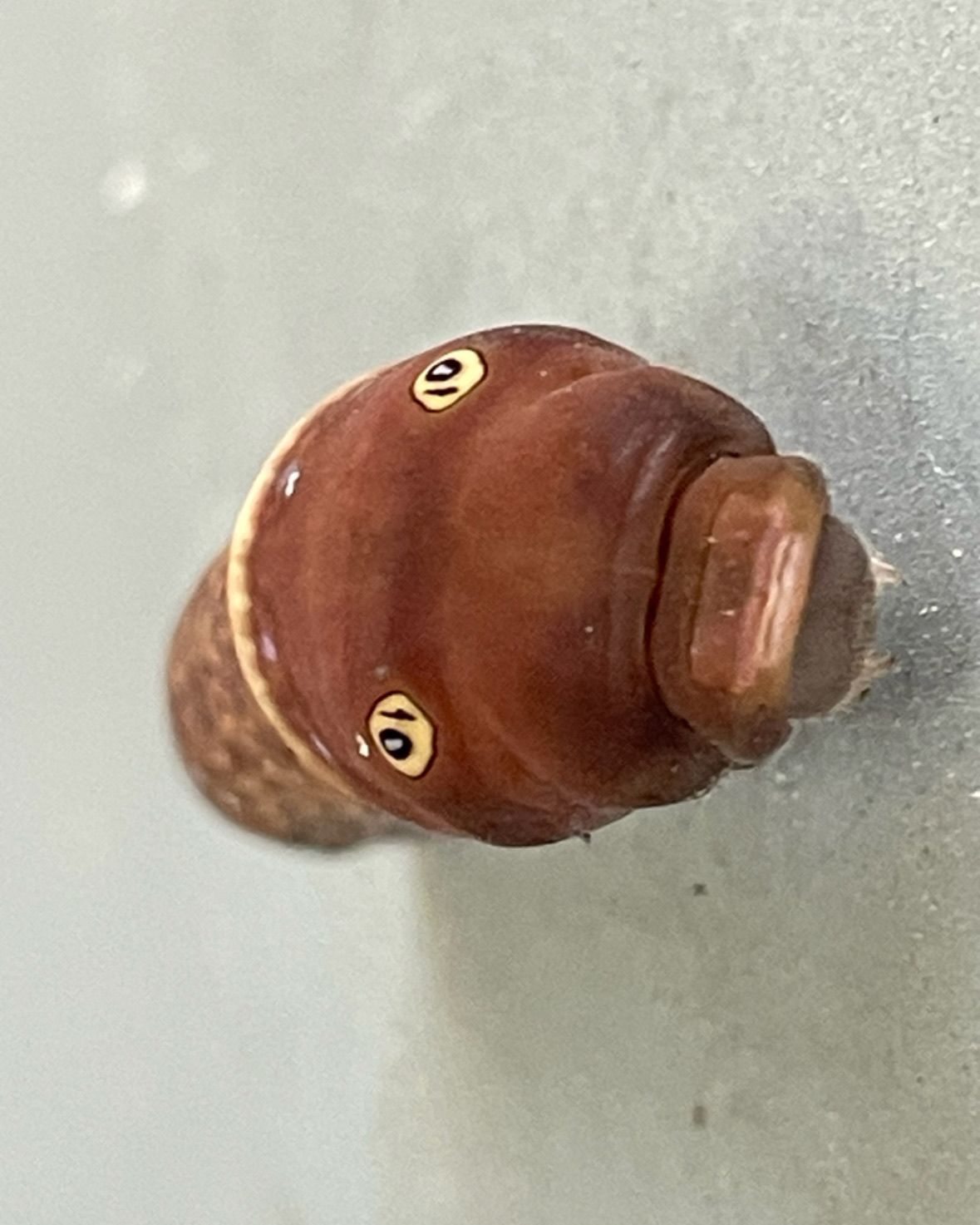
Eastern Tiger Swallowtail Caterpillar

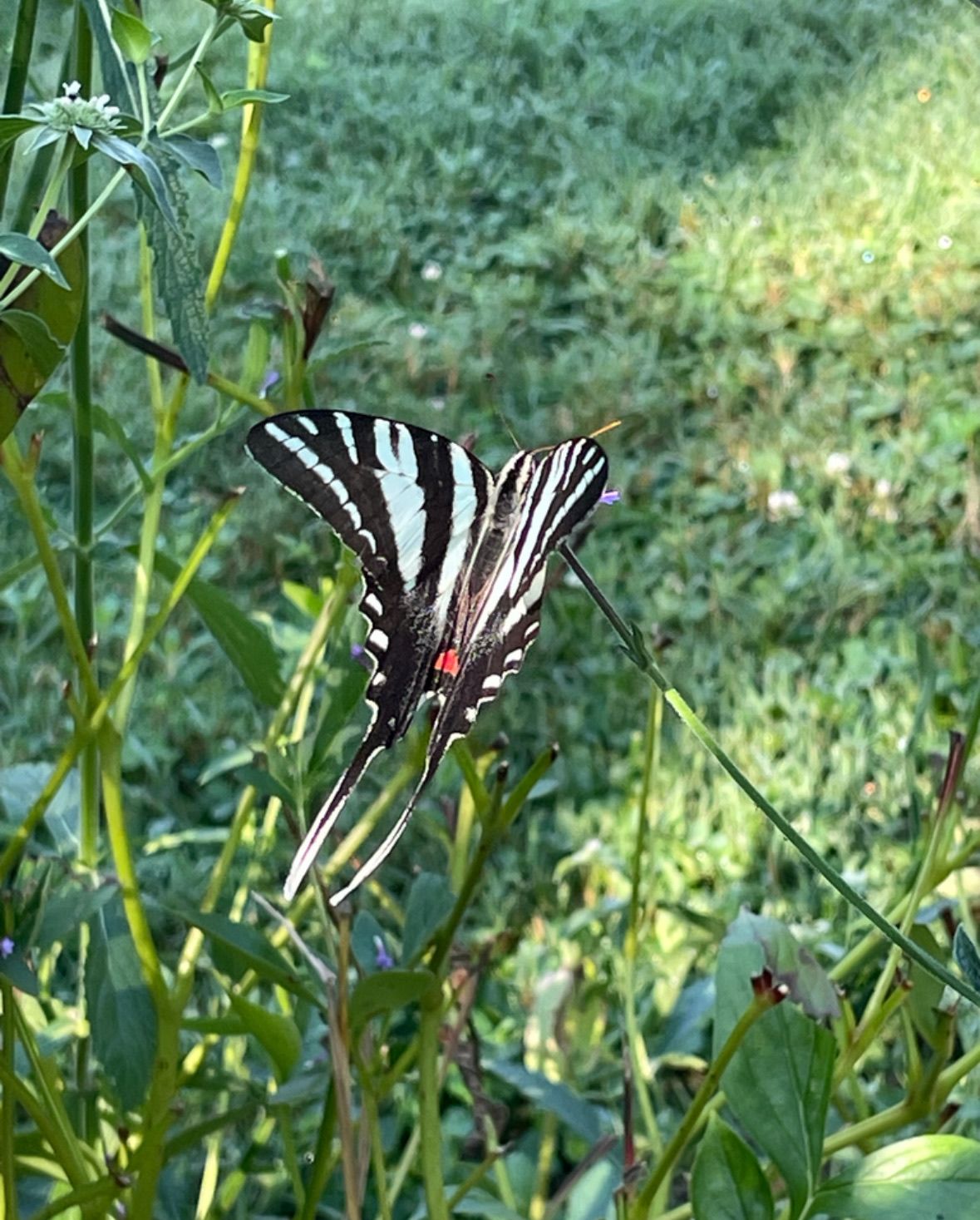
Zebra Swallowtail

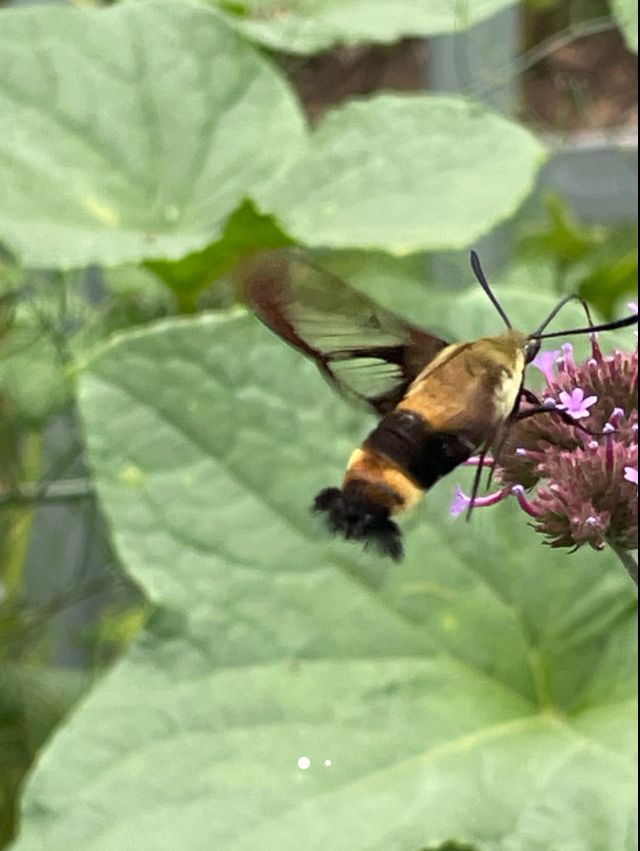
Snowberry Clearwing

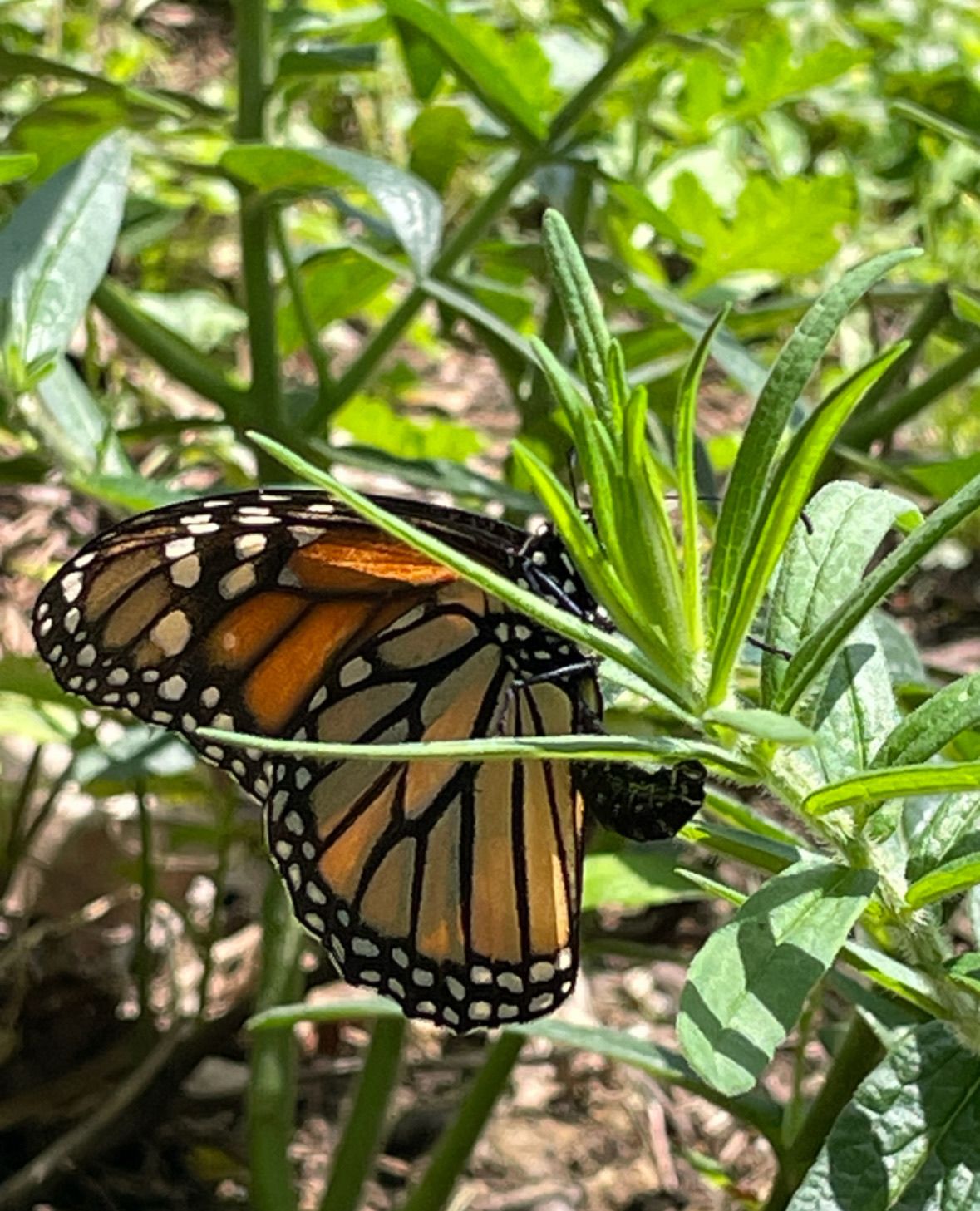
Monarch butterfly
In her garden this past October, King spotted her favorite insect, a snowberry clearwing, a type of day-flying moth that looks like a cross between a bumblebee and a hummingbird. She regularly sees fritillaries, monarchs, swallowtails and more.
She points to a different type of fritillary perched on an aster.
“See, if you plant it, they will find it.”
 Built with Shorthand