
Maple it up
Dawes Arboretum's 60th annual Maple Syrup Day

What’s that smell in the air? Maple syrup.
The scent of maple syrup filled the air at Dawes Arboretum from noon to 4 p.m. Feb. 22 on Jacksontown Road in Newark during its 60th annual Dawes Maple Syrup Day, attracting nearly 500 people, including children and adults, curious visitors, Girl Scouts, families, friends and dogs.

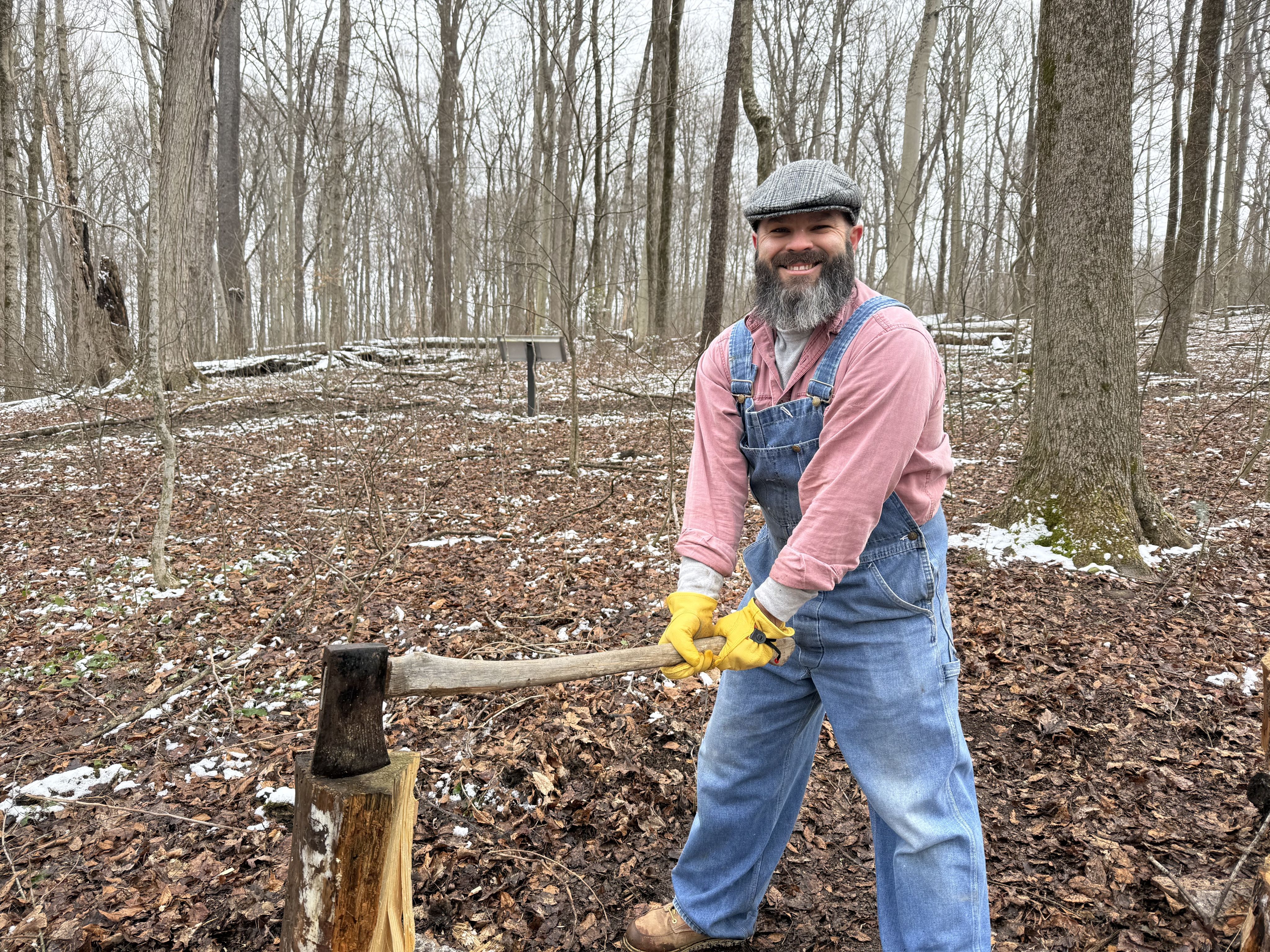
Photo by Donna Chang
Photo by Donna Chang
Peter Lowe, 41 from Dublin, Ohio
Lowe, an employee at the arboretum was dressed in a period costume reflecting the attire worn by a worker on the Dawes family property in the 1920s.

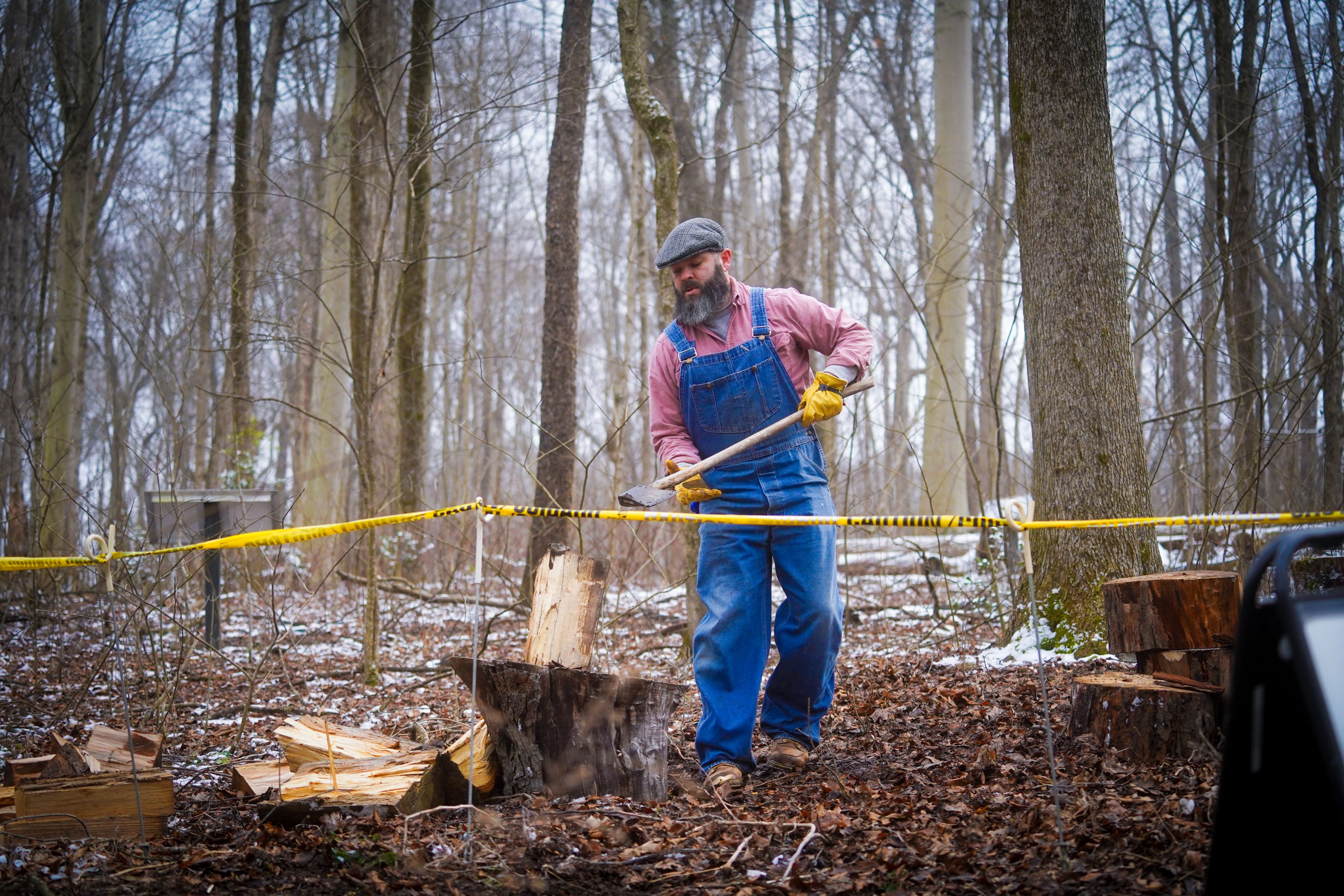
Photo by Grant Hunter
Photo by Grant Hunter
“It’s one of those unique positions where I get to teach people about what I do for a living,” he said. “I’m the garden programs manager at the arboretum, and I teach garden classes on horticulture and plants.”
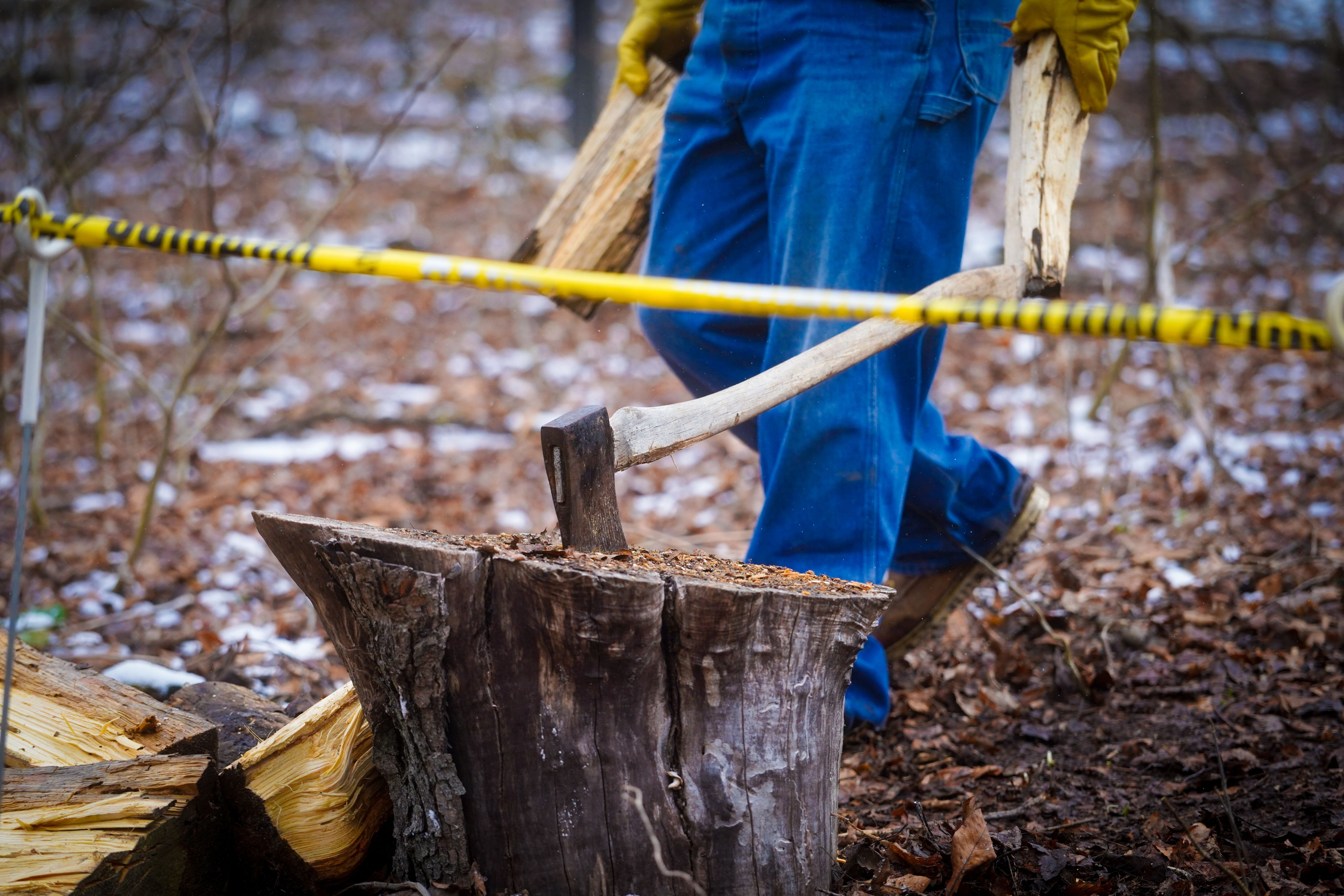
Photo by Grant Hunter
Photo by Grant Hunter
The costumes are coordinated by the arboretum’s historian using photographs from the archives, said Beth Spieles, the learning and engagement educator and interpretive coordinator at Dawes Arboretum.

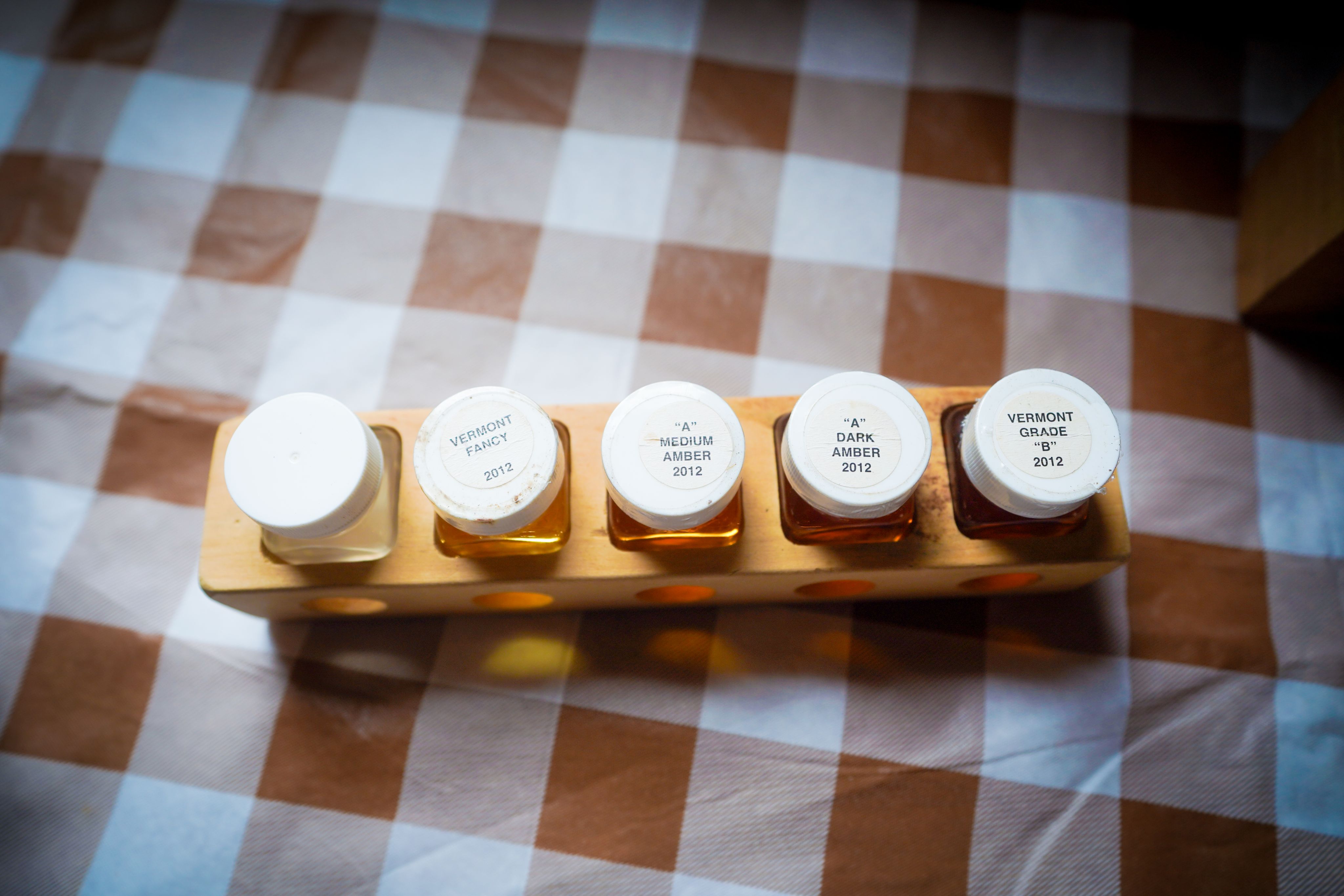
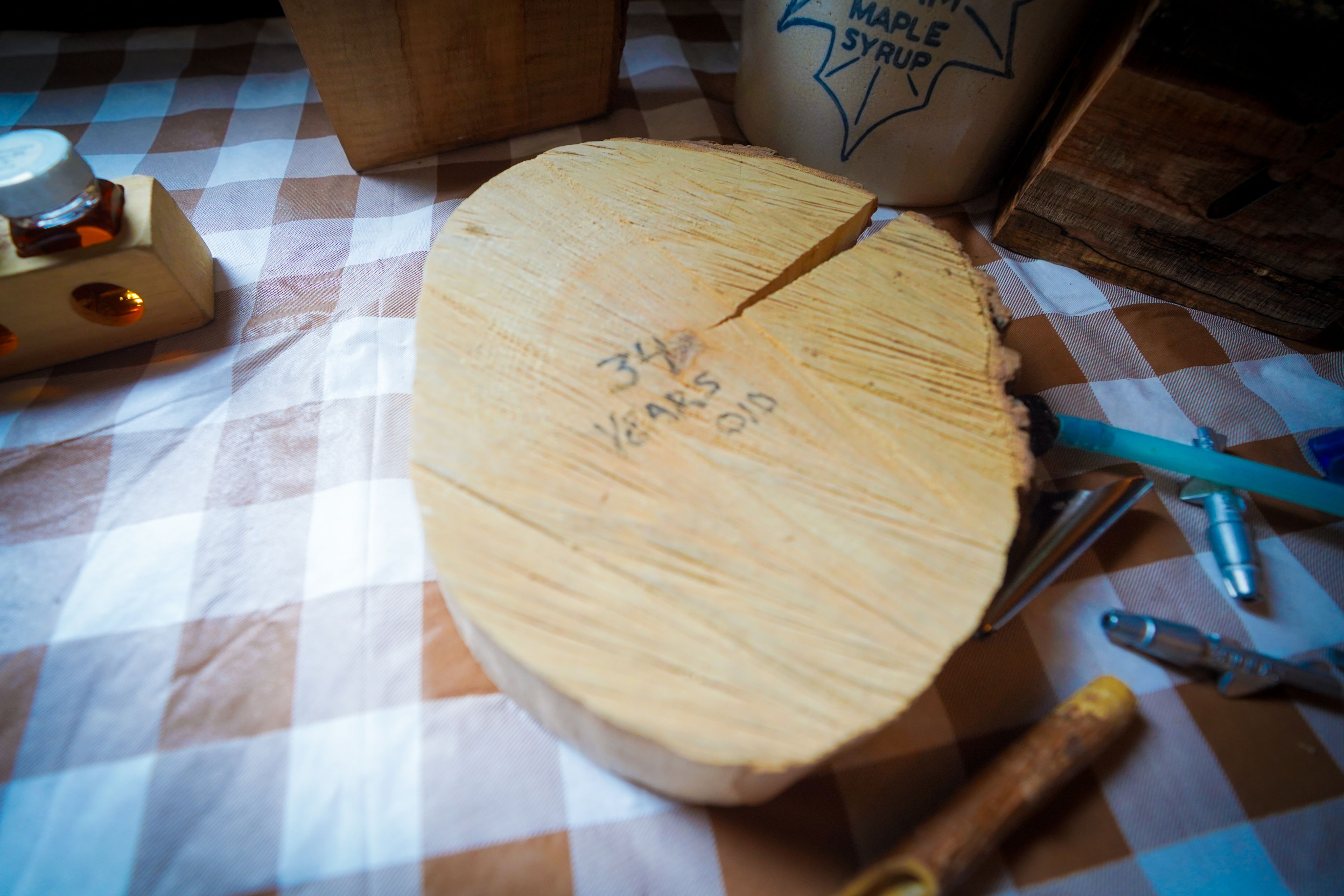
The event allows visitors to learn about maple trees, the history of maple syrup production and the surrounding nature in an area where syrup has been made since 1919.
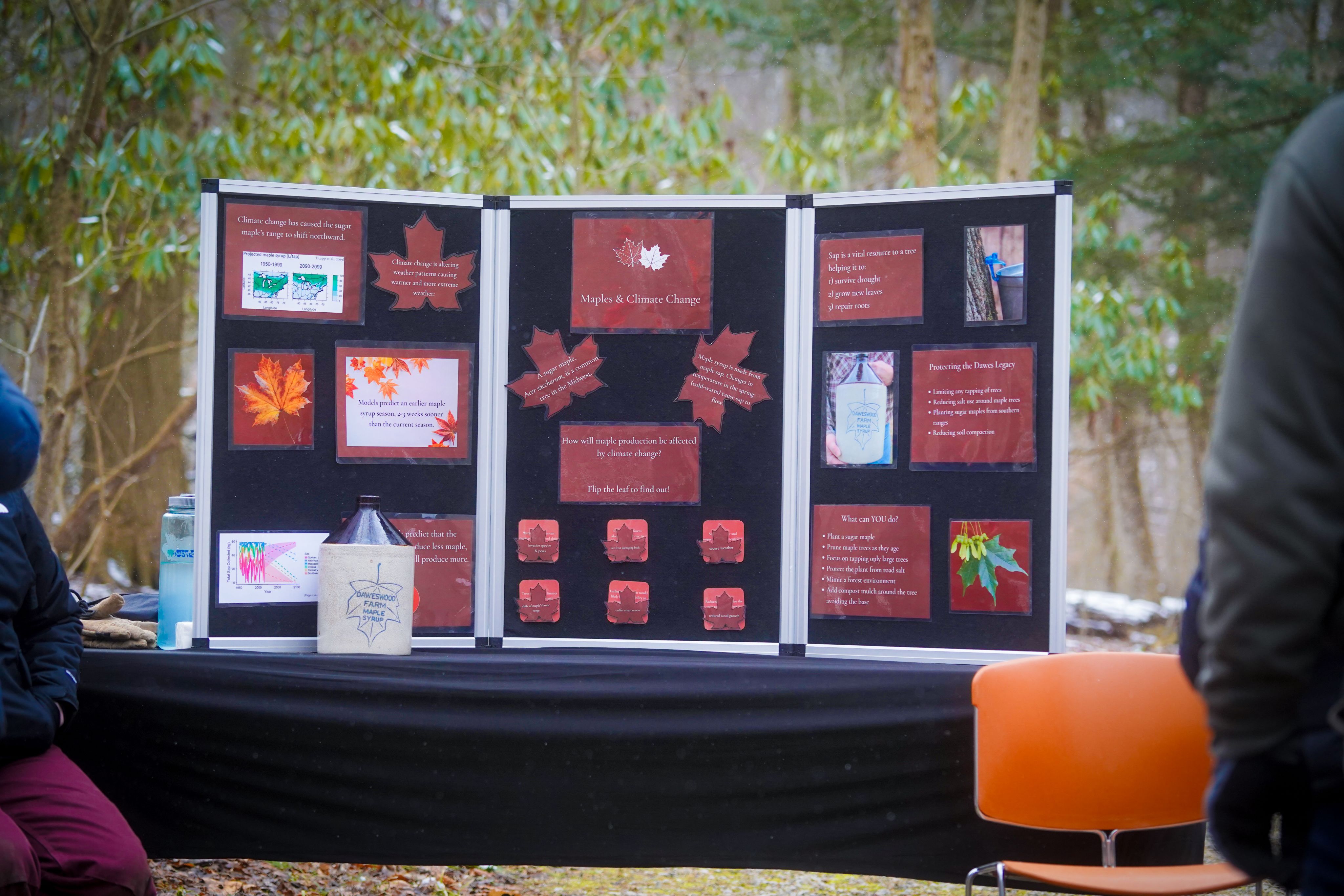
Photo by Grant Hunter
Photo by Grant Hunter
Visitors got to see a couple of tapped sugar maple trees and tasted the sap and syrup made on the spot by volunteers Tom and Wendy Miller, who have their own maple trees and make their own maple syrup in Granville.
“We turn mud season into syrup season,” Wendy said on Sunday.
Maple syrup-making is quite an intensive process, requiring lots of passion and sap—about 40 to 50 gallons of sap for 1 gallon of syrup, said Nancy Gregory, environmental educator at the Dawes Arboretum.
“When the sap comes out, it tastes like water… Nothing is added to make it maple syrup. Actually, things are taken away. Some of the water needs to be evaporated off,” Gregory said. “All that evaporation going on and then you do it again and again and again, and eventually you’ve boiled down the sap… We bring it to about 66% sugar content, and that’s what makes maple syrup.”
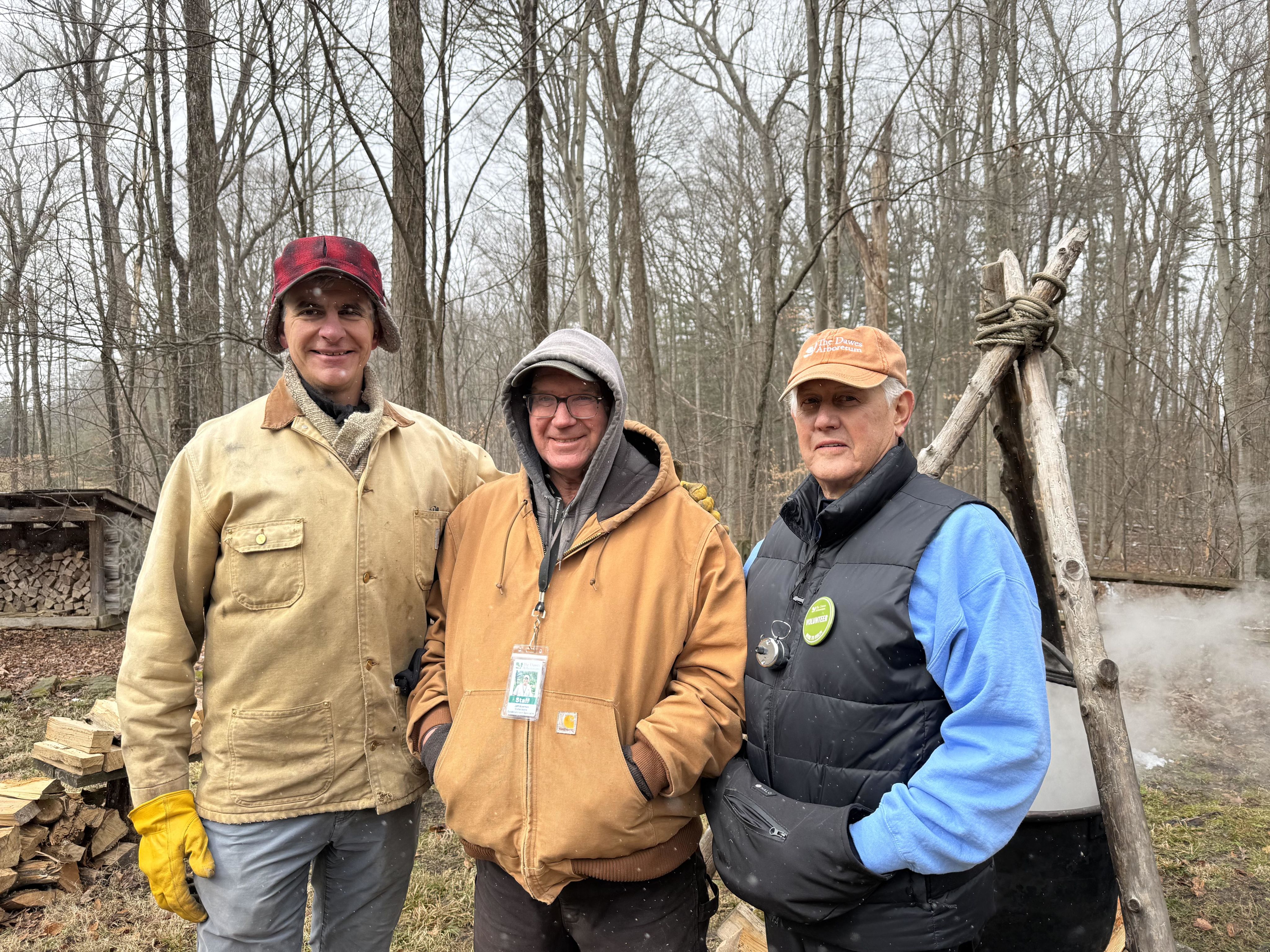
Photo by Donna Chang
Photo by Donna Chang
Tom Miller (left), Jeff Bowen (center) and Jim Morehead (right)
“We have 50 maple trees at home, and we make maple syrup every year this time. So we brought out sap to boil down and make syrup at this event. Maple syrup is really good for making granola or protein energy bites, and it’s really good with a little bit of bourbon,” Miller said.
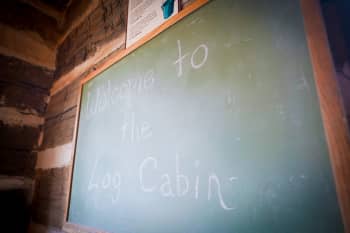
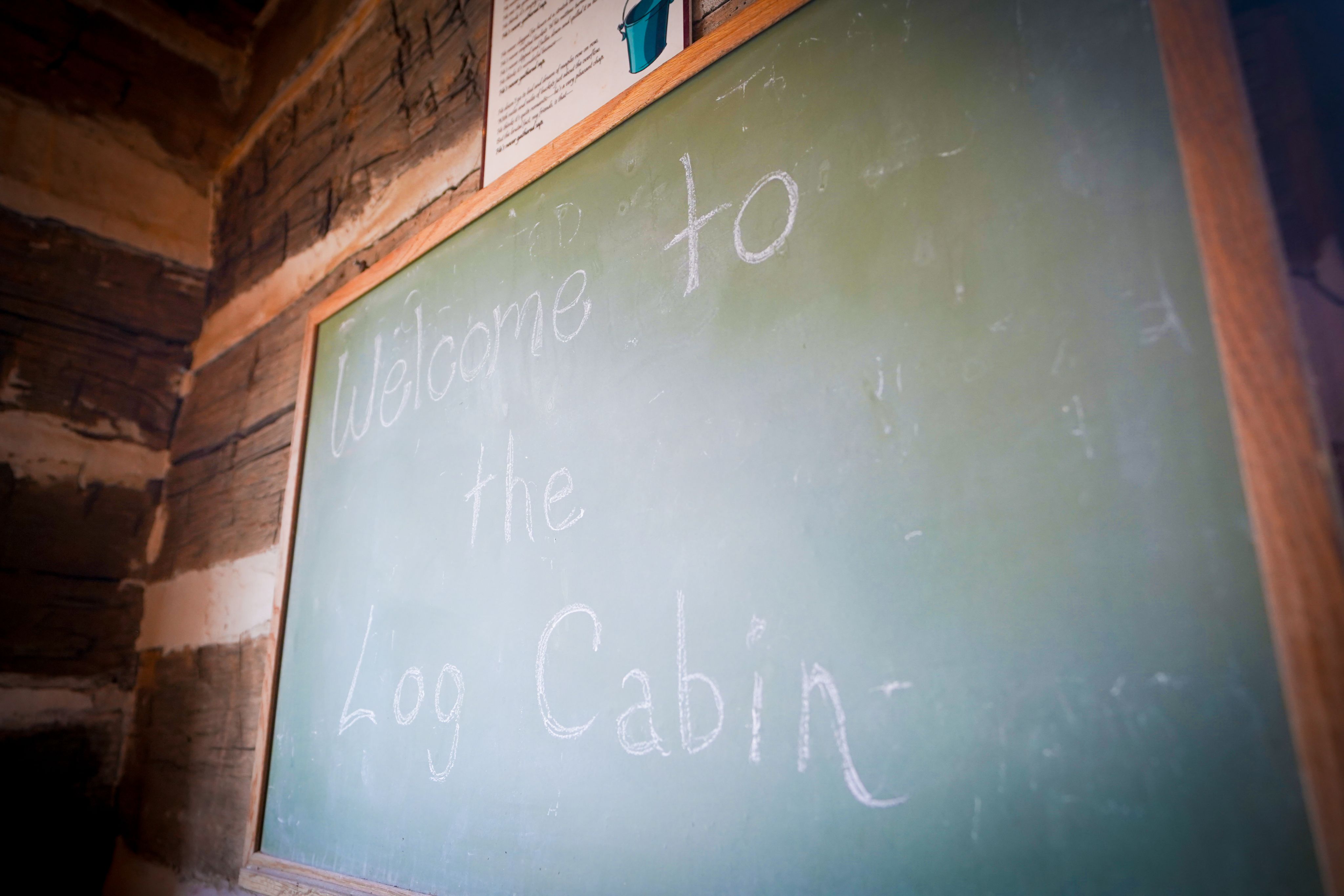
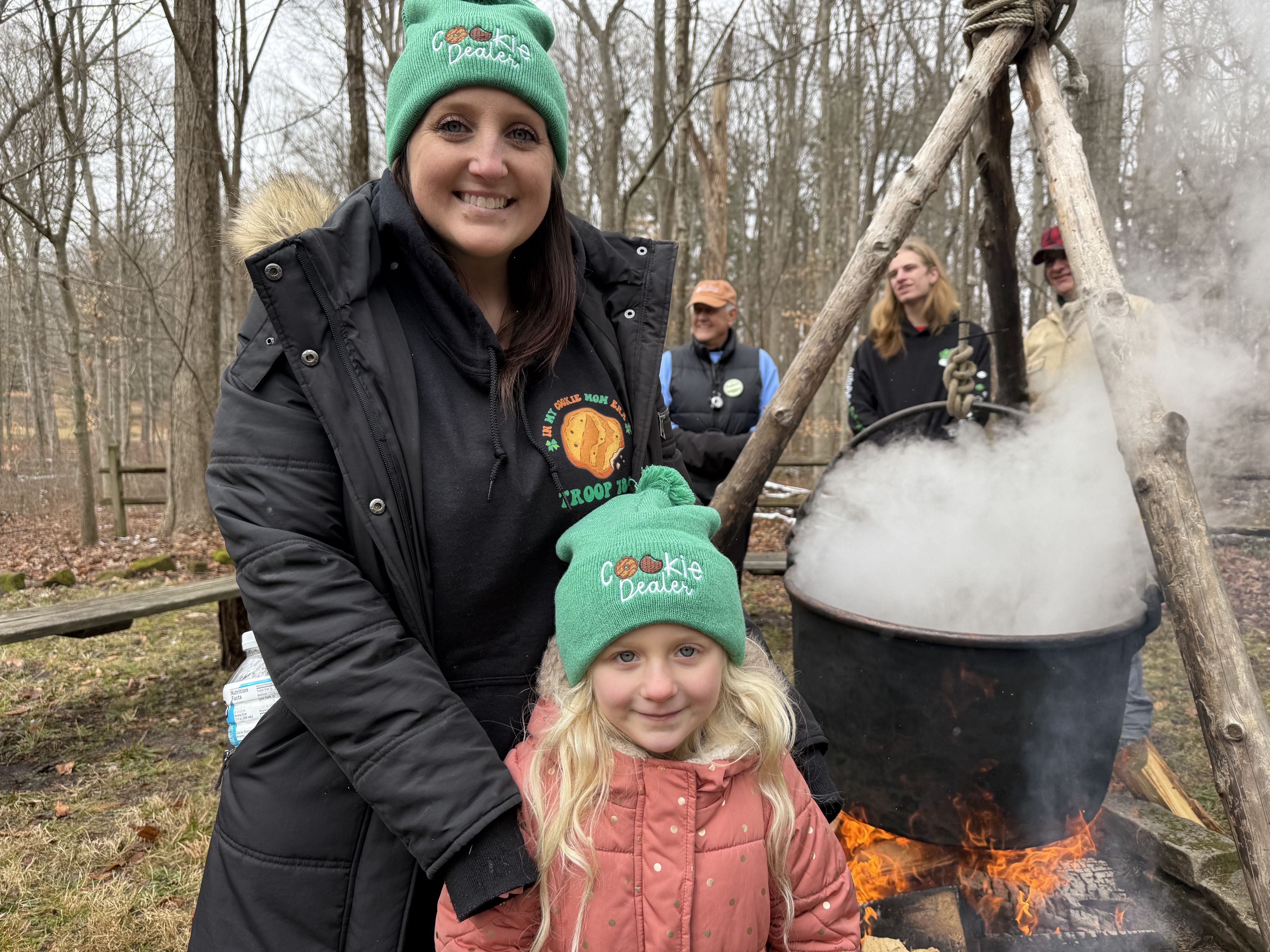
Photo by Donna Chang
Photo by Donna Chang
Sierra Smith (left) and Riot Smith (right), from Heath
“The maple syrup day was an event listed for girl scouts,” Sierra Smith said. She finds value in having the girls out here to learn.
Riot’s favorite thing she saw was the leaves.
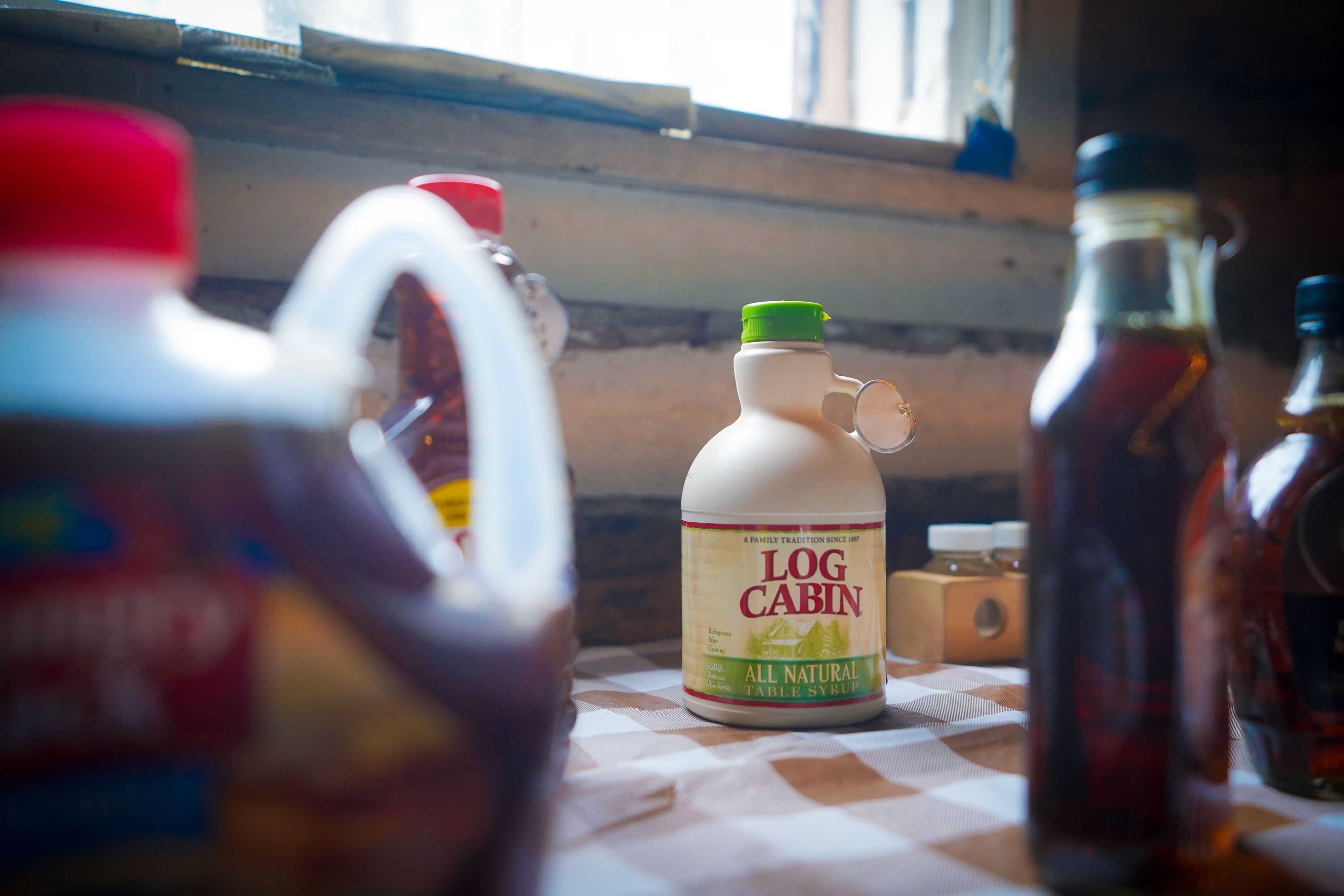
Photo by Grant Hunter
Photo by Grant Hunter
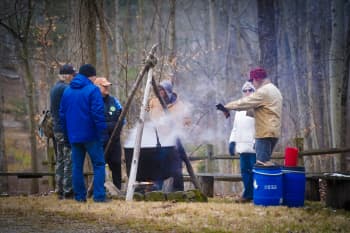
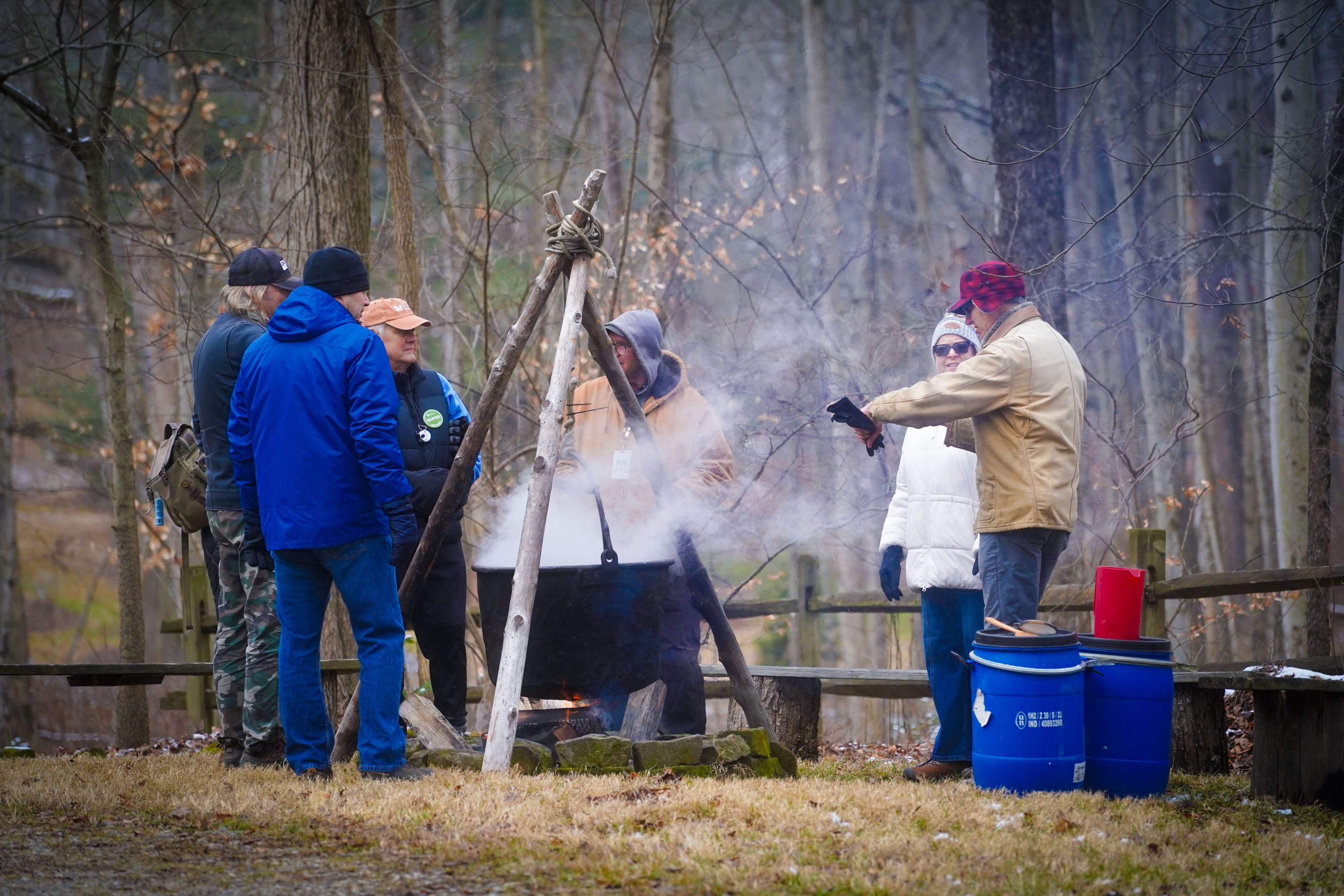
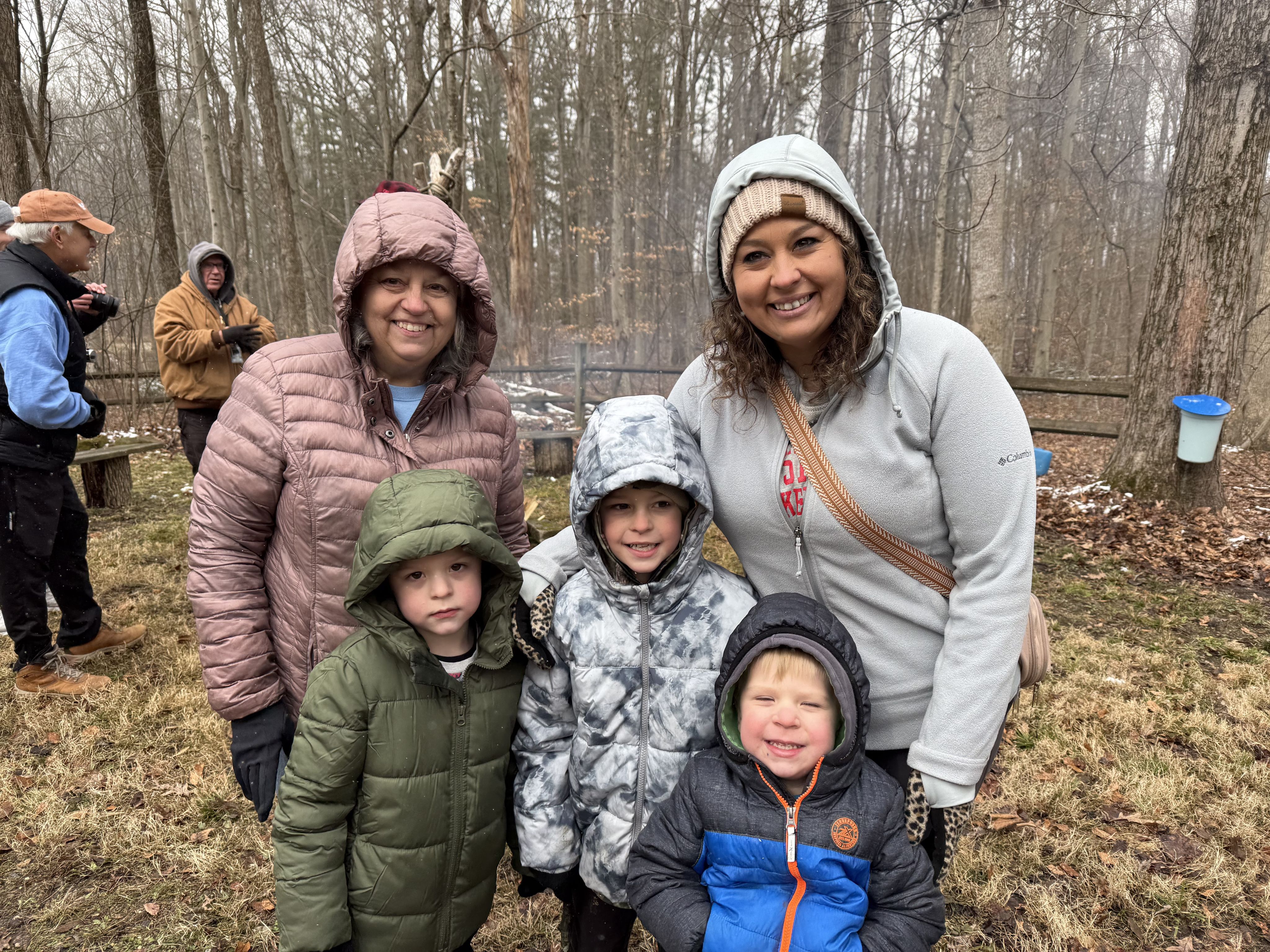
Photo by Donna Chang
Photo by Donna Chang
From left to right: Sheila Sedlak, Weston Bott, Bentley Bott, Elizabeth Bott and Braxton Bott, from Zanesville.
“It’s educational for them,” Sedlak said. “I wanted them to learn where maple syrup comes from. It’s important for kids to understand that it doesn’t just come from a bottle in a store. You have to start somewhere to get to the finished product.”
Braxton, 3: “[The sap] tasted like strawberries.”
Bentley, 7, found a stick and will bring it home. The highlight of the day was the bird map he spotted along the trail.
Weston, 4, will not come again next year because he did not enjoy the cold.
The arboretum no longer uses its own sap to produce syrup, pausing the practice in 2018 due to declining tree health. Even so, Dawes continues to hold demonstrations by volunteers. Through various activities, visitors can still explore the tradition of maple syrup production upheld by Indigenous people, pioneers and the founding Dawes family.
The founders of the arboretum, Beman and Bertie Dawes, were conservationists who purchased the property and founded Dawes Arboretum in 1929 to research and plant trees, reflecting their concern about deforestation. In 1919, the family began extracting maple syrup from sugar maple trees, which they gave as gifts to friends and relatives and did not sell commercially, Spieles said.
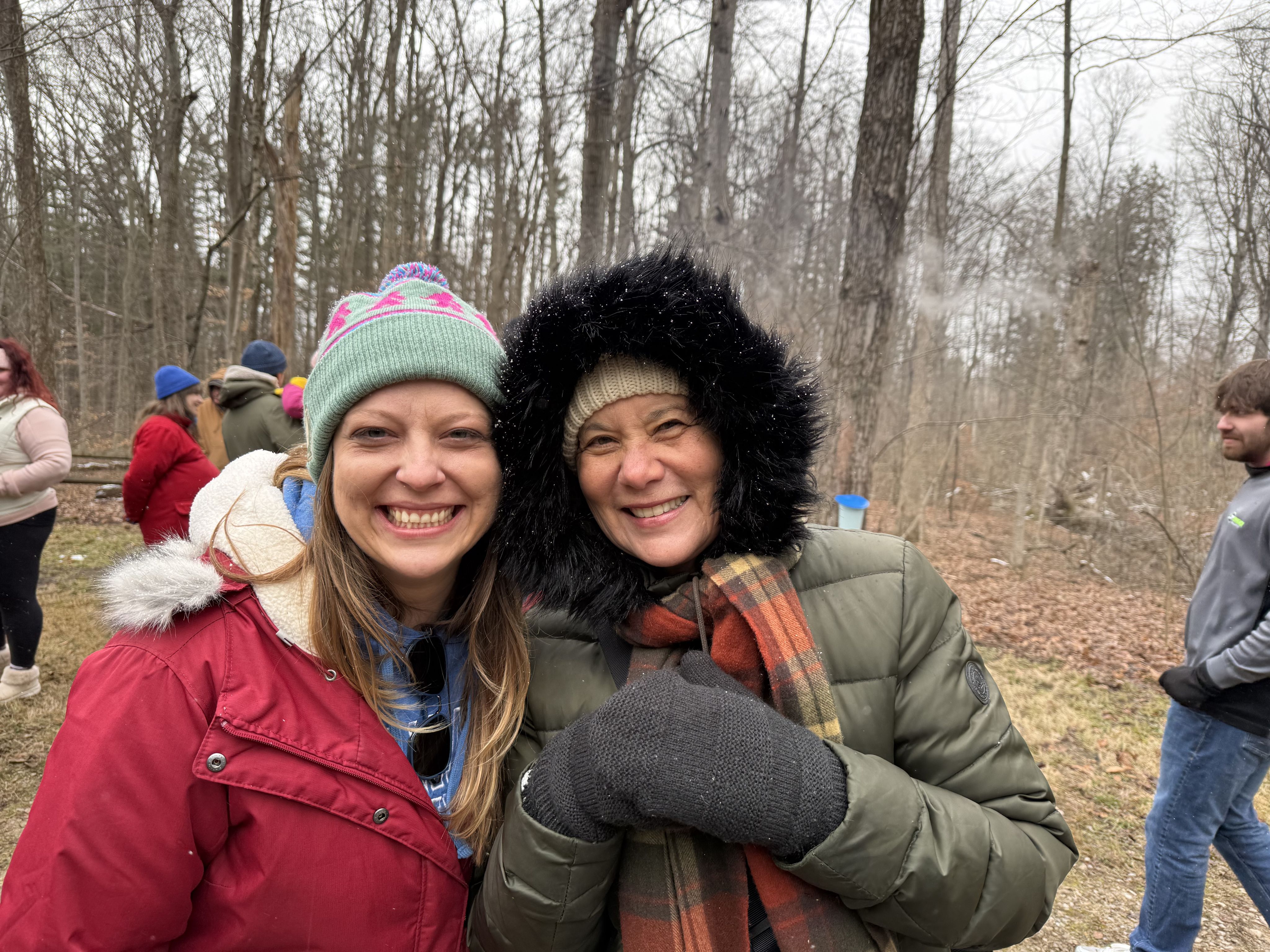
Photo by Donna Chang
Photo by Donna Chang
Kayla Gibbson (left) and Sanda Gibbson (right)
“When the Dawes family was making maple syrup, they gifted it to their friends and employees, and that is a beautiful gesture, something so close to nature,” Sanda Gibbson said.
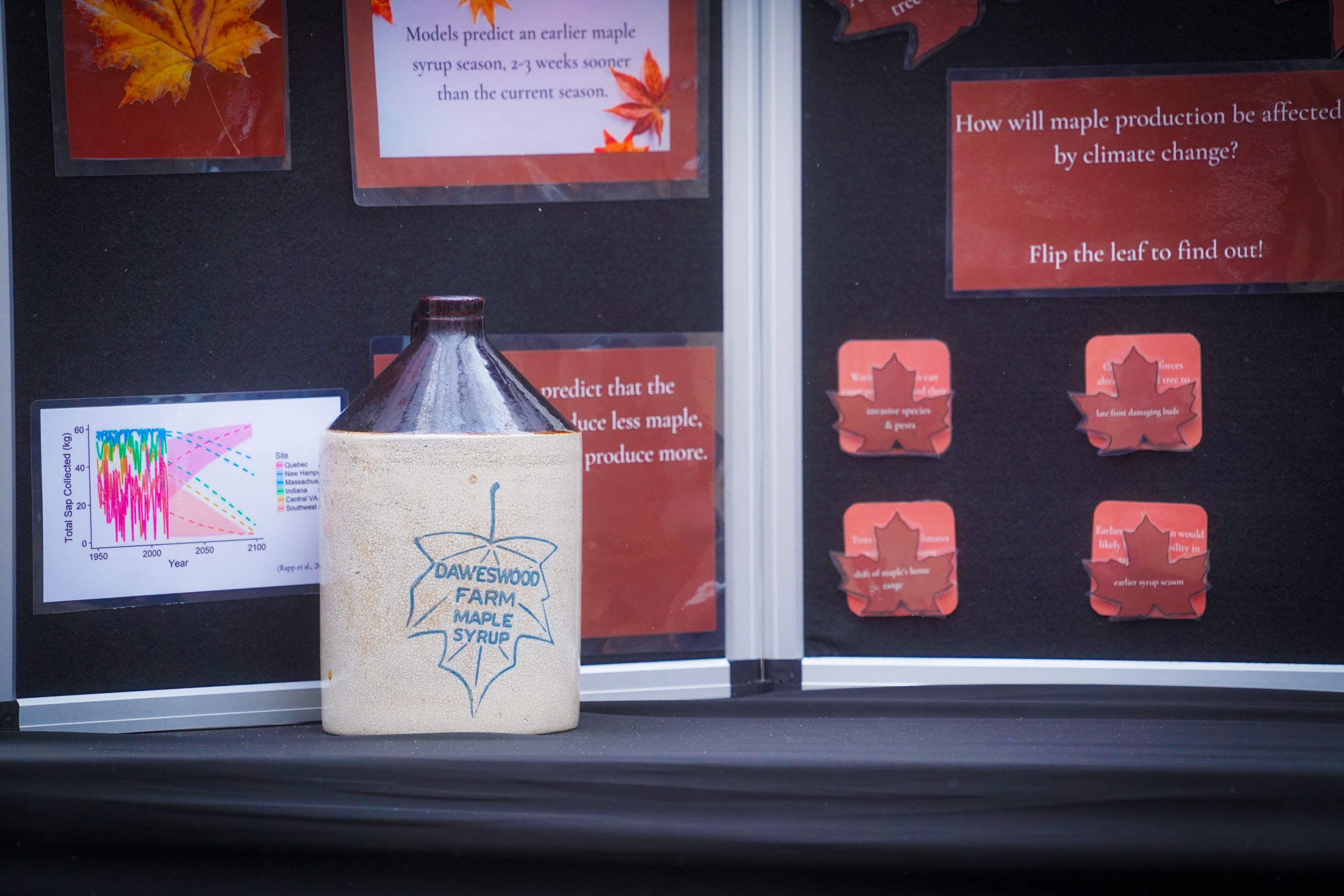
Photo by Grant Hunter
Photo by Grant Hunter
“I learned that [after drilling holes in the sugar maple trees] the sap pecker would wait for where the bugs end up to locate where the syrup is. I thought that was really cool,” Kayla Gibbson said.
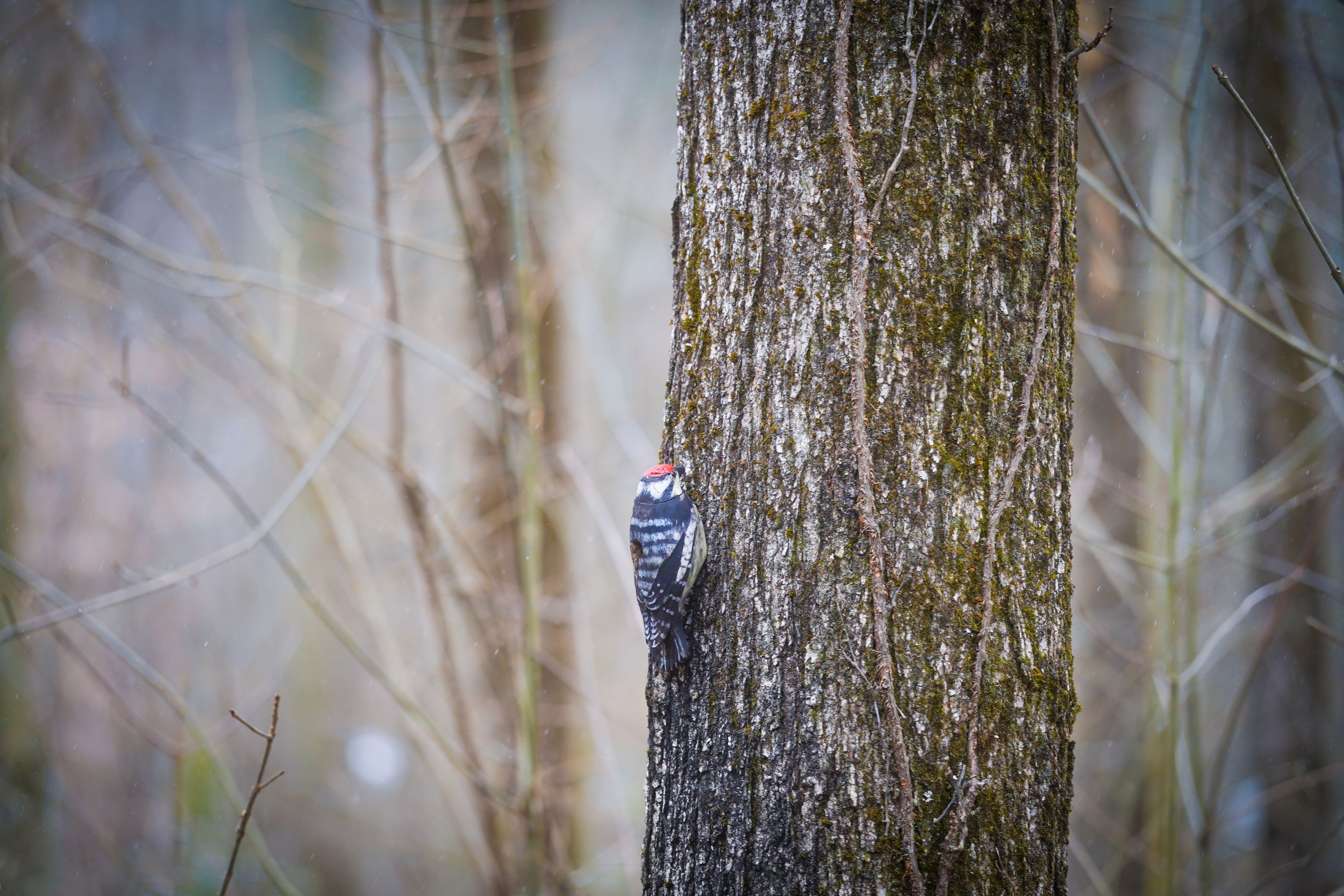
Photo by Grant Hunter
Photo by Grant Hunter
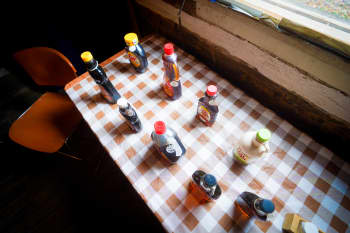
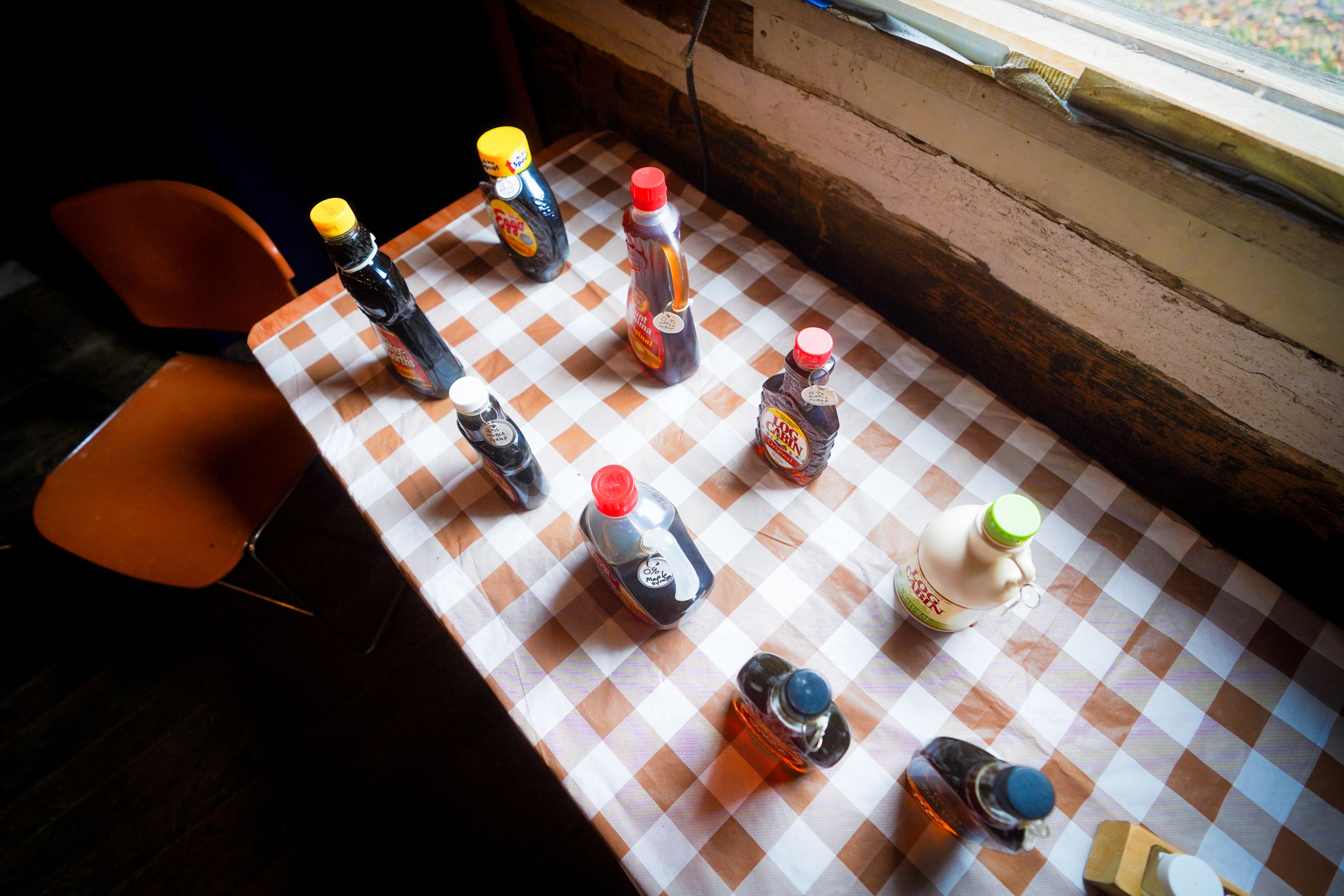
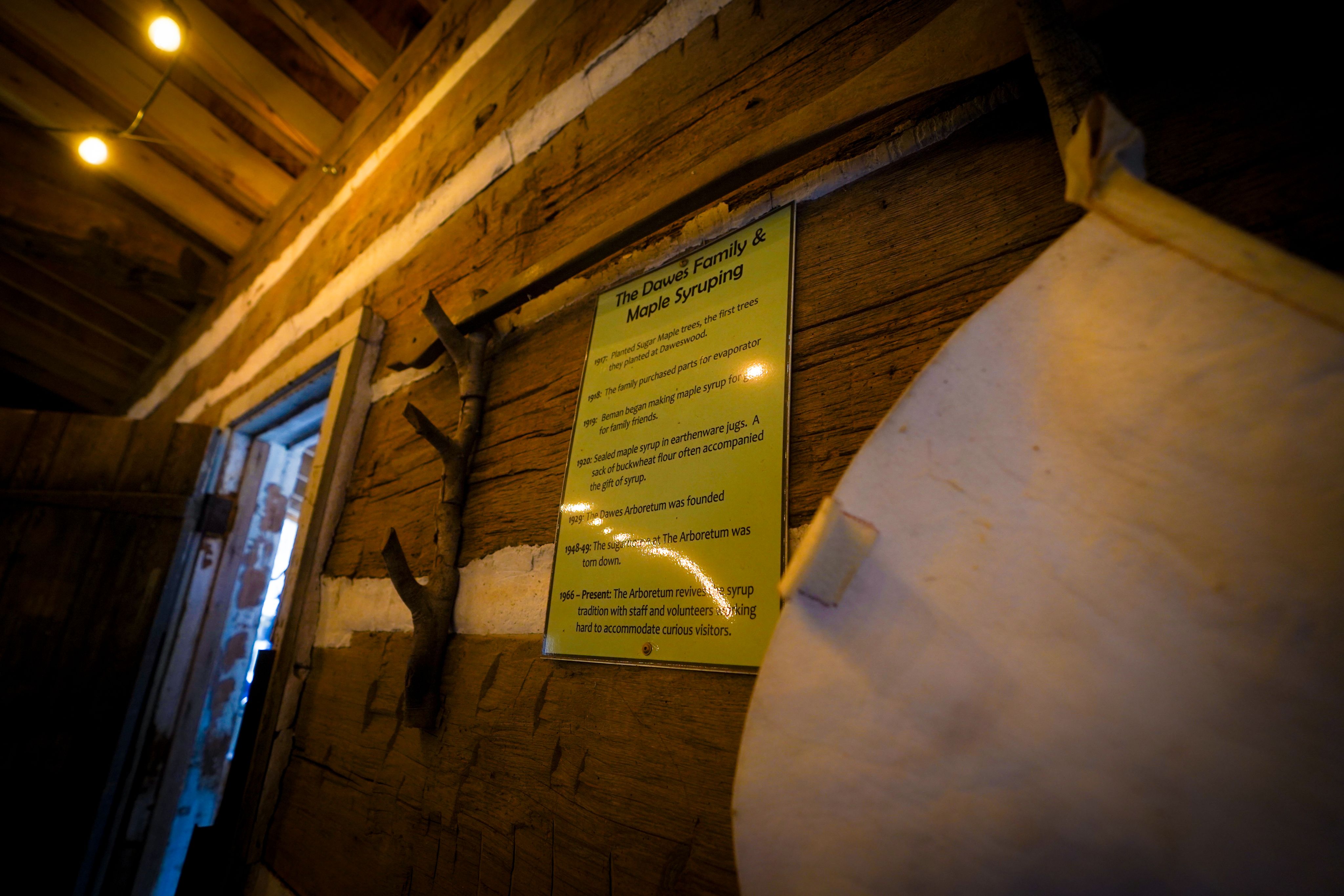
Photo by Grant Hunter
Photo by Grant Hunter
The Dawes family later opened maple syrup activities to the public as an event in 1966, aiming to engage people in understanding and conserving natural resources while educating visitors about trees through the tradition of maple syrup. The tradition continues today.
Maple Syrup Day is the longest-running event at the Dawes Arboretum, said historian Leslie Wagner, who worked at the arboretum for 13 years.
“Maple syrup was a tradition started by our co-founders, Beaman and Bertie Dawes, back in 1919. So we do maple syrup in honor of them,” Wagner said. “But really, this maple syrup event encompasses our entire mission: trees, nature, history.”
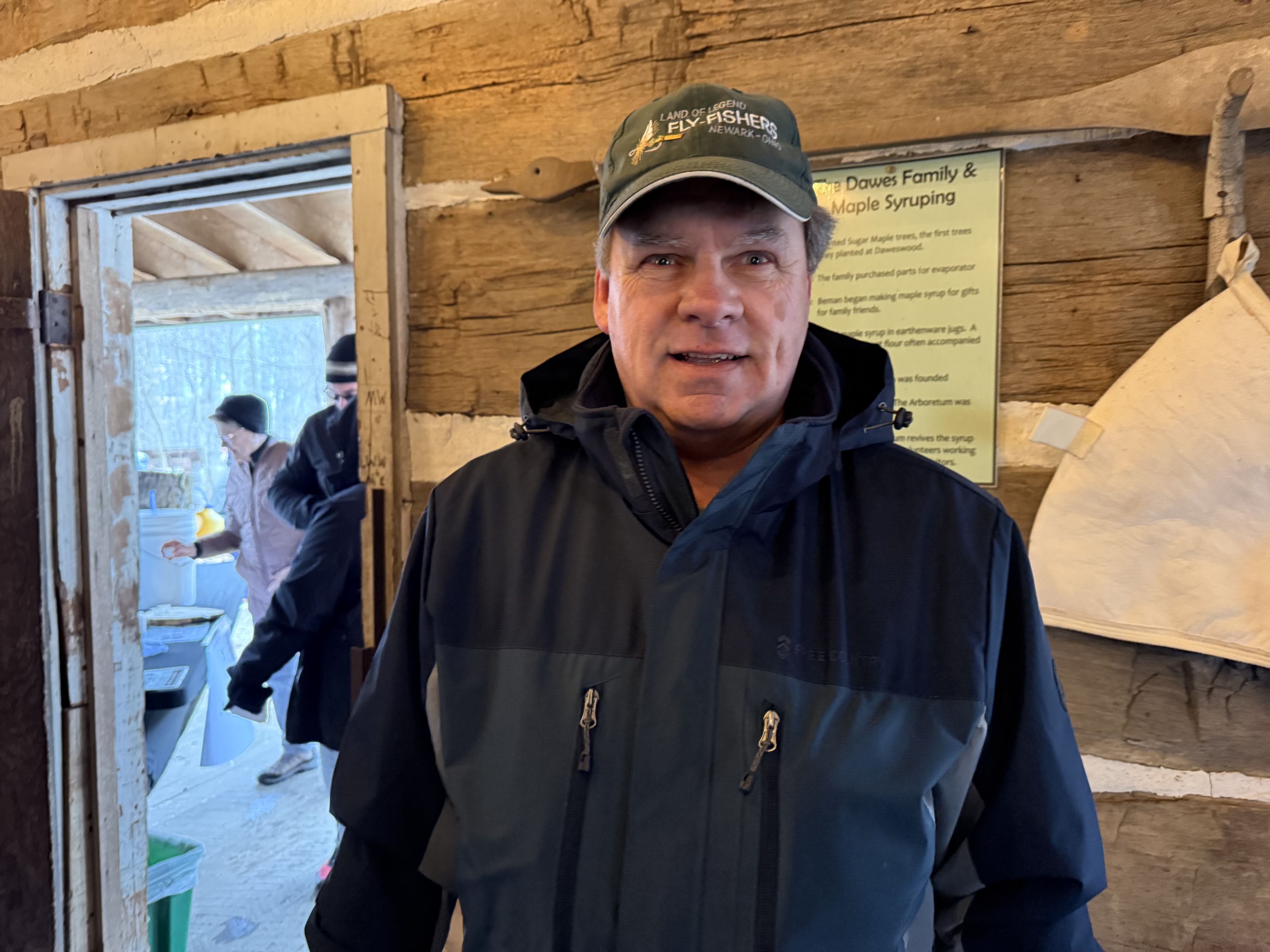
Photo by Donna Chang
Photo by Donna Chang
Kendall Hill
Hill’s daughters asked him about 16 years ago if they could make maple syrup after they discovered how it is made.
“It took hours and hours and hours,” he said. “When it’s finally done, the house smells like maple syrup. It goes from not smelling like anything to all of a sudden smelling wonderful.”
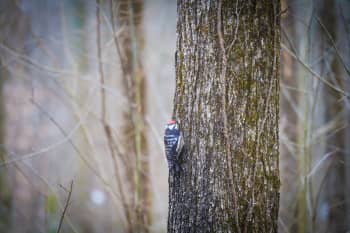
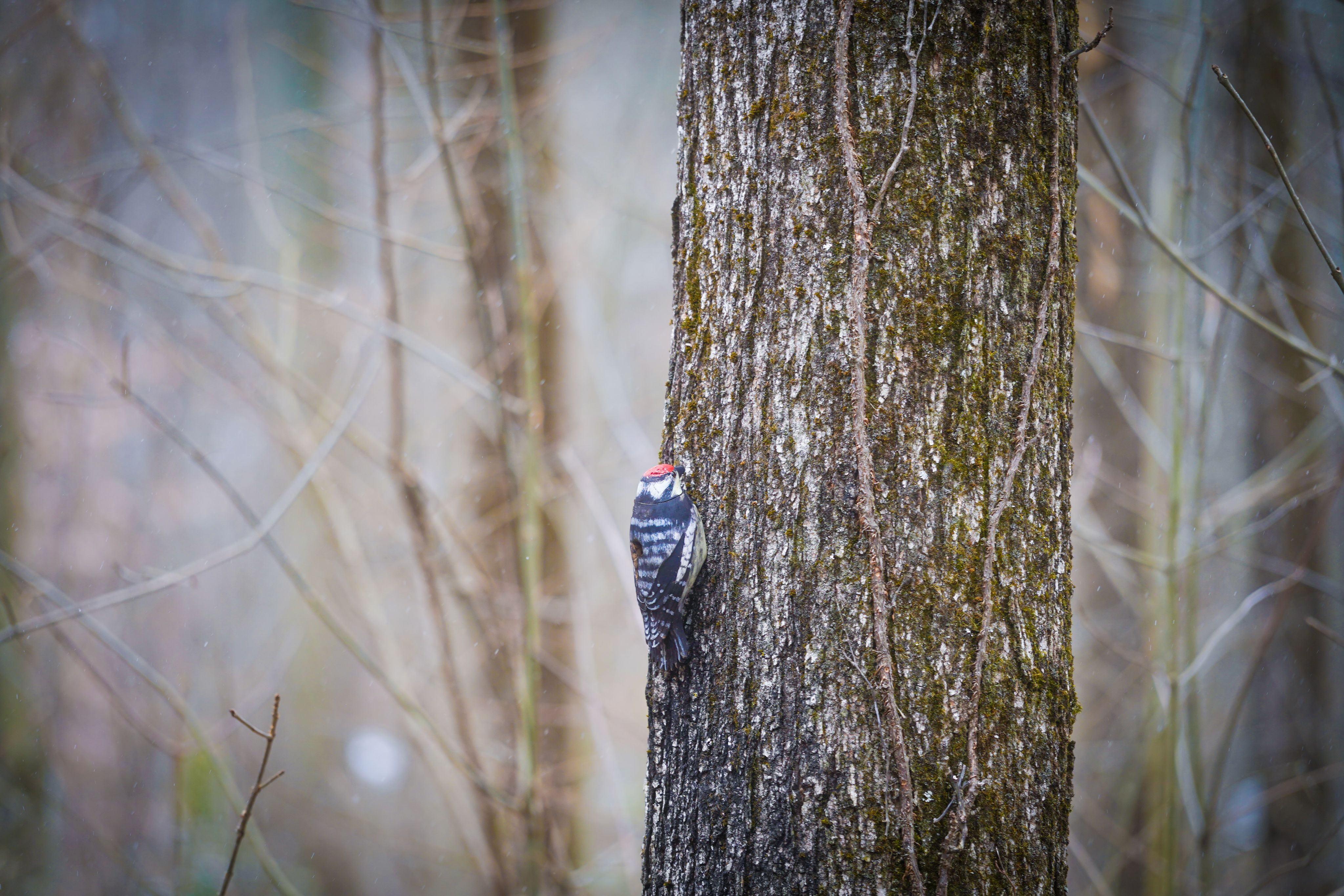
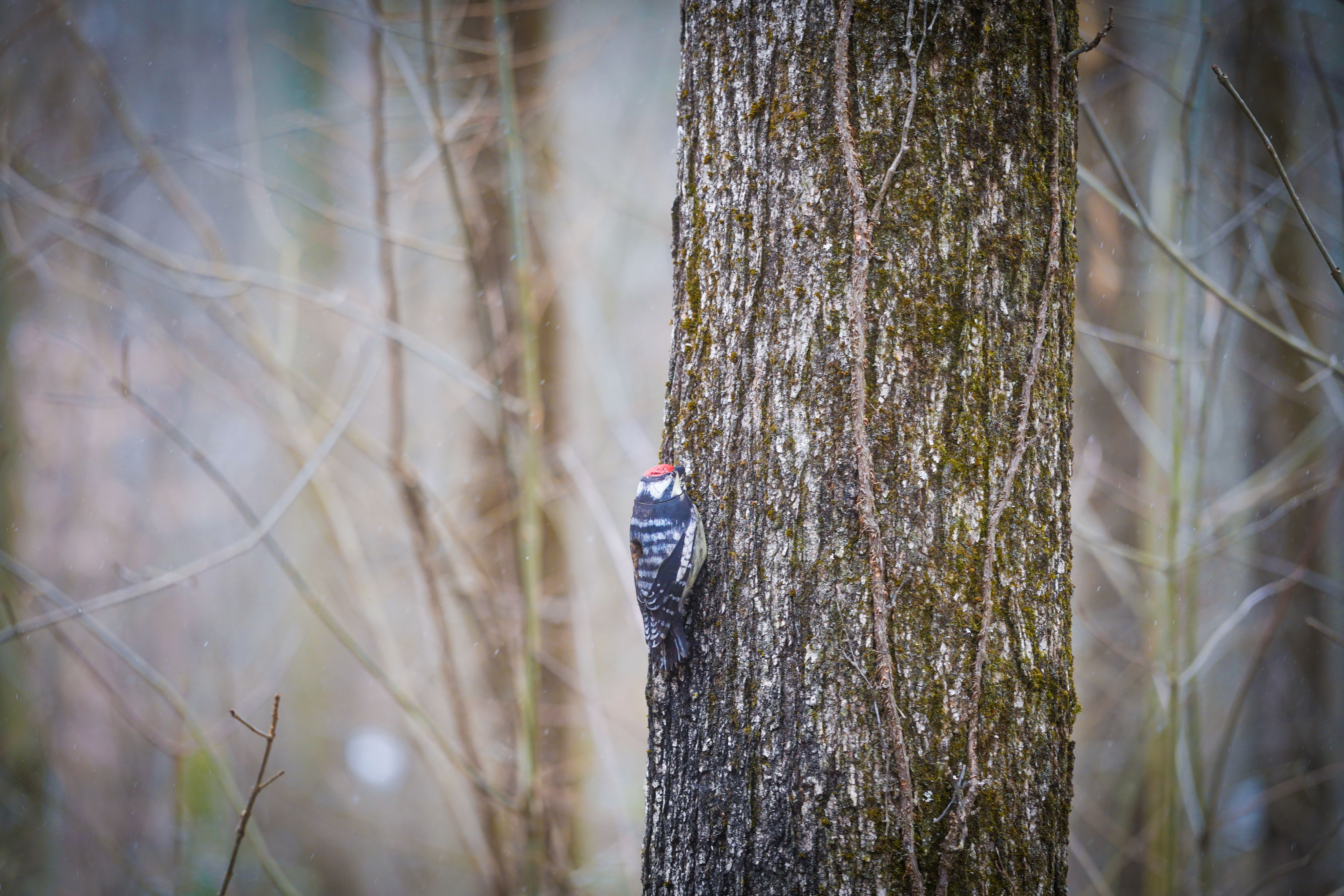
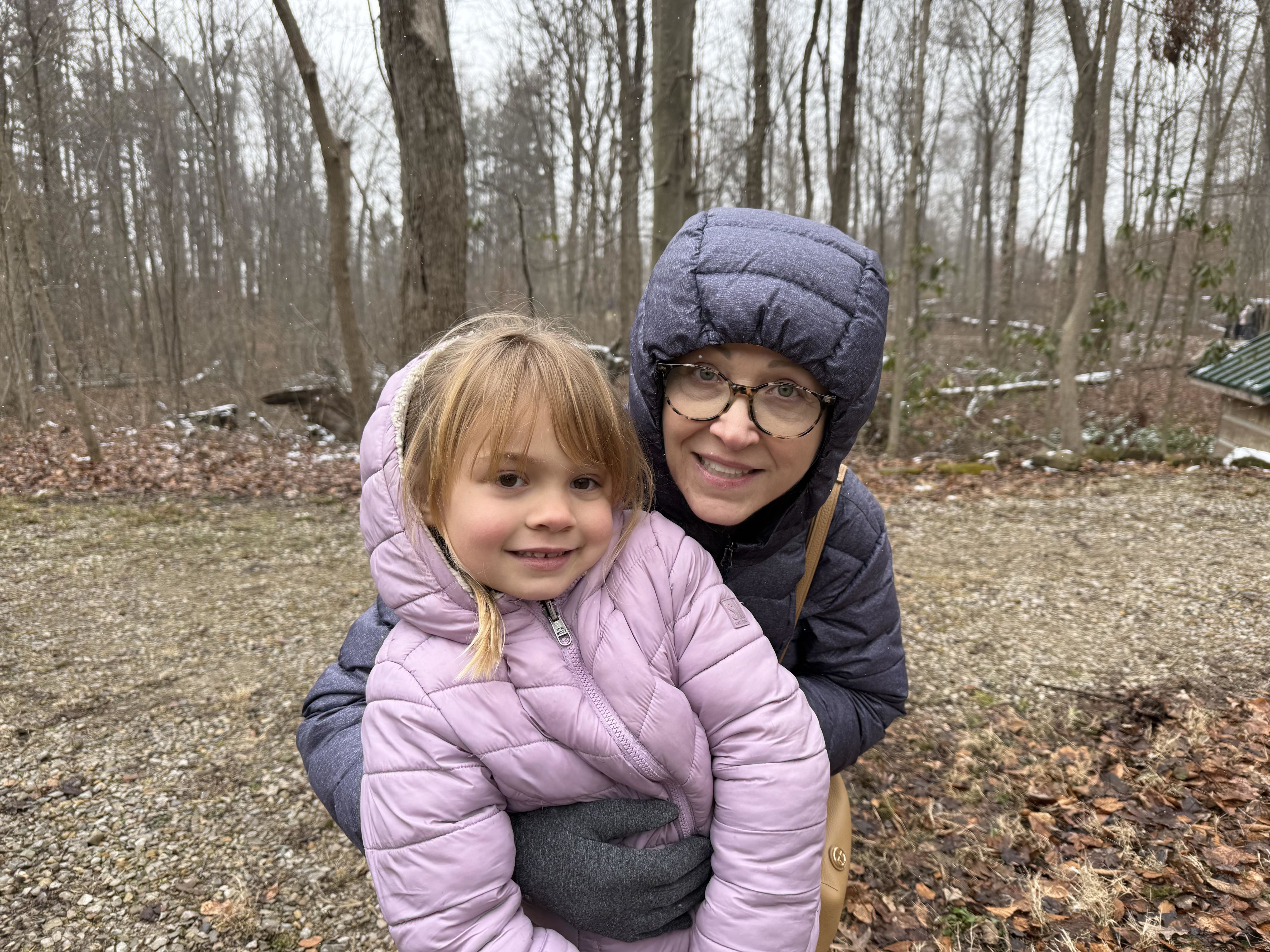
Photo by Donna Chang
Photo by Donna Chang
Heidi Marshall (right) and Sophia Marshall (left)
“It’s worth it [coming to the event despite the cold] because I can learn stuff,” Sophia Marshall said.
“Sophia loves to learn. She is the best in math in her class,” Heidi Marshall said. “My goal is to spend time with her and help her learn about the world because her parents are really busy. They both work full time, and I’m retired.”
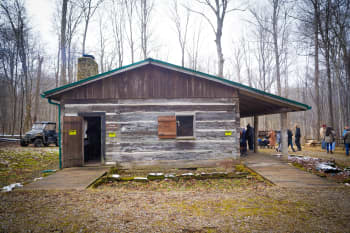
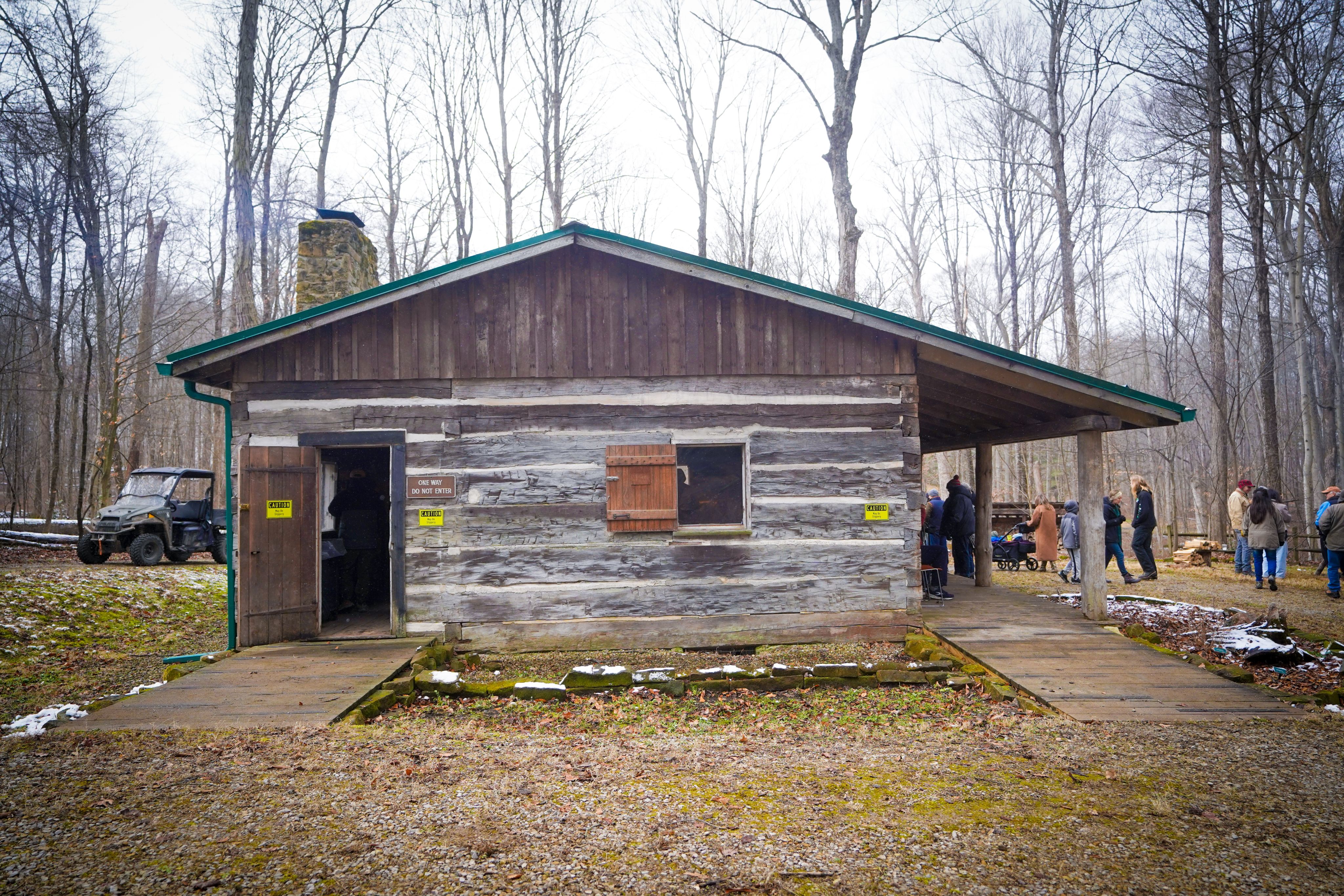
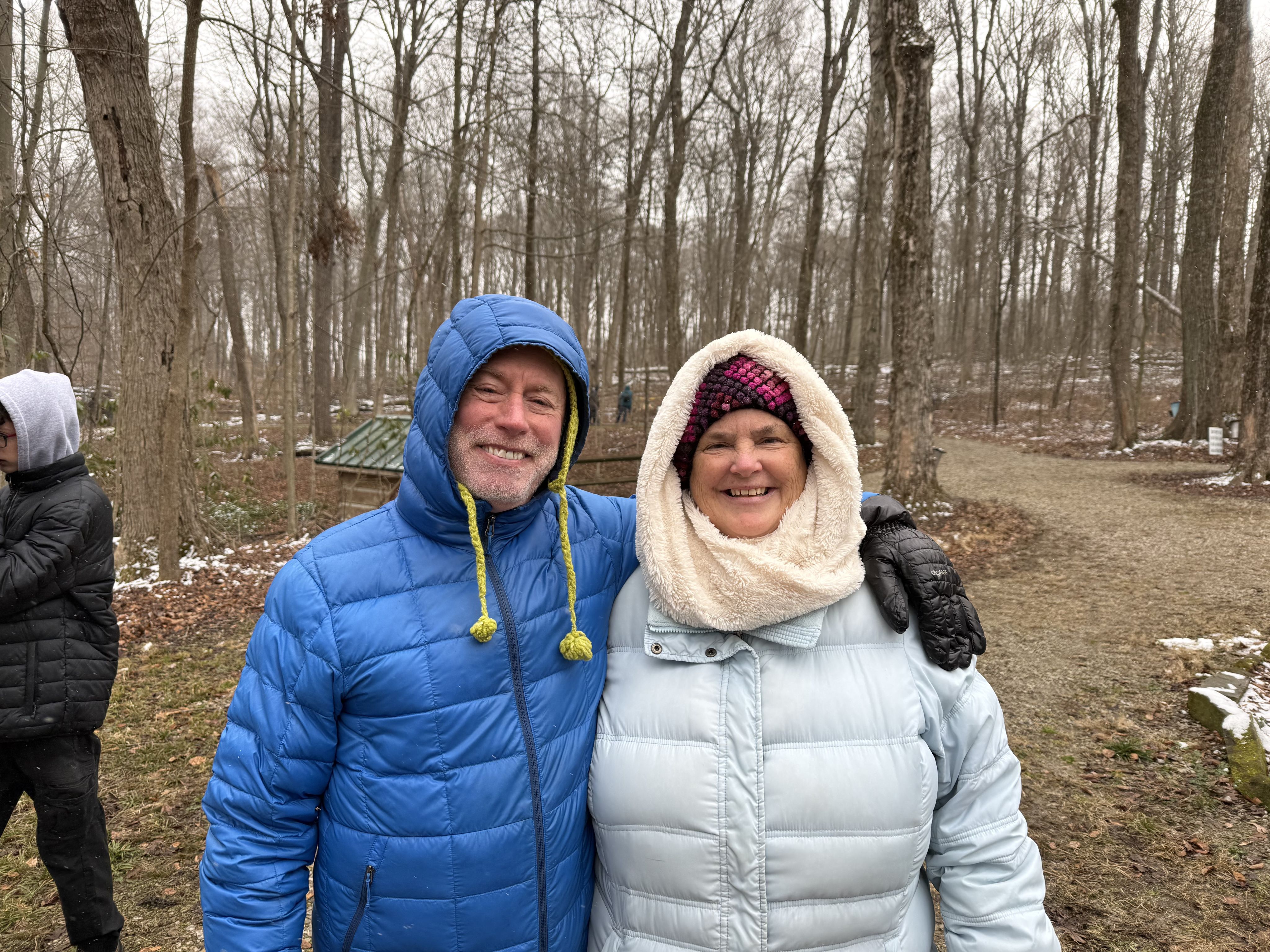
Photo by Donna Chang
Photo by Donna Chang
Jeff Kasson (left) and Colleen Kasson (right)
“You could only do it this around this time of the year. No matter what the weather is, you have to come now. We learned about the process of creating maple syrup, so we would know how to do it,” Colleen Kasson said.
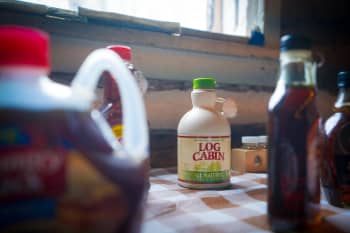
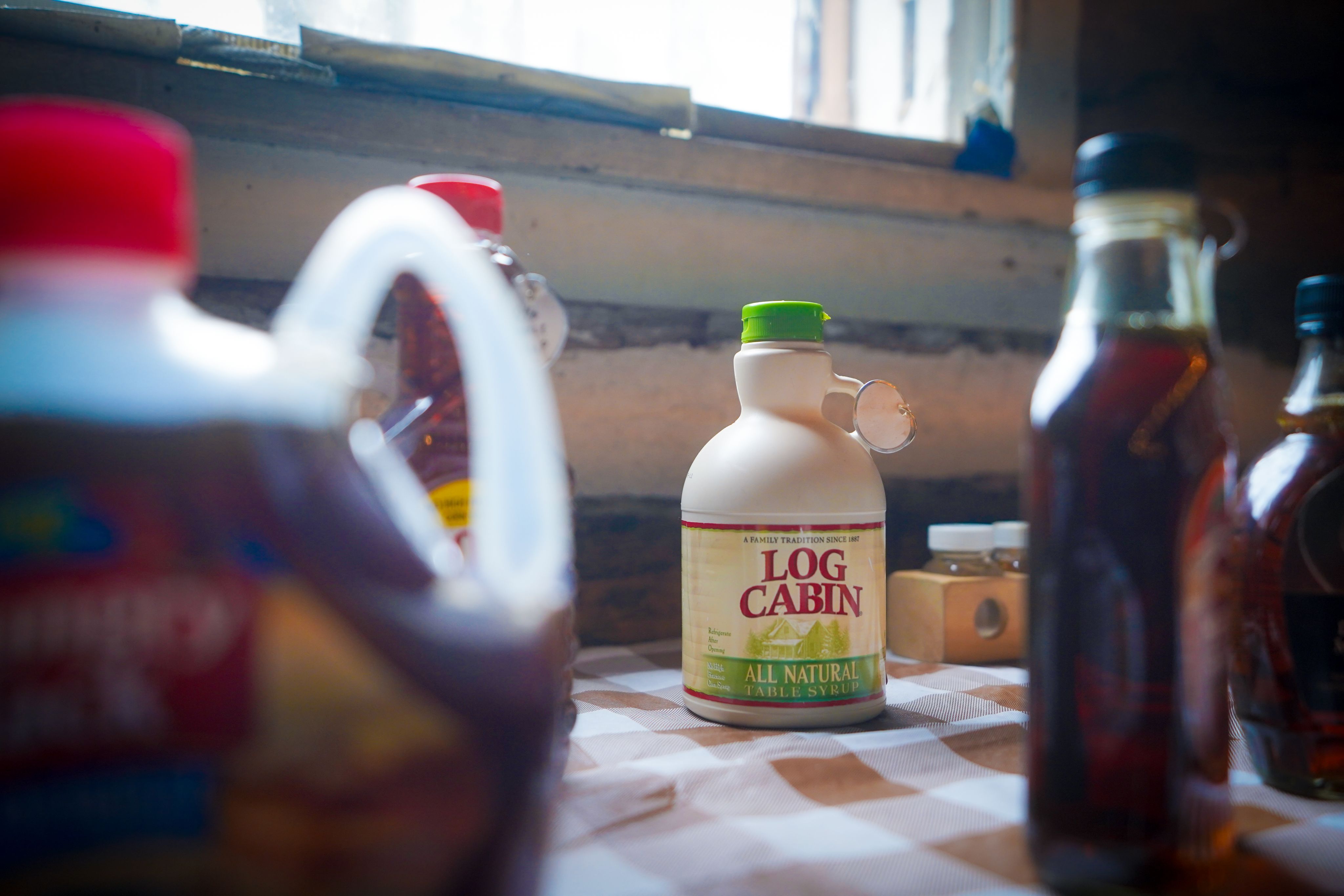
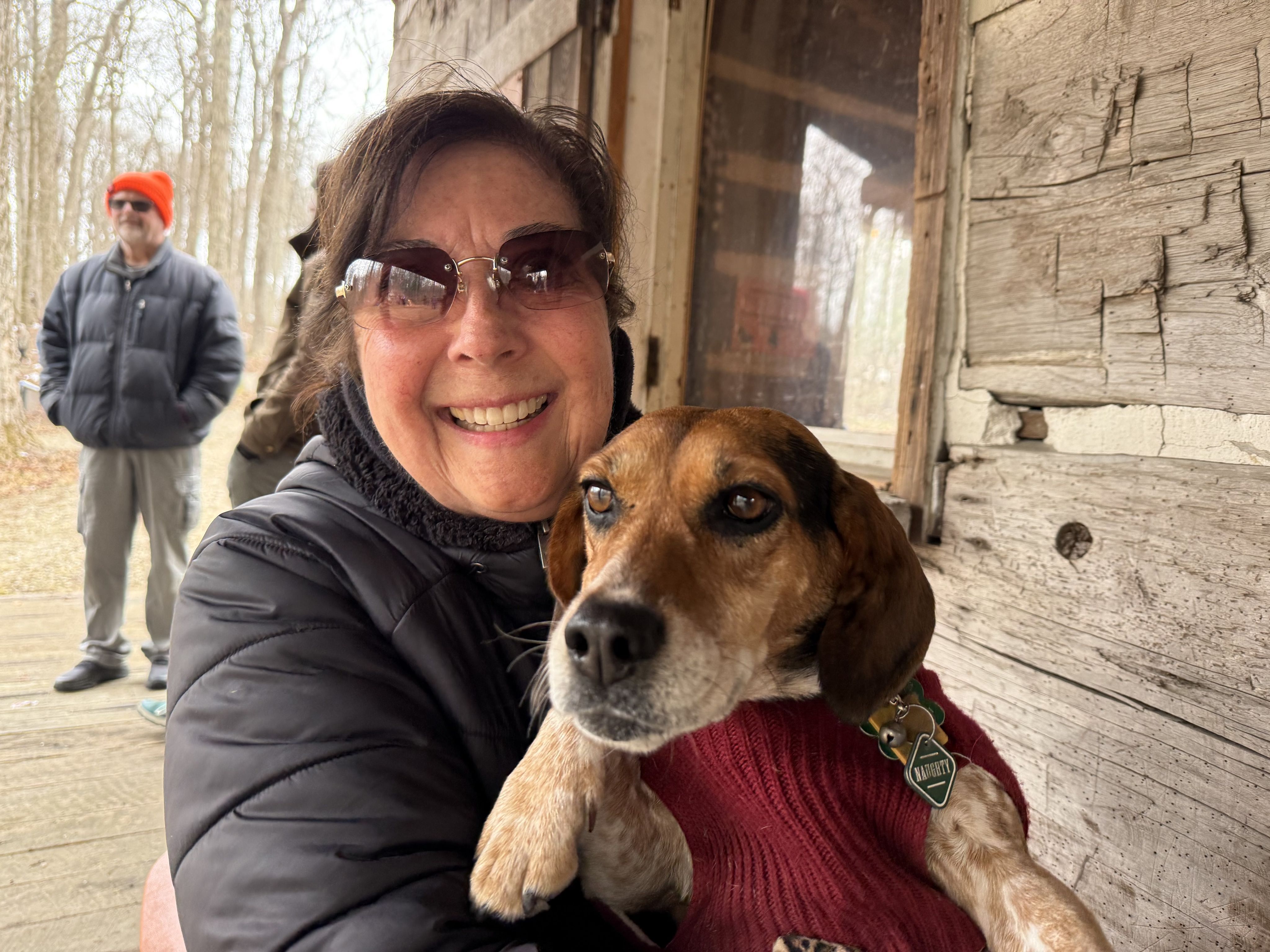
Photo by Donna Chang
Photo by Donna Chang
Molly (left) and Minnie the dog
Molly said, “I learned about the different varieties of syrup. I really like the cinnamon maple syrup, and I hope they have that at the gift shop.”
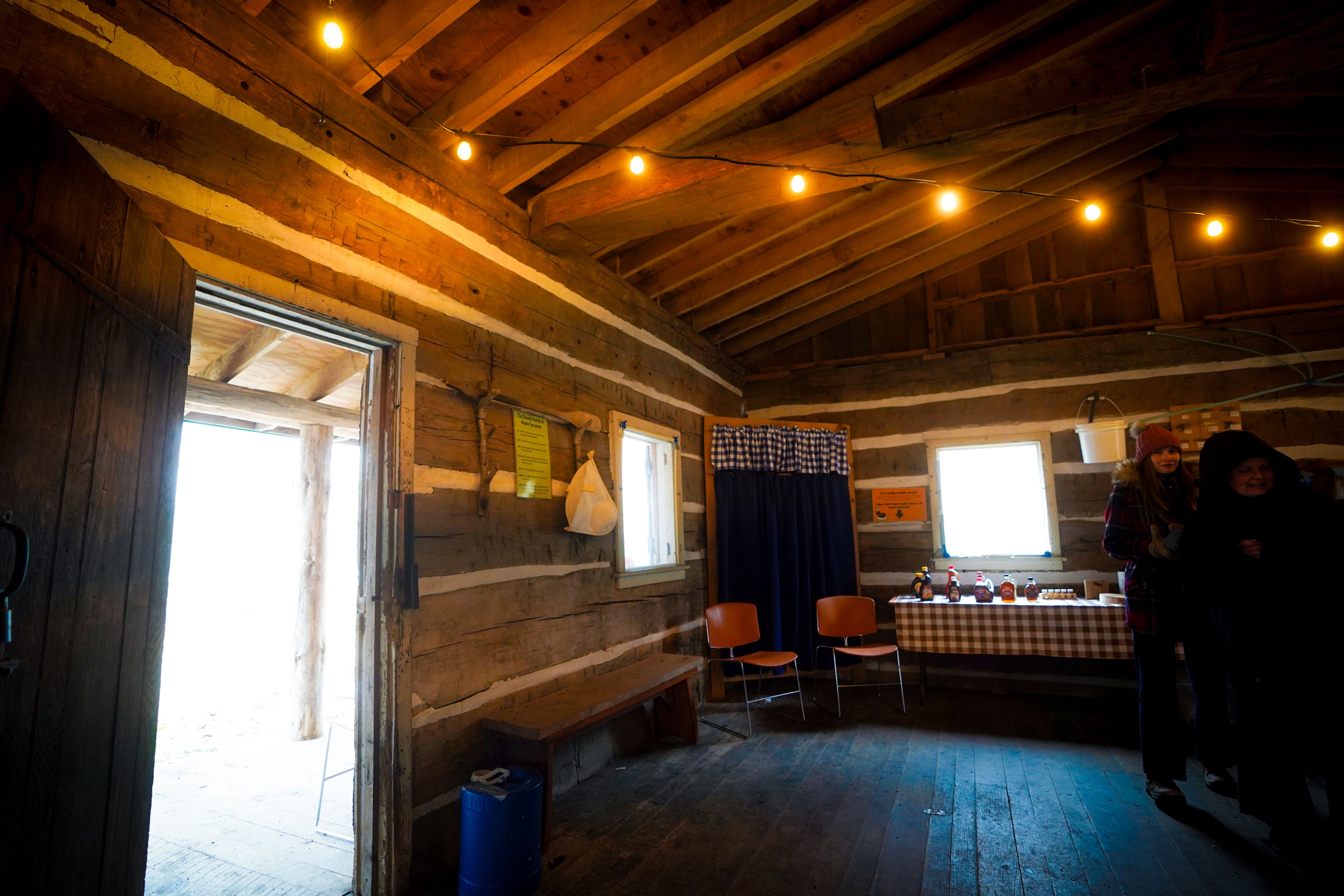
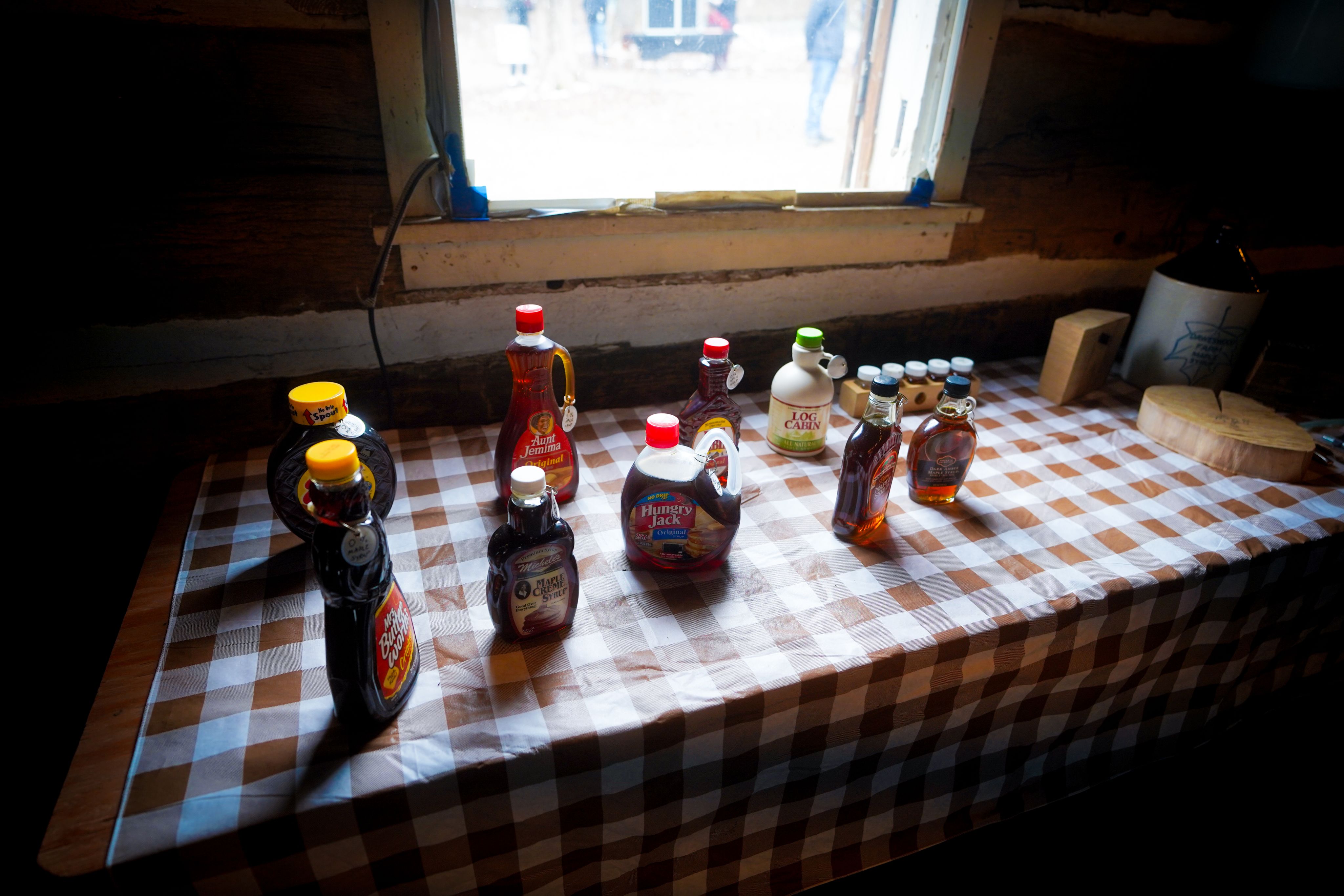
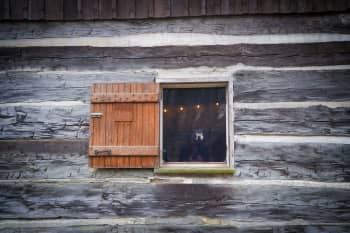
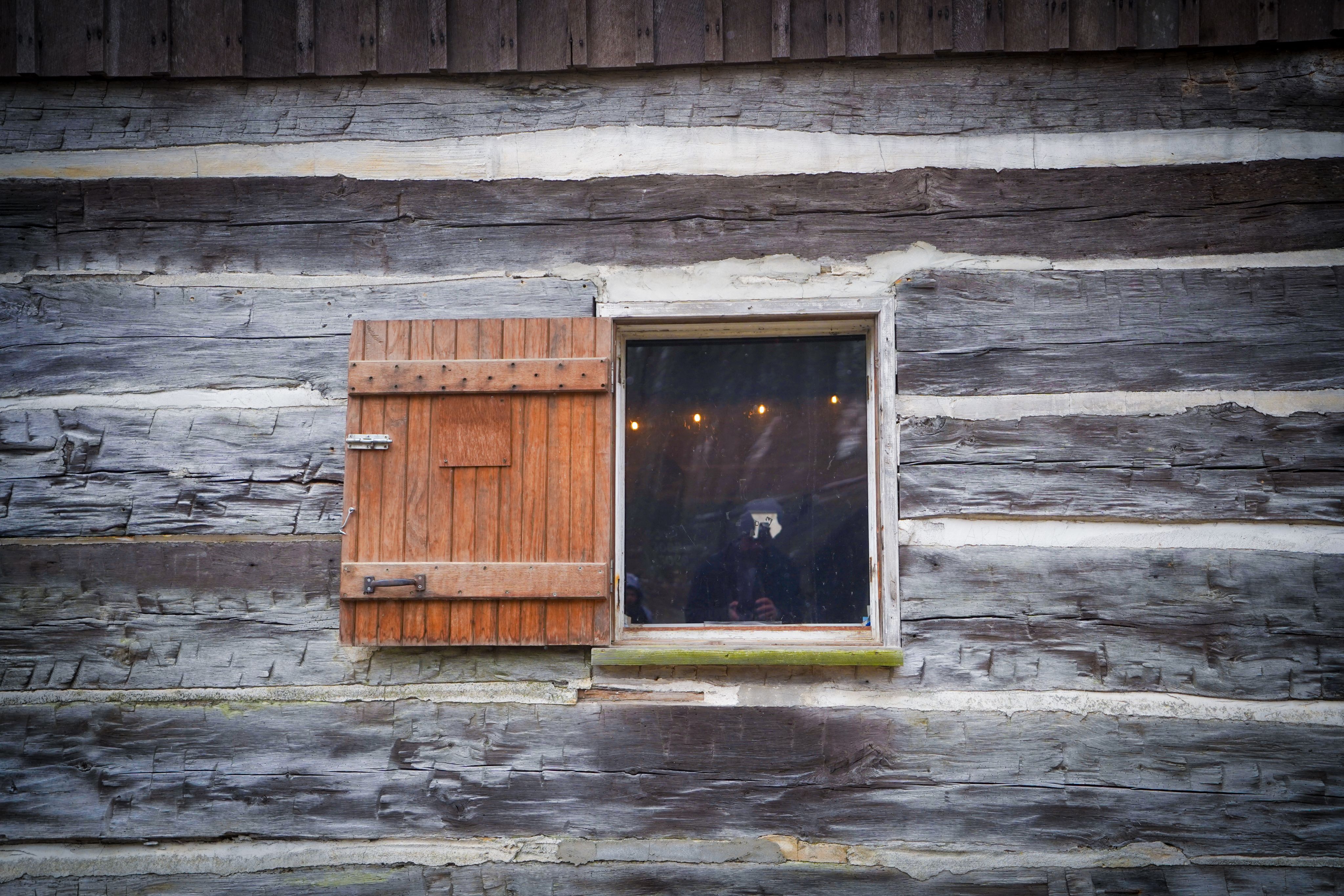
Activities featured at the event include a guided historical walking tour along the Maple Syrup Trail, tree tapping demonstrations, and syrup tastings—featuring maple syrup from Winding Trails Maple Syrup in neighboring Utica, Ohio, maple syrup from Vermont, hickory syrup from Pennsylvania, as well as store-bought varieties from local retailers—at the arboretum’s iconic log cabin, which has been on the property since the 1920s, Spieles said.
This year’s event also includes new activities such as crafts inside the visitor center, a historical photo slideshow from the arboretum’s archives featuring images from Dawes Maple Syrup Day over the past 60 years, and educational displays explaining why maple tree tapping and syrup production stopped, how climate change affects maple trees, how to care for any maple trees people have at home, along with discussions of how Beman Dawes’ staff produced syrup in the 1920s.
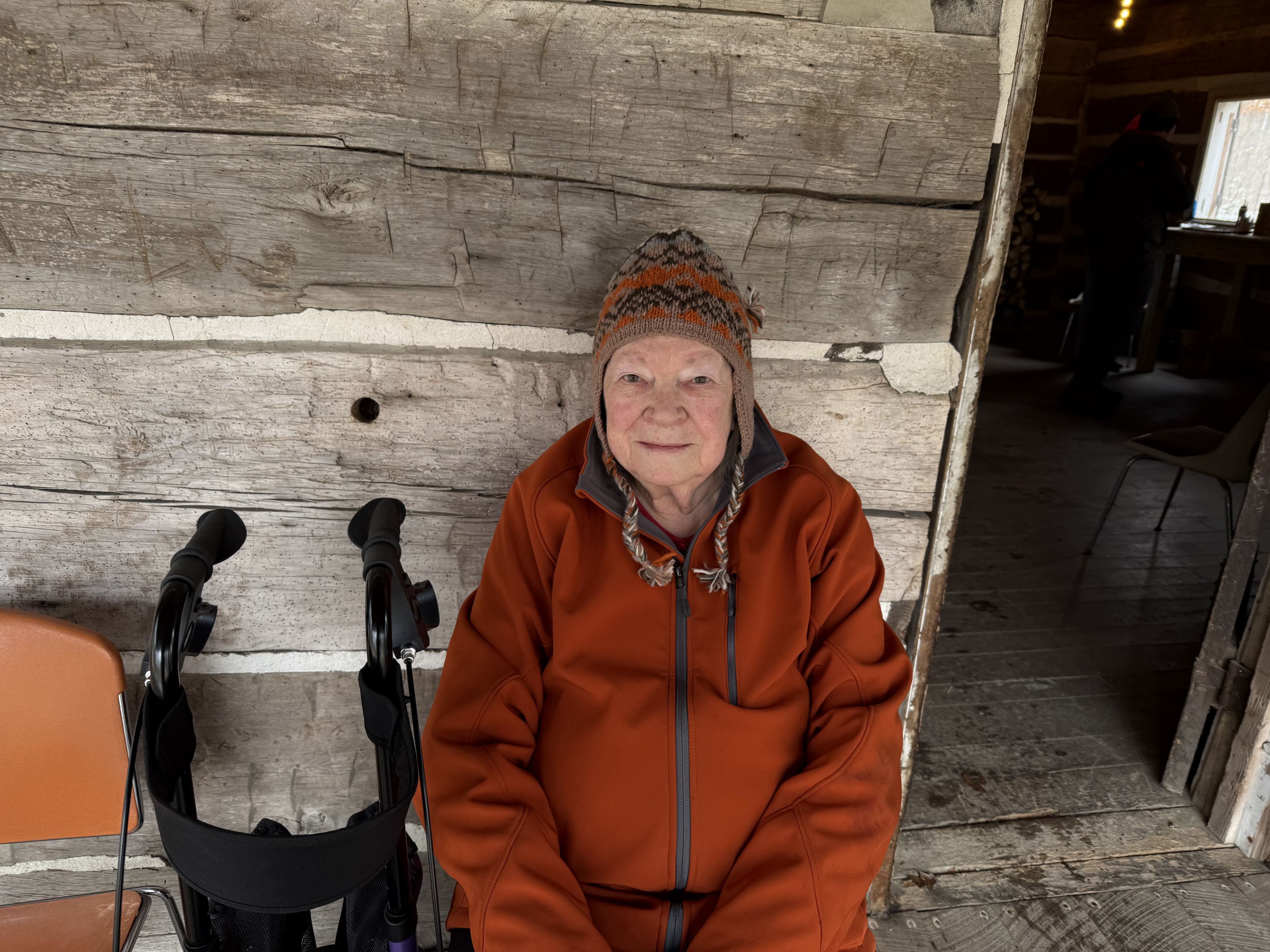
Photo by Donna Chang
Photo by Donna Chang
Jane Shue
“I like maple syrup, but I grew up in the south [Northern Georgia], and they don’t have anything down in the southern states like that. I’ve learned all that from traveling and exploring,” Shue said.
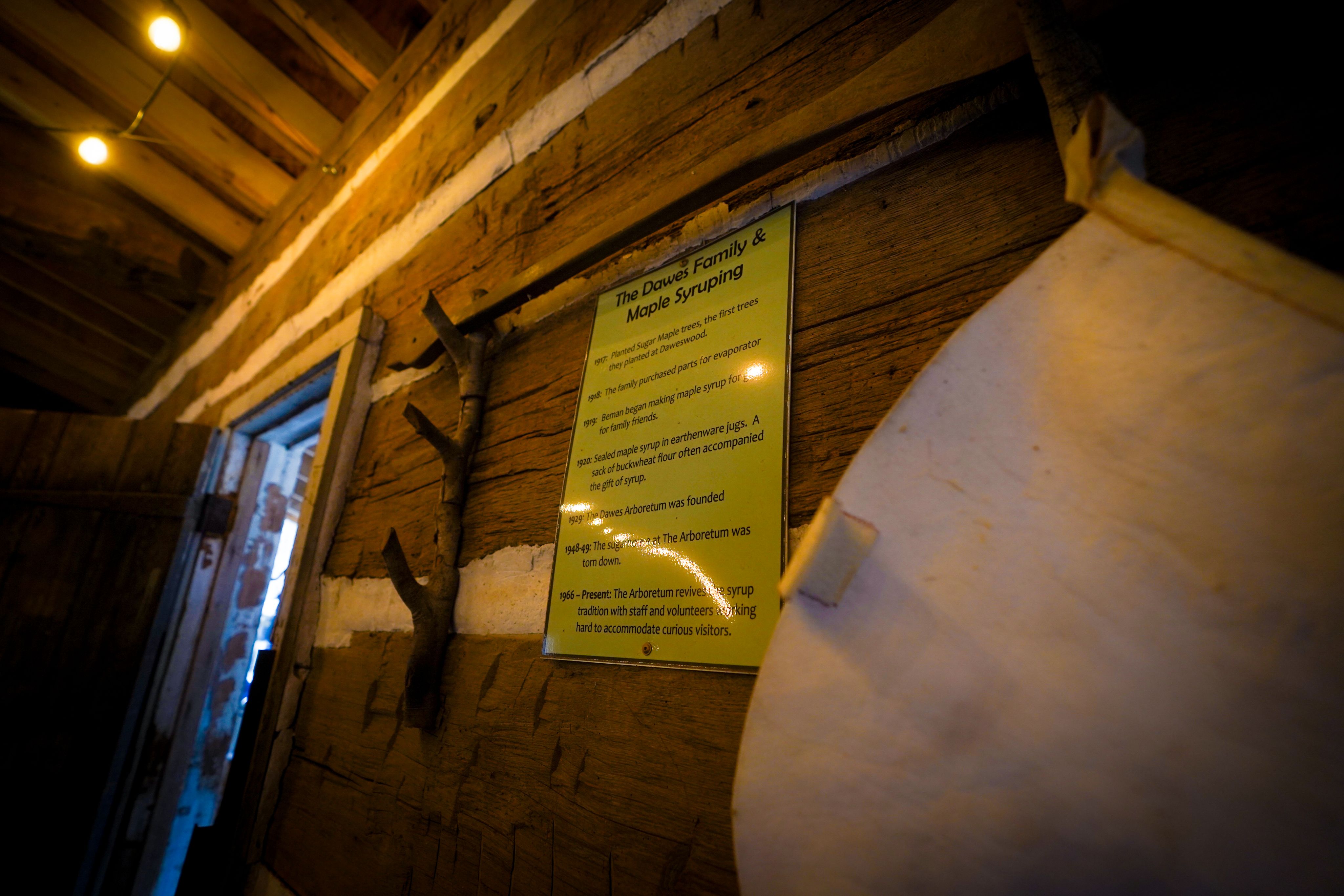
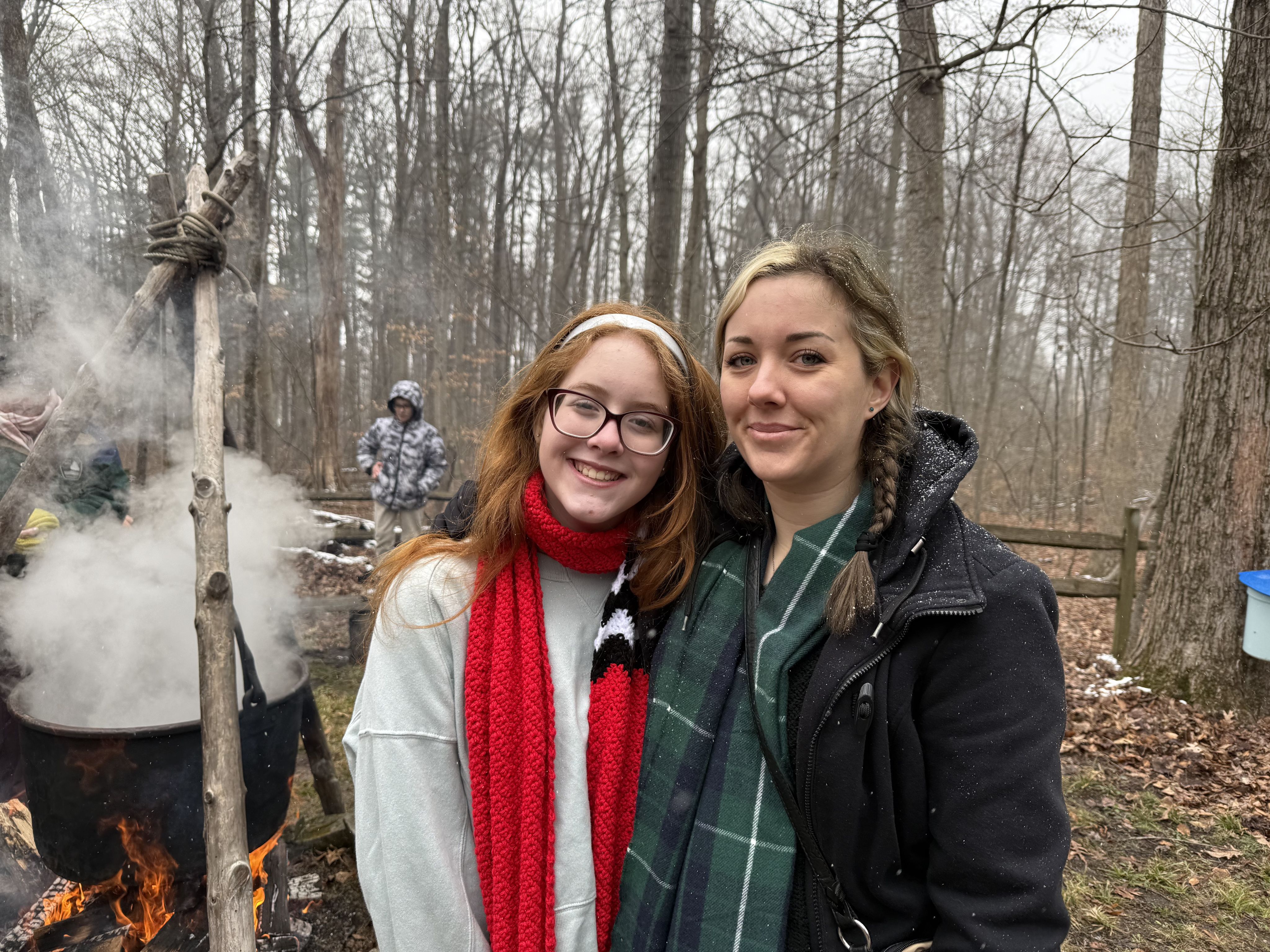
Photo by Donna Chang
Photo by Donna Chang
Mckenna Hamilton (left) and Salem Hamilton (right)
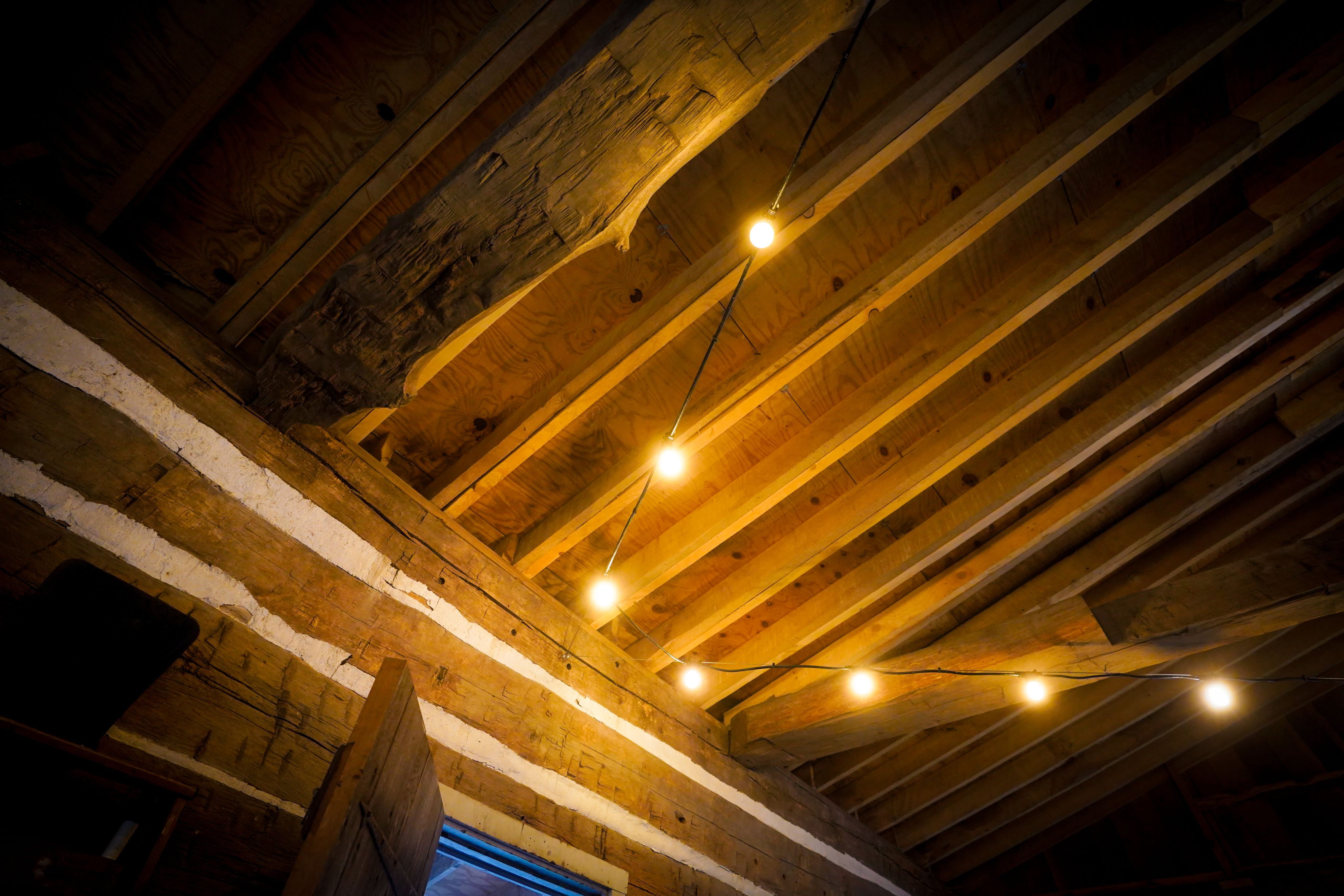
Photo by Grant Hunter
Photo by Grant Hunter
McKenna Hamilton’s favorite thing about the event is the fireplace because it keeps her warm.
“I learned that a lot of maple syrup is not real…They are allowed to call themselves syrup when it’s 0%,” Salem Hamilton said.
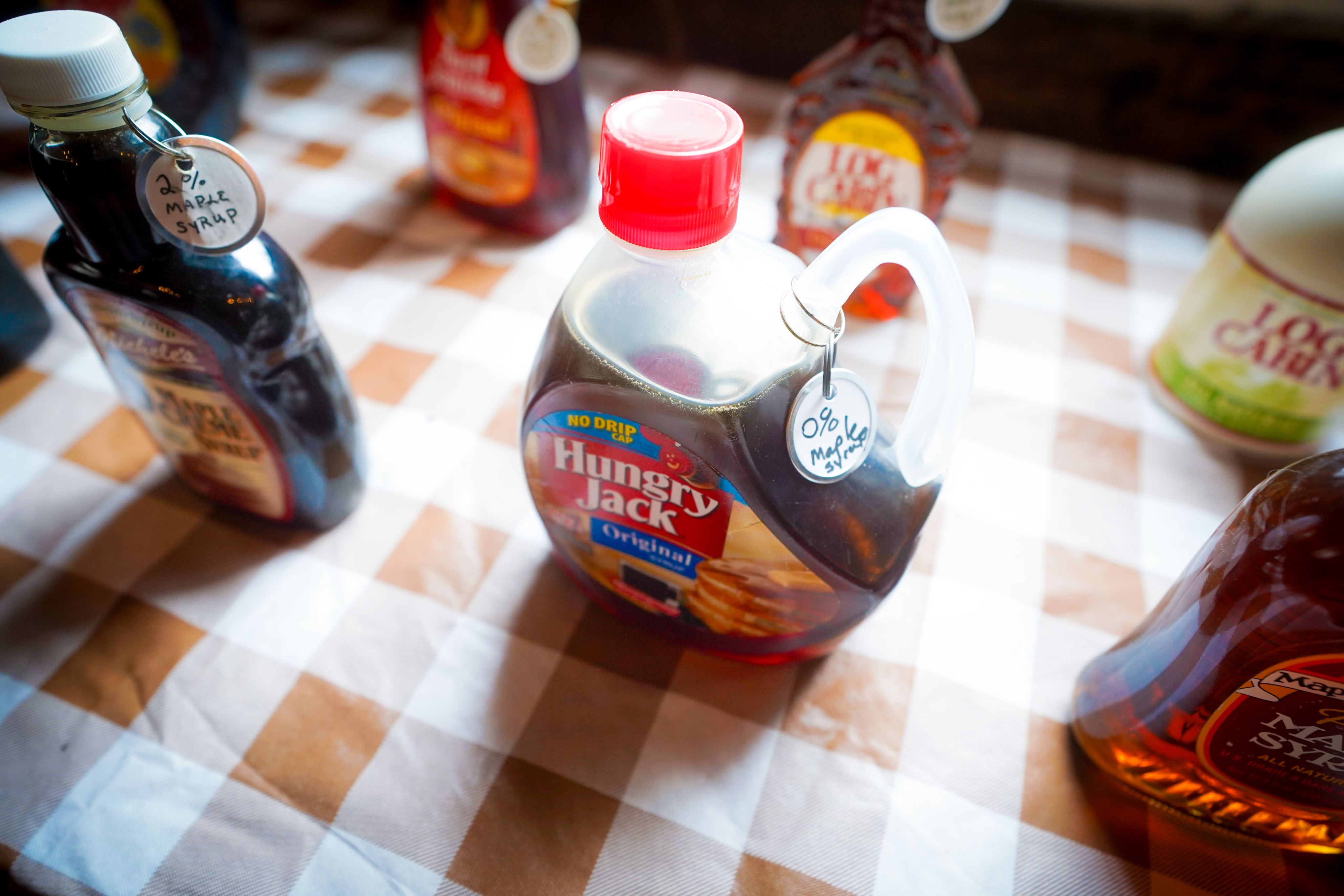
Photo by Grant Hunter
Photo by Grant Hunter
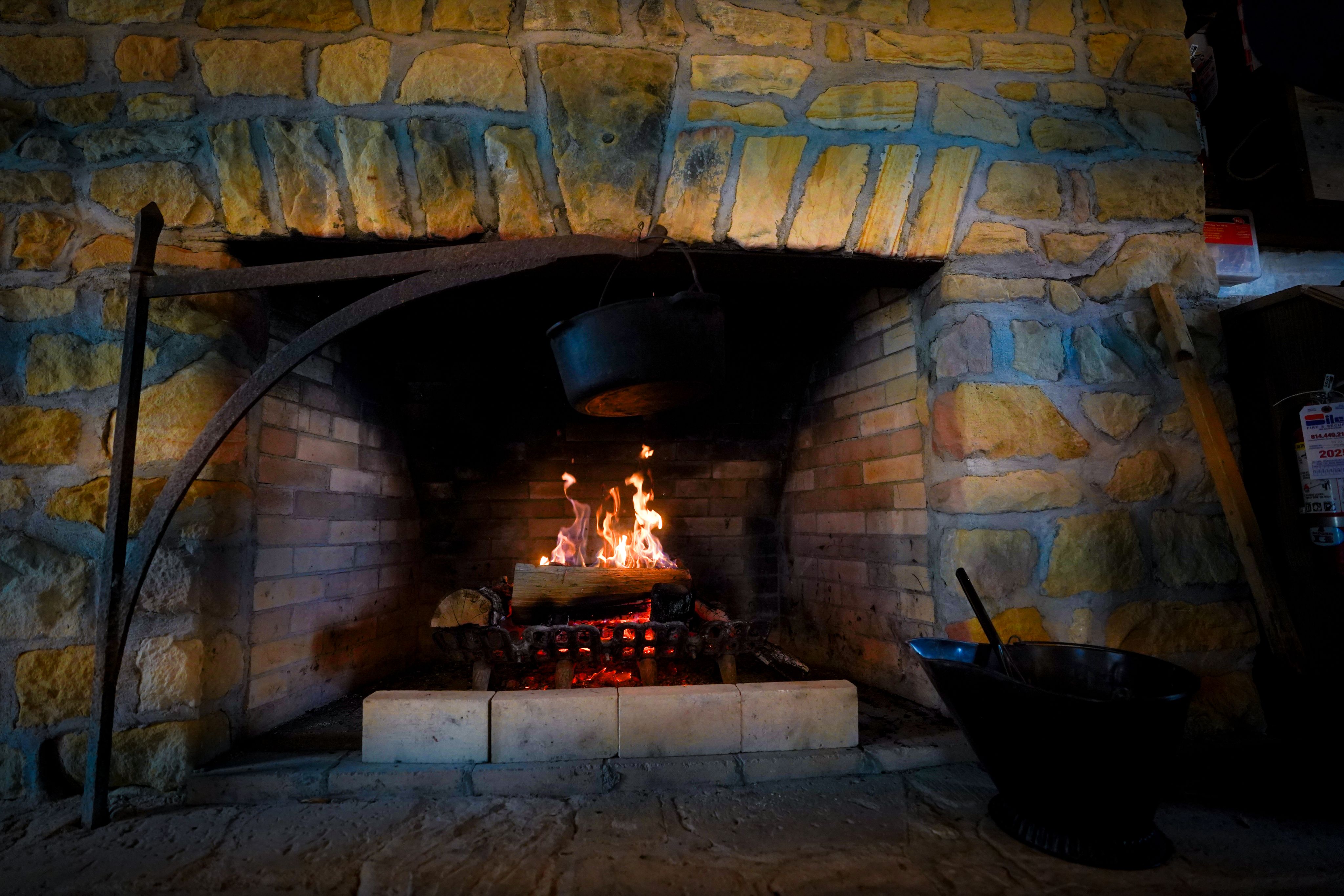
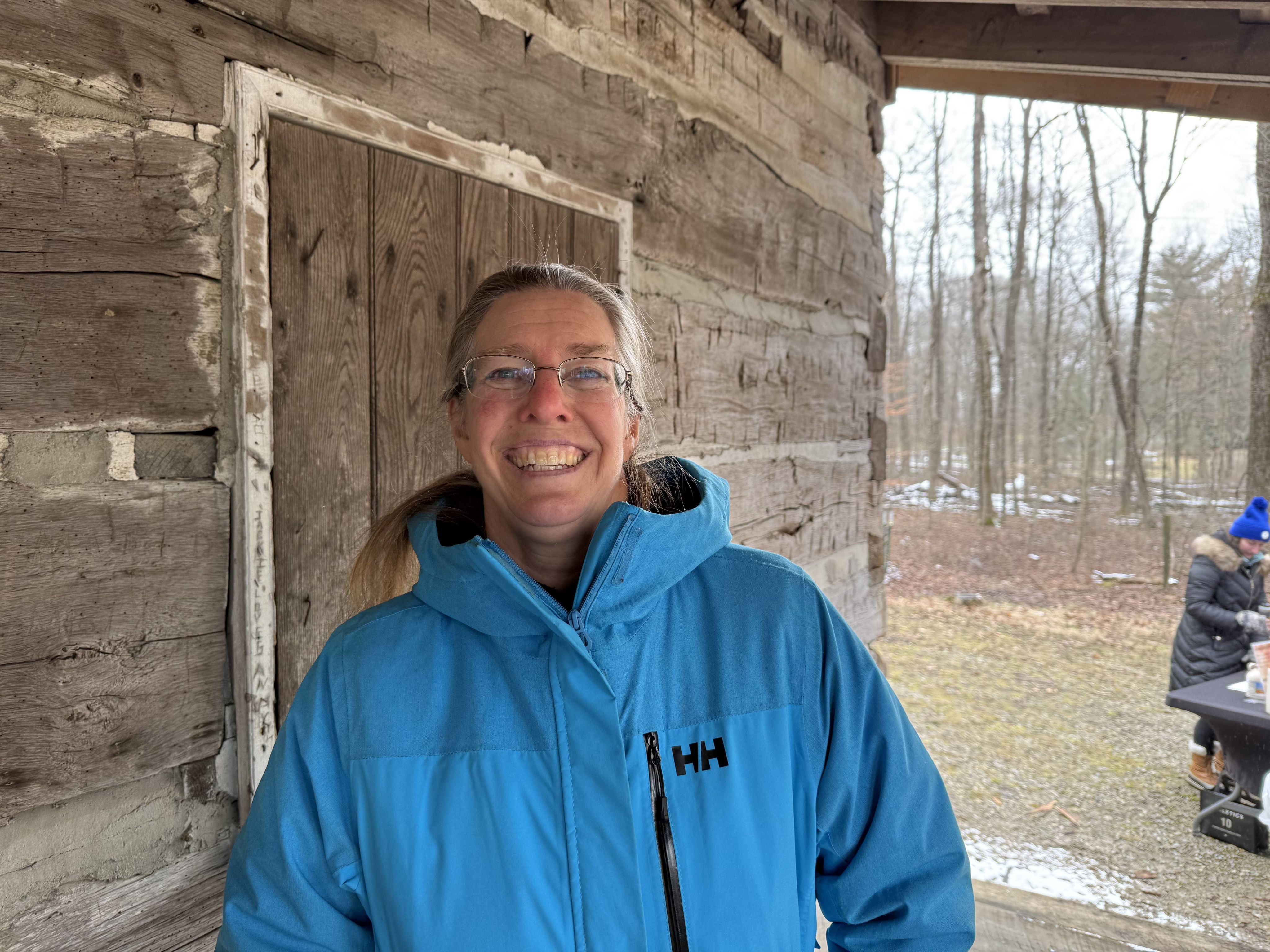
Photo by Donna Chang
Photo by Donna Chang
Wendy Miller
Miller has been making her own maple syrup for four years.
“Making maple syrup is fun. It gives you an excuse to be outside on days you wouldn't. It turns mud season into syrup season,” she said.
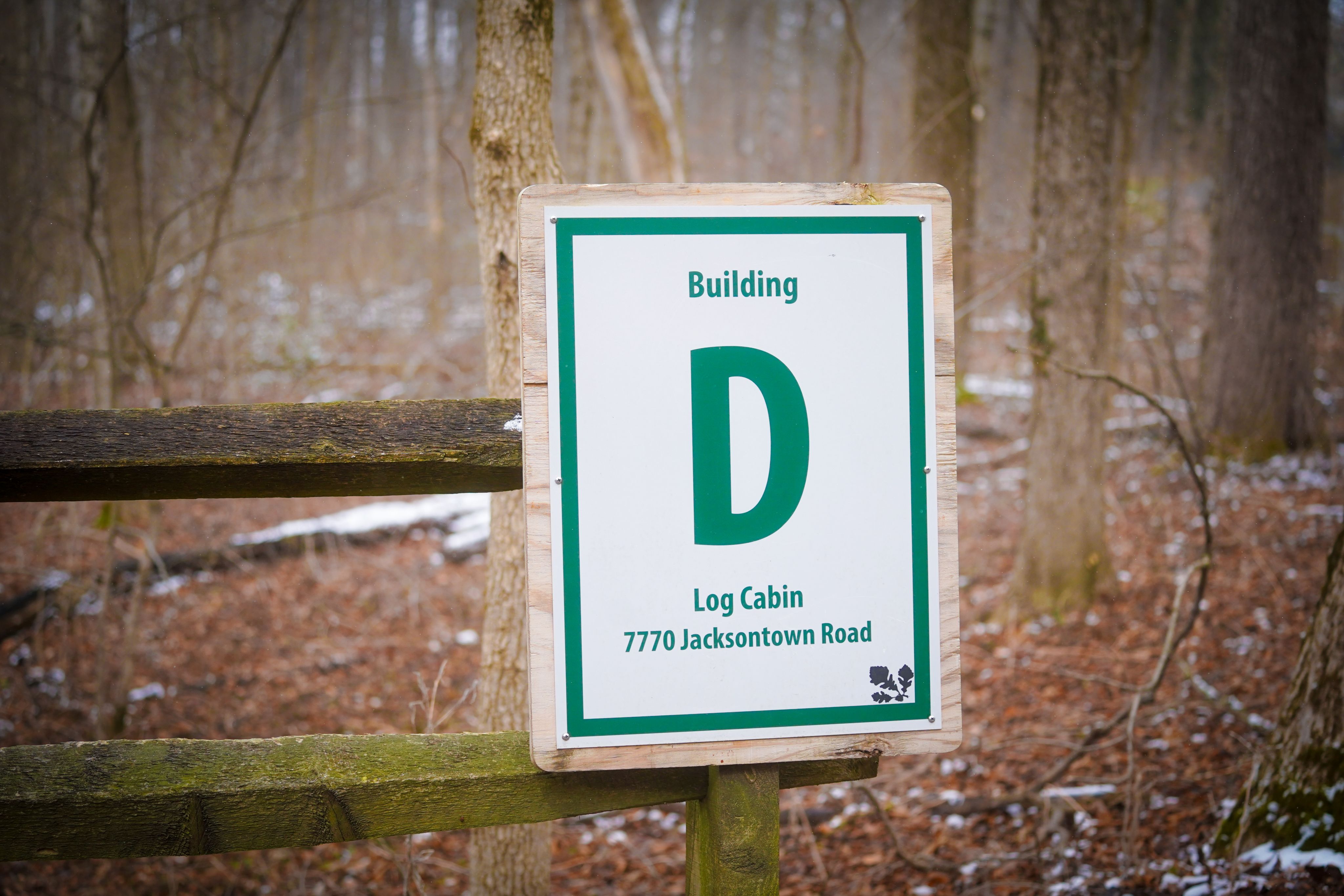

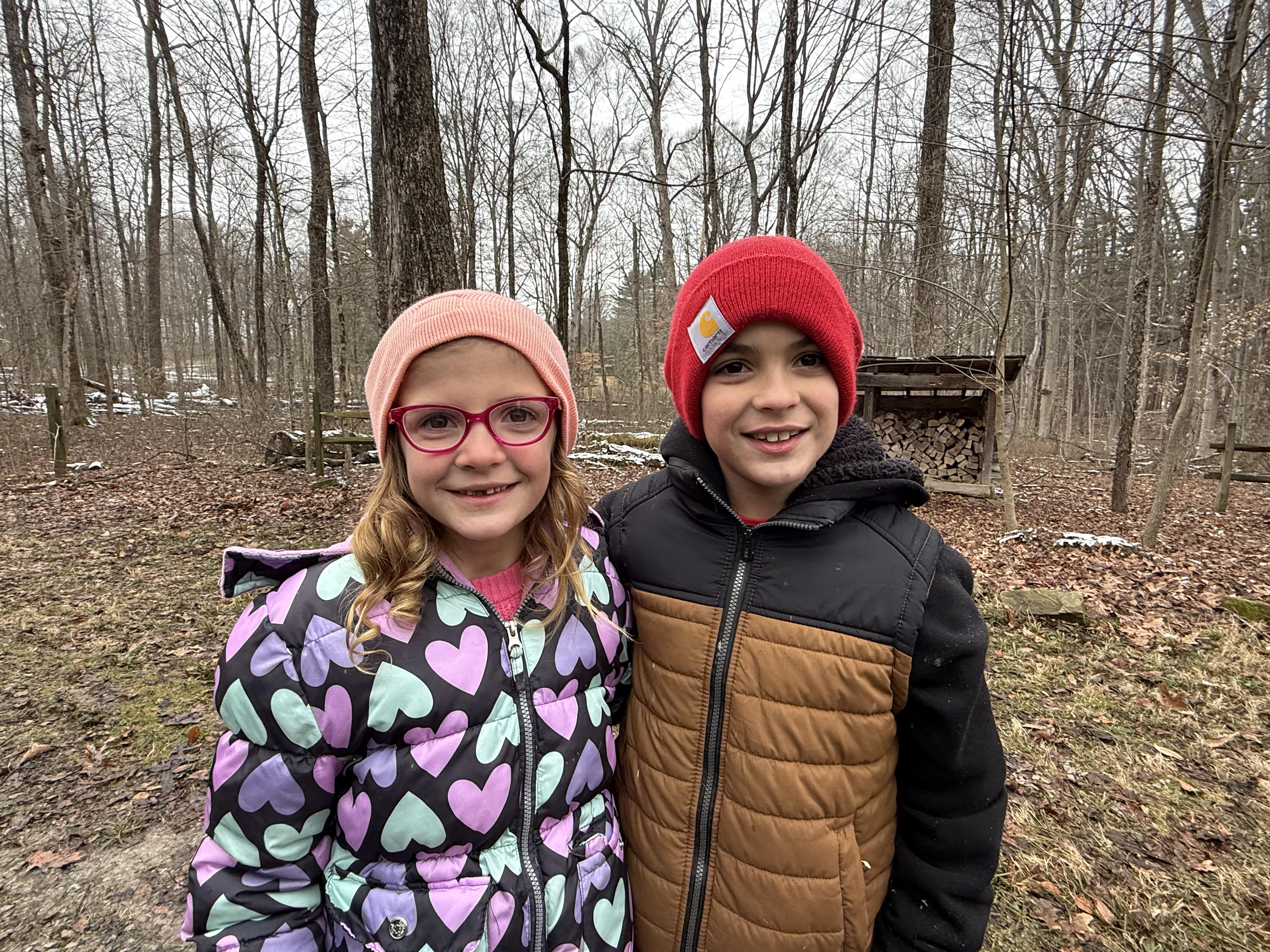
Photo by Donna Chang
Photo by Donna Chang
Caroline (left) and Emmett (right)
Emmett can taste the difference between the real and the fake maple syrup: The real one tastes sweeter, he said.
“I like the real one. I always get sugared up,” he said. Emmett’s mom laughed.
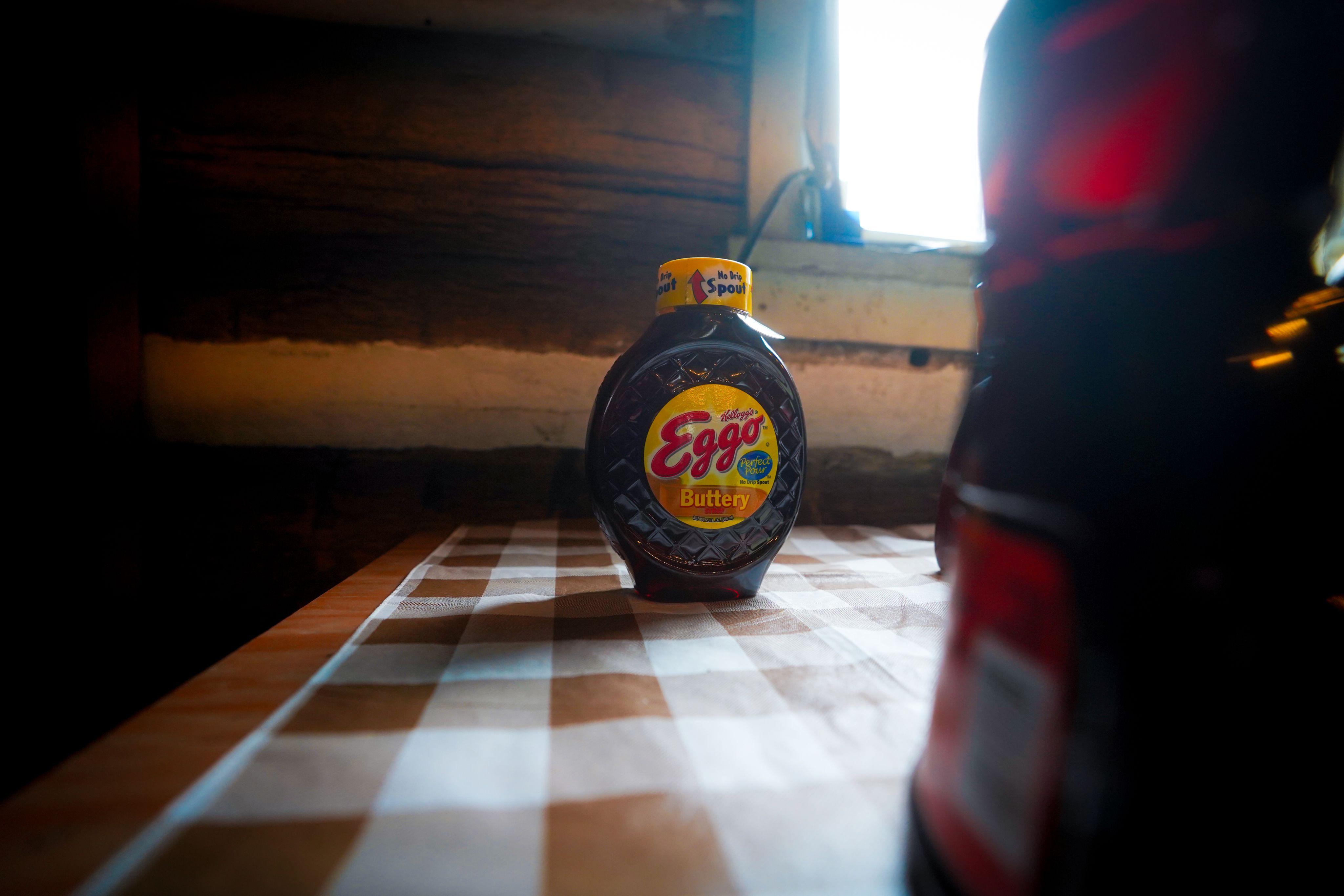
Photo by Grant Hunter
Photo by Grant Hunter
Caroline enjoyed carrying the wood to the fireplace for the volunteers who were heating the sap.
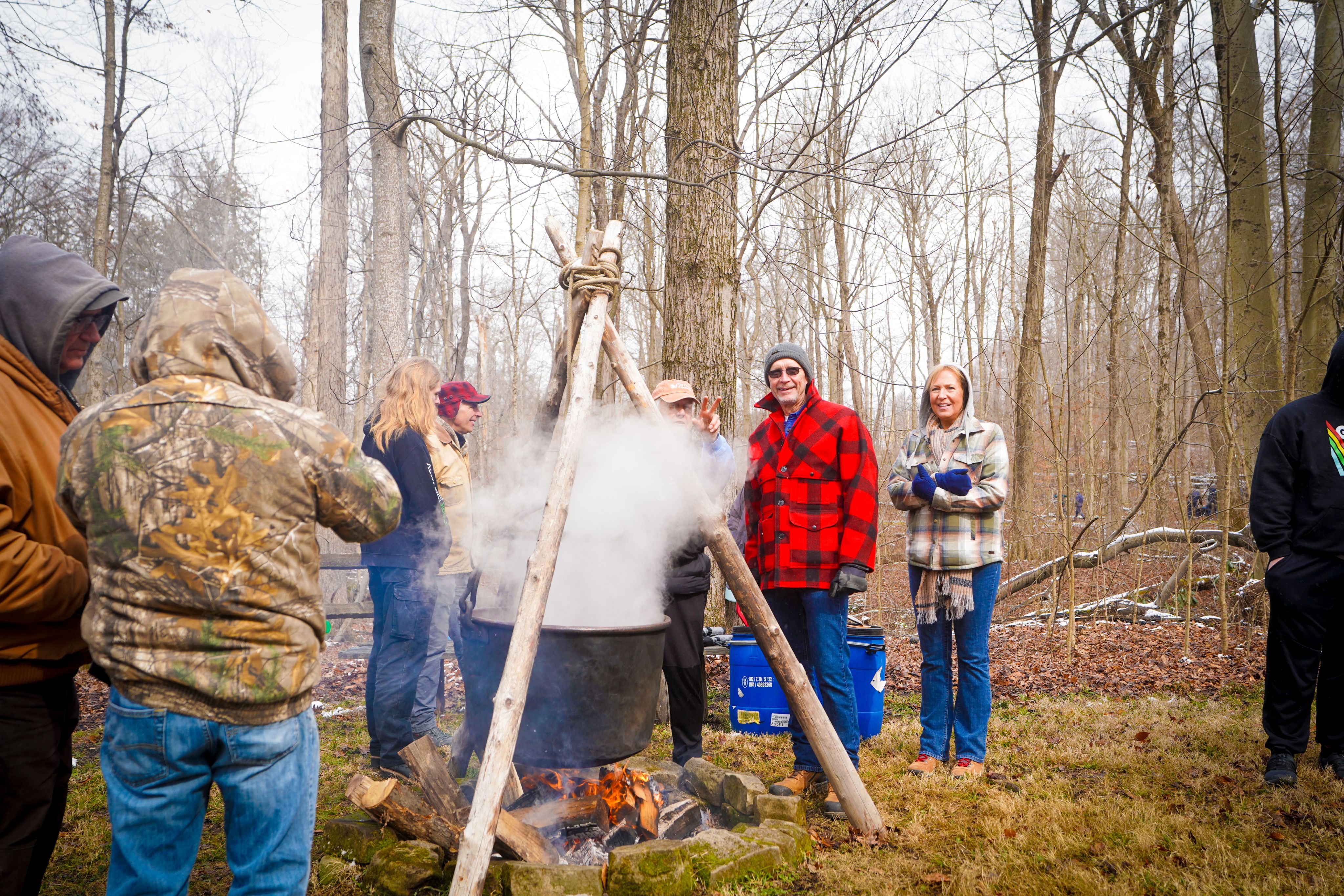
Photo by Grant Hunter
Photo by Grant Hunter
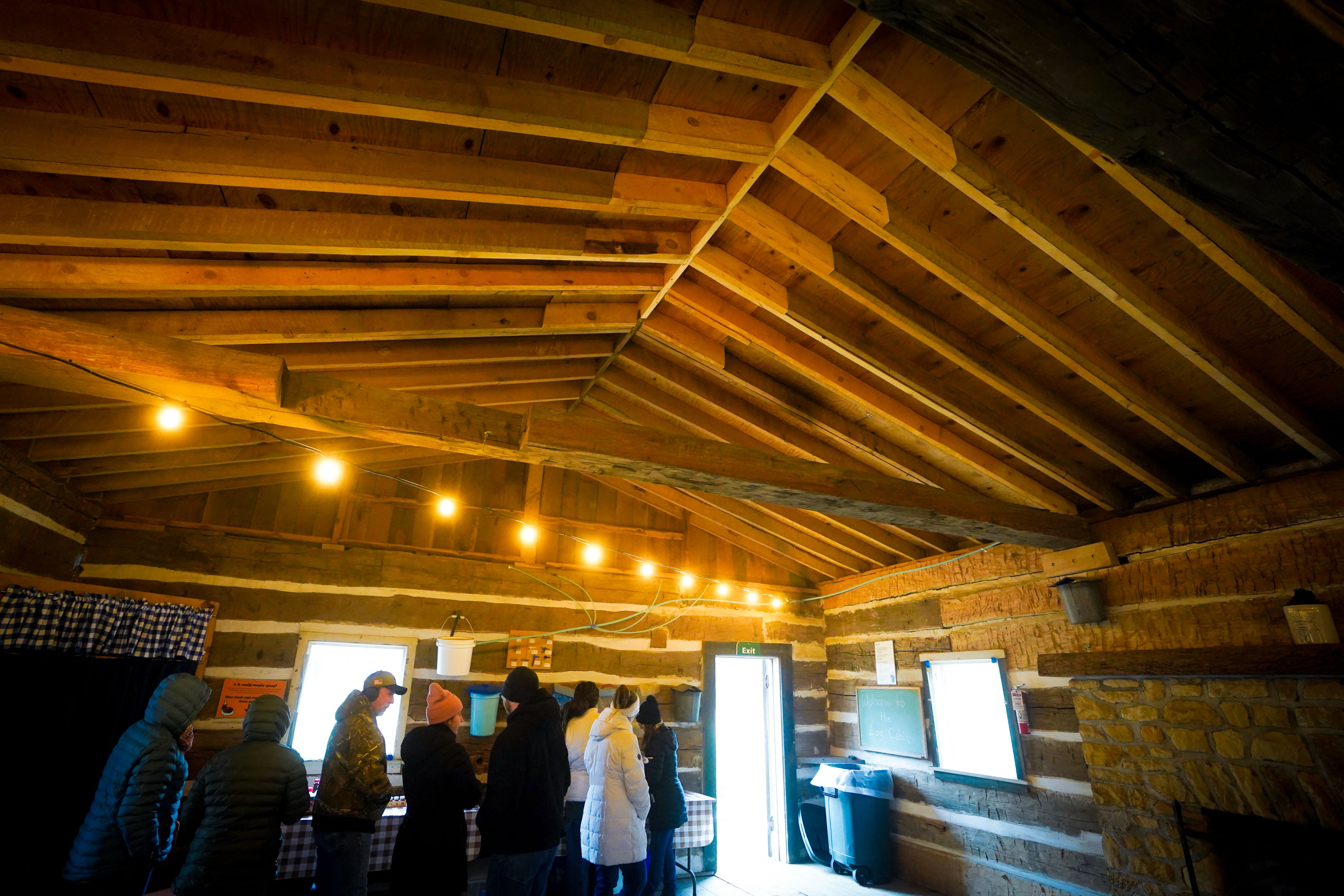
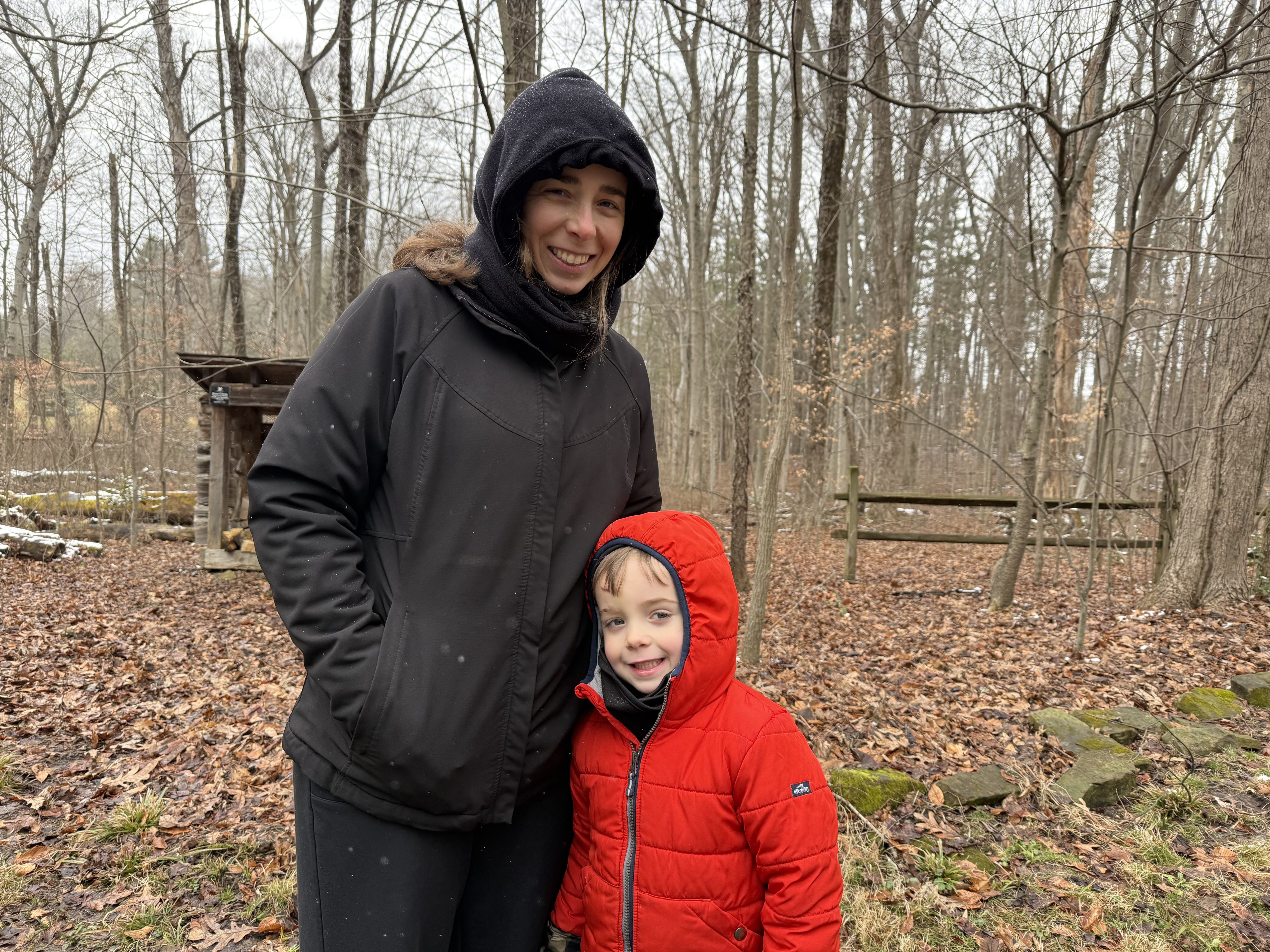
Photo by Donna Chang
Photo by Donna Chang
Elizabeth Biggers (left) and Christopher Biggers (right)
“The history of the Dawes family and their connection with the maple trees and how they’ve produced it over the years was interesting… I don’t think the kids were interested in that, but I enjoyed it,” Elizabeth Biggers said.
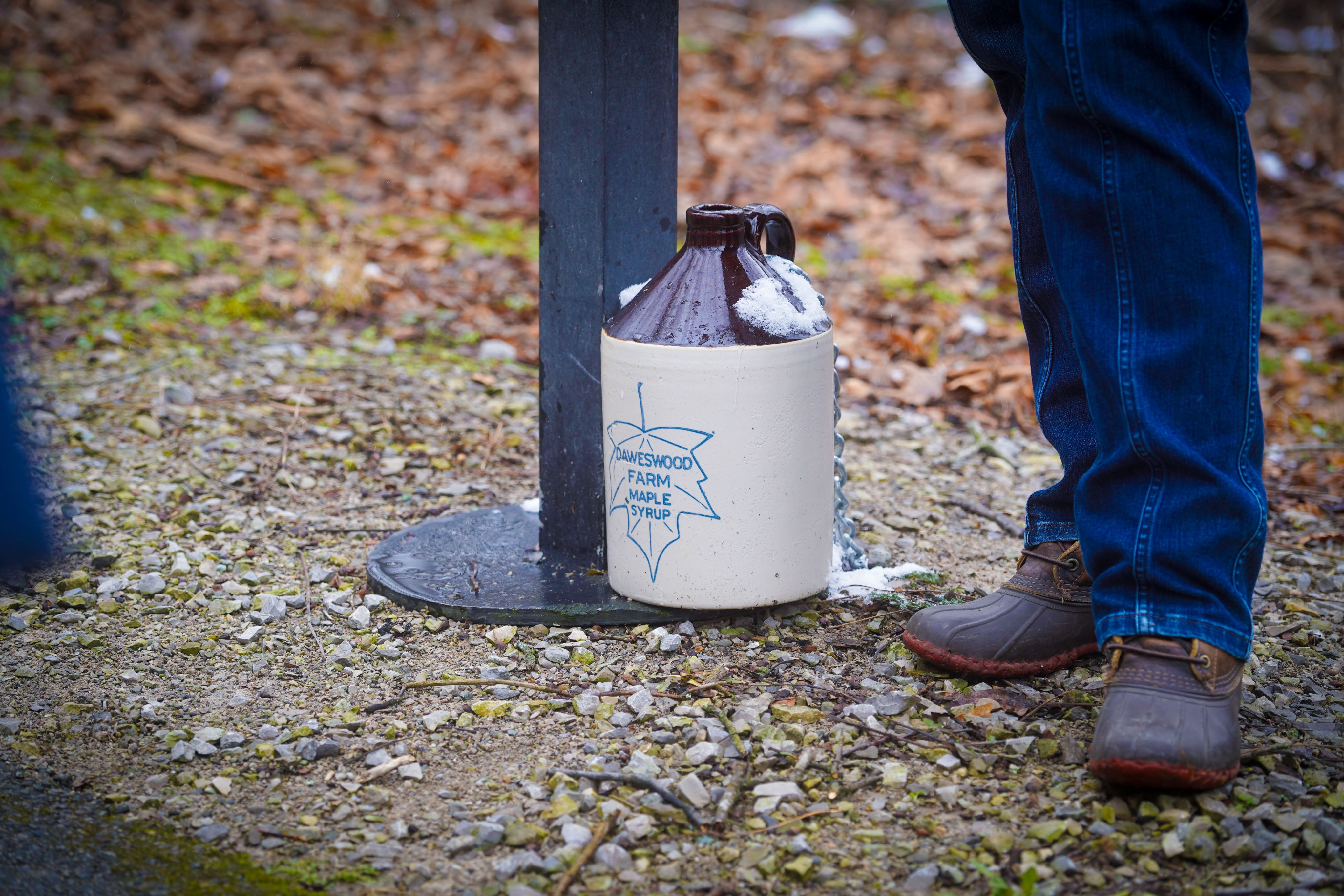
Photo by Grant Hunter
Photo by Grant Hunter
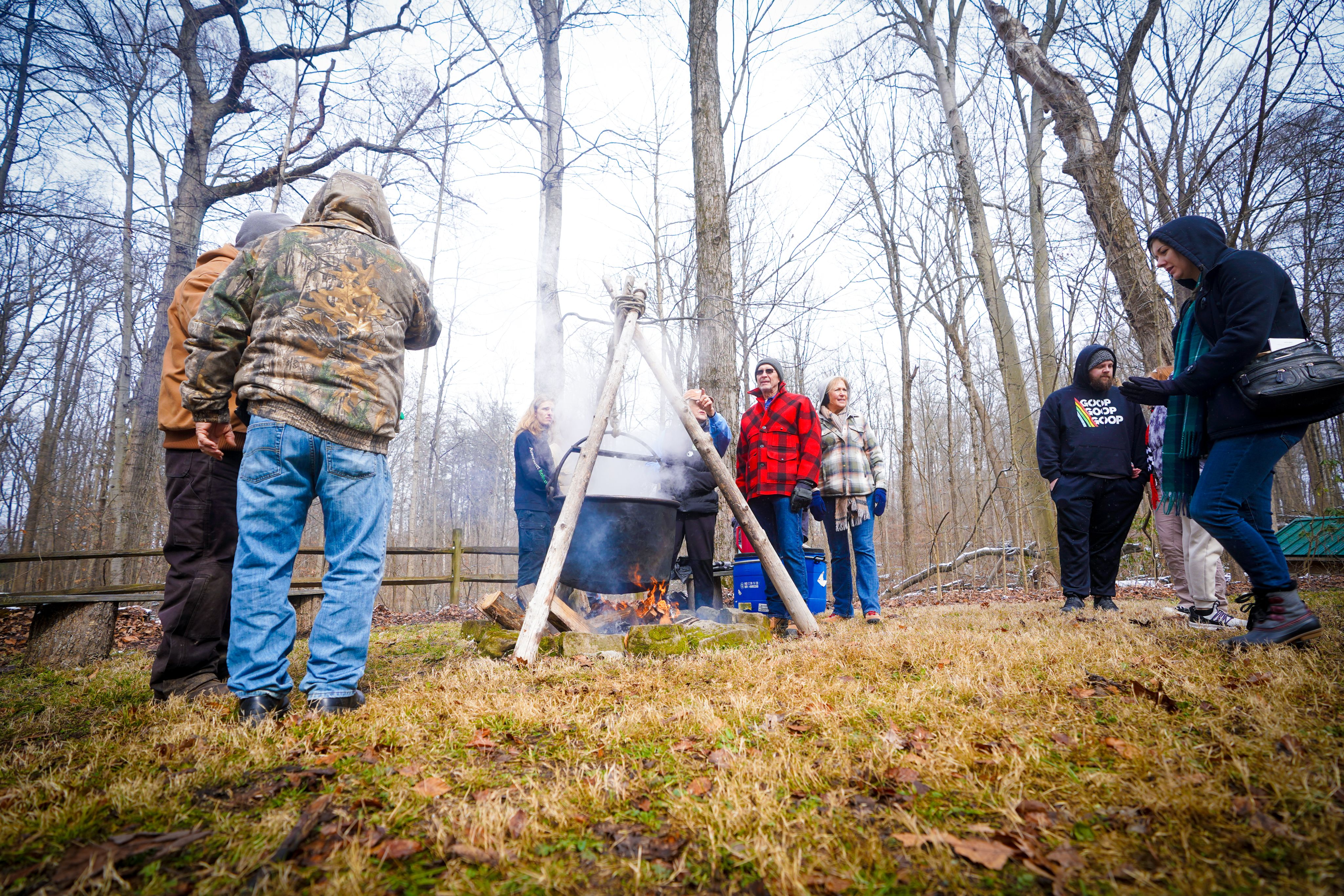
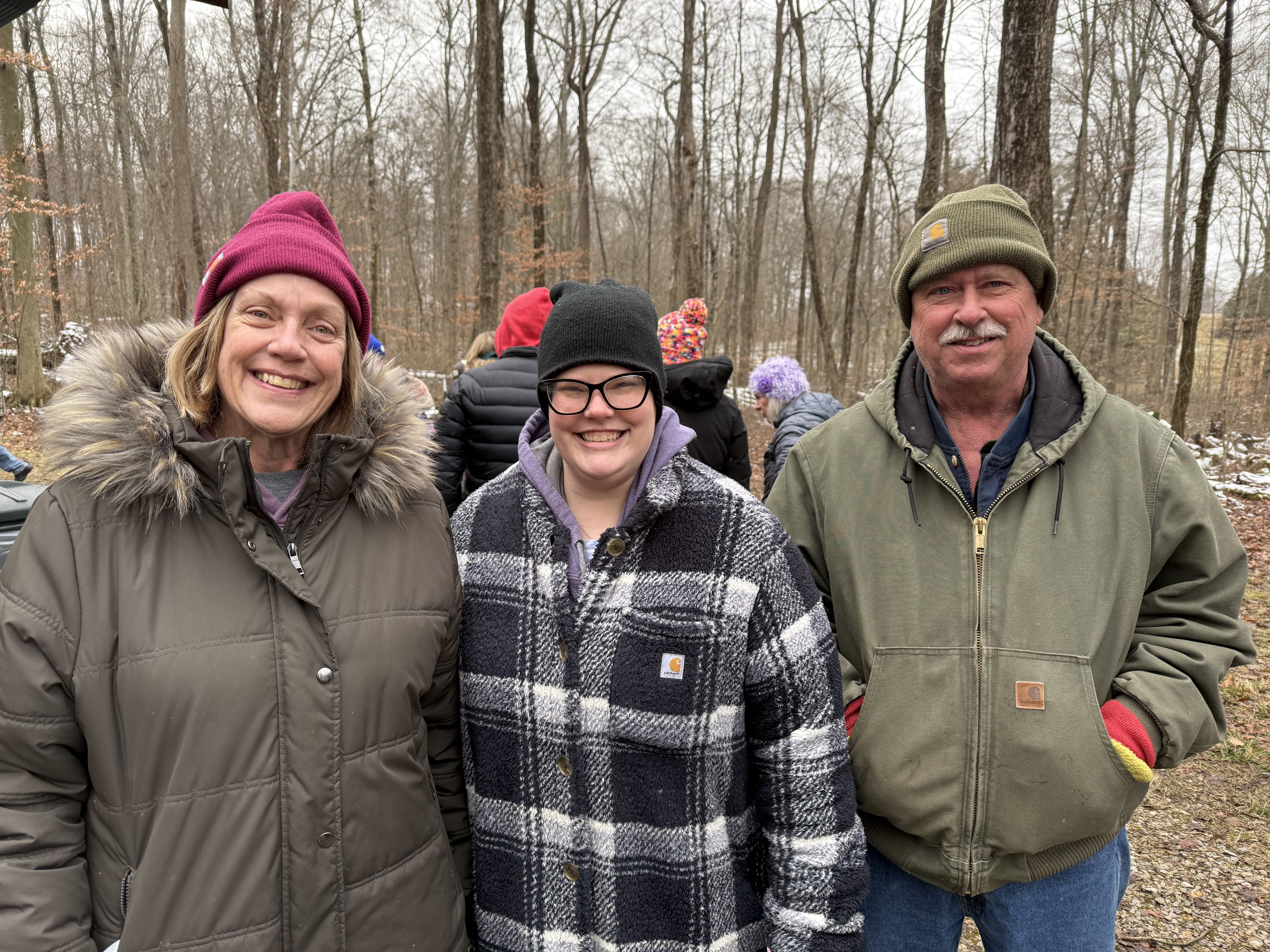
Photo by Donna Chang
Photo by Donna Chang
Terry Irwin (left), Jalyn Broughton (middle) and Steve Irwin (right)
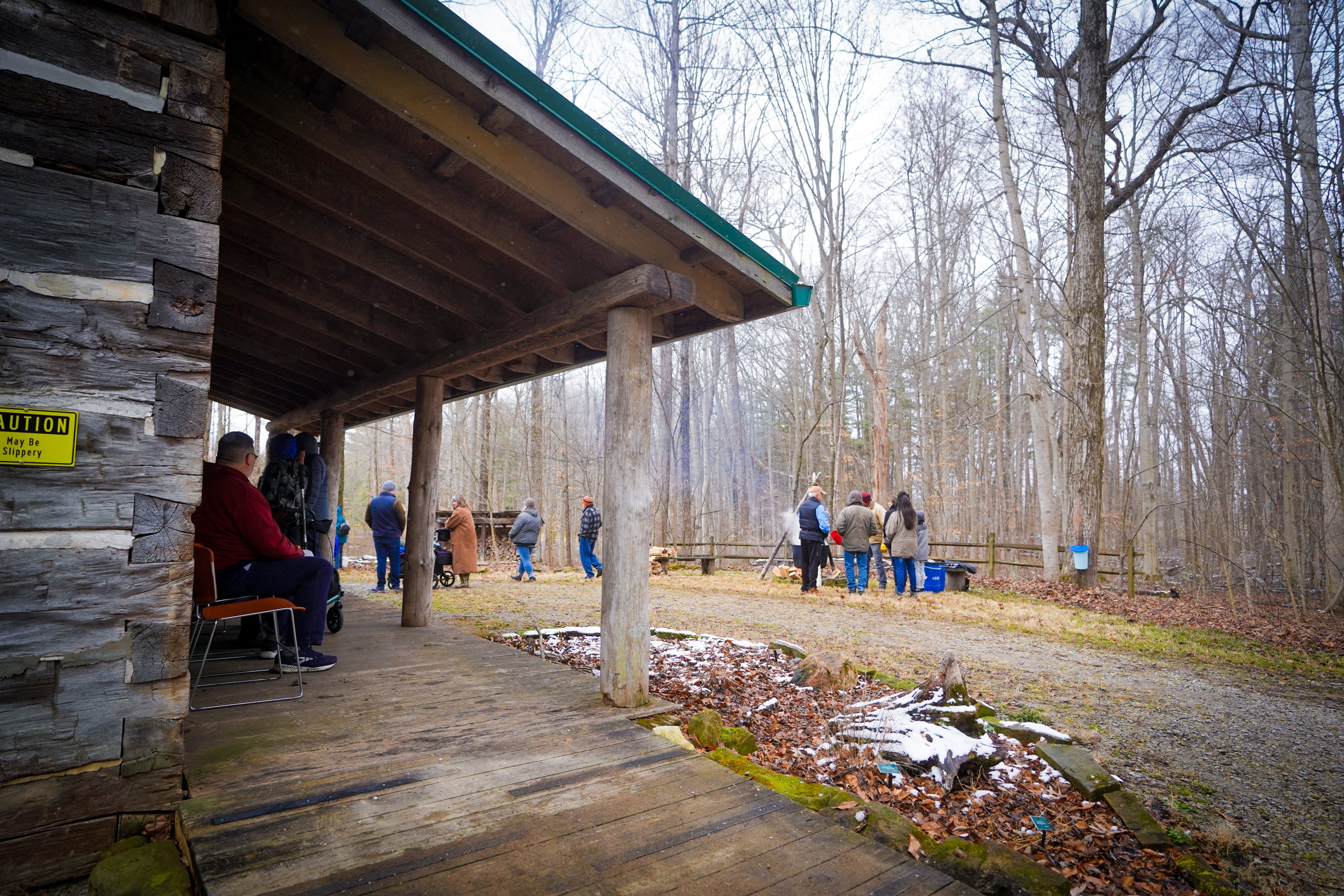
Photo by Grant Hunter
Photo by Grant Hunter
“We bought a membership to the arboretum, and we’ve been coming here and walking, but we’ve never been into the log cabin. And we’ve never been here for syrup day, so we thought that would be really interesting… They had the hickory syrup made out of hickory bark, which I thought was really interesting, and I never tried it before,” Terry Irwin said.
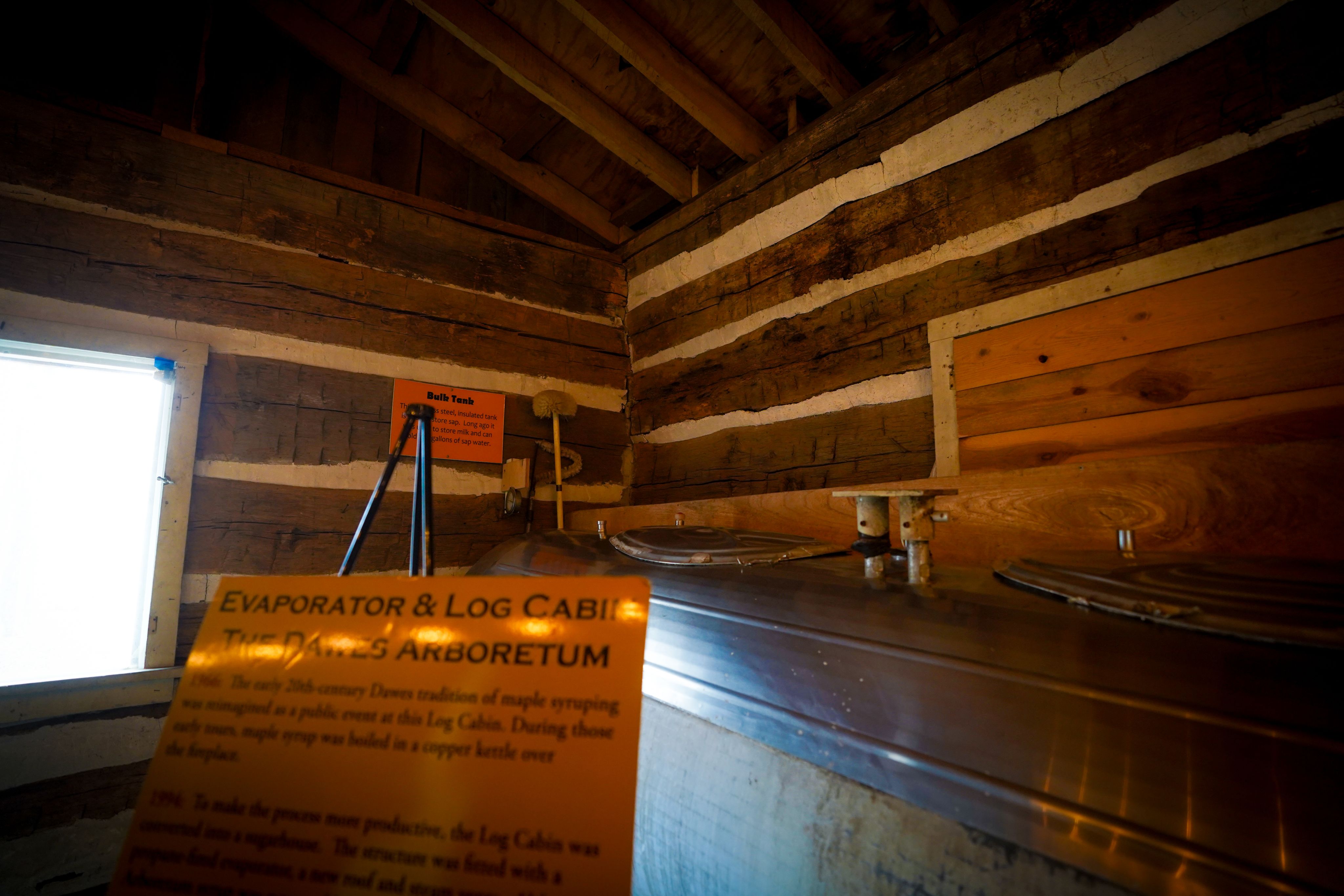
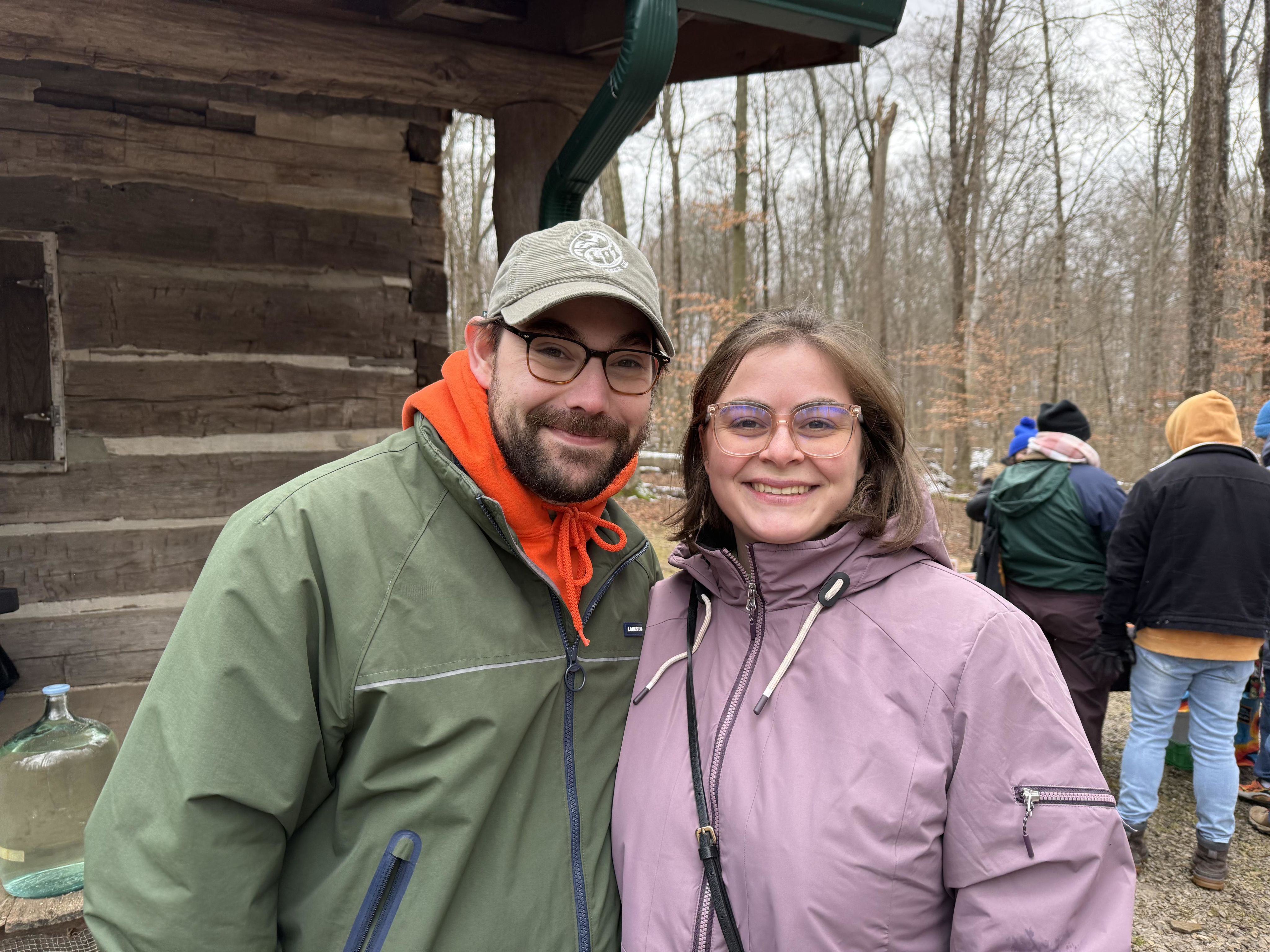
Photo by Donna Chang
Photo by Donna Chang
Andrew Matejcik (left) and Alli Kulbago (right)
“We wanted to check it out. This event is unique to this part of the continent,” Kulbago said.
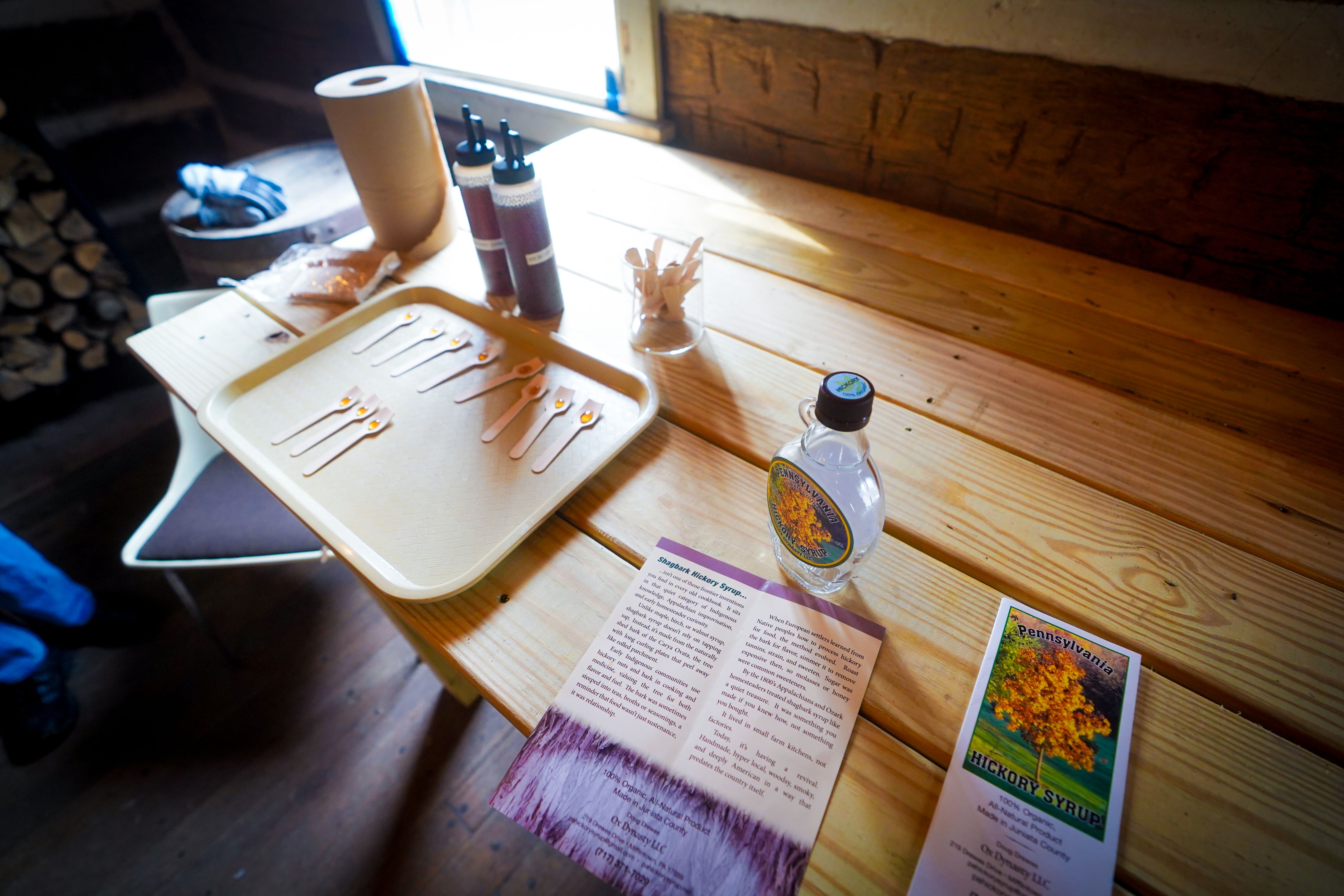
Photo by Grant Hunter
Photo by Grant Hunter
“I didn’t know about Hickory syrup, and I was surprised by the amount of sap to produce the syrup,” Matejcik said.
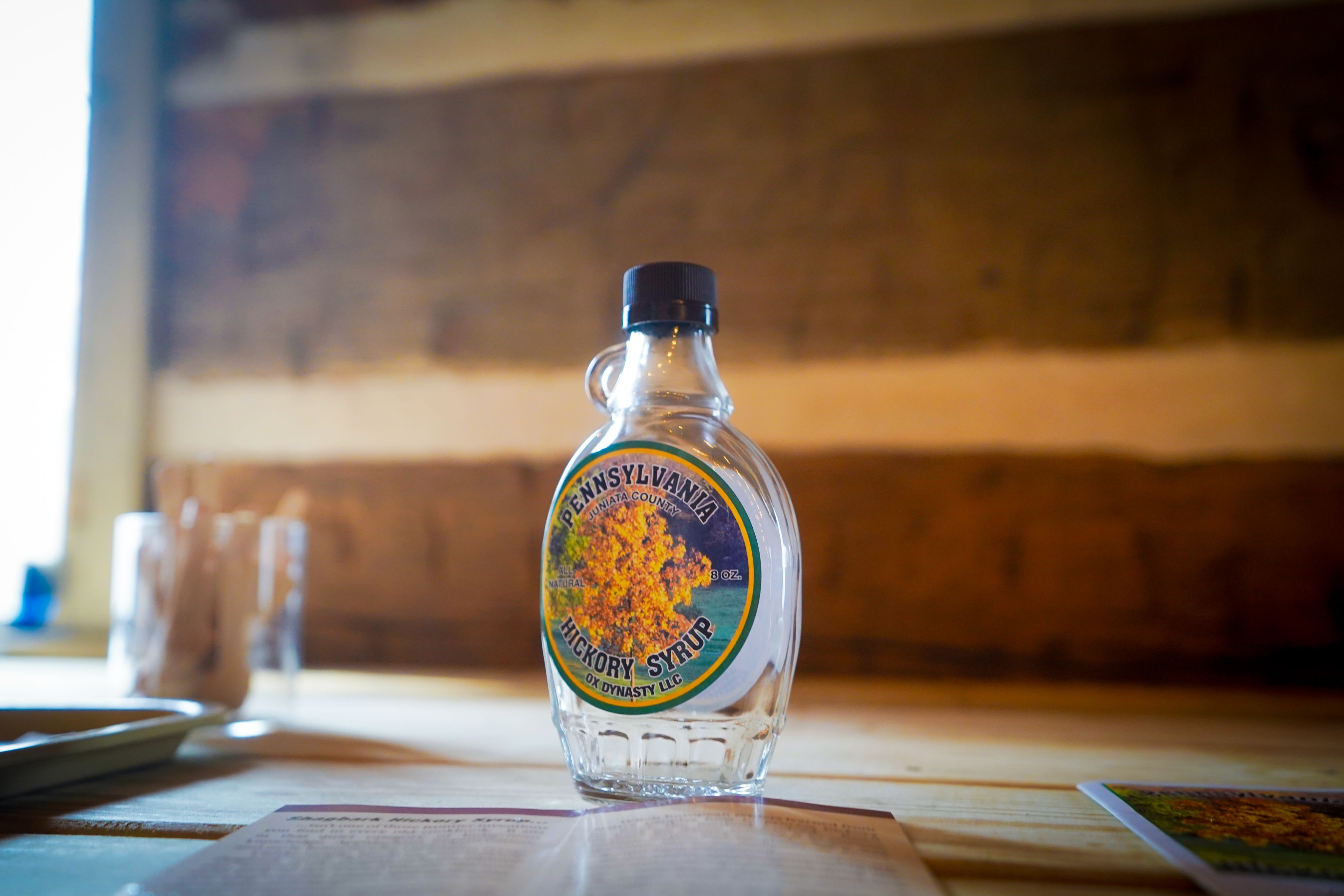
Photo by Grant Hunter
Photo by Grant Hunter
Donna Chang and Grant Hunter write for TheReportingProject.org, the nonprofit news organization of Denison University’s Journalism program, which is supported by generous donations from readers. Sign up for The Reporting Project newsletter here.
 Built with Shorthand