
Bobcats are Back
Bobcats have returned to Licking County. Shauna Weyrauch wants to help them thrive.

Shauna Weyrauch’s phone lights up displaying a photo of her tabby cat, Bernie.
It's a notification: her trail cameras have captured over sixty new photos of wildlife, including bobcats. We get into her Jeep, with a bobcat license plate on the front, and set out to explore.
In 1855, these trail cams would not have captured any bobcats. They were extirpated from Ohio by the mid-19th century due to habitat loss and increased trapping.
But with the recovery of forests and a statewide ban on trapping, the bobcats were able to make a comeback. Bobcat populations have been steadily rising in Ohio over the past twenty years, and in 2014 they were officially taken off the state’s endangered species list. According to the Ohio Division of Wildlife, their population has reached an all time high at 521 total confirmed sightings in 2020 and at least 32 in Licking County.
Credit: Laurel Brown

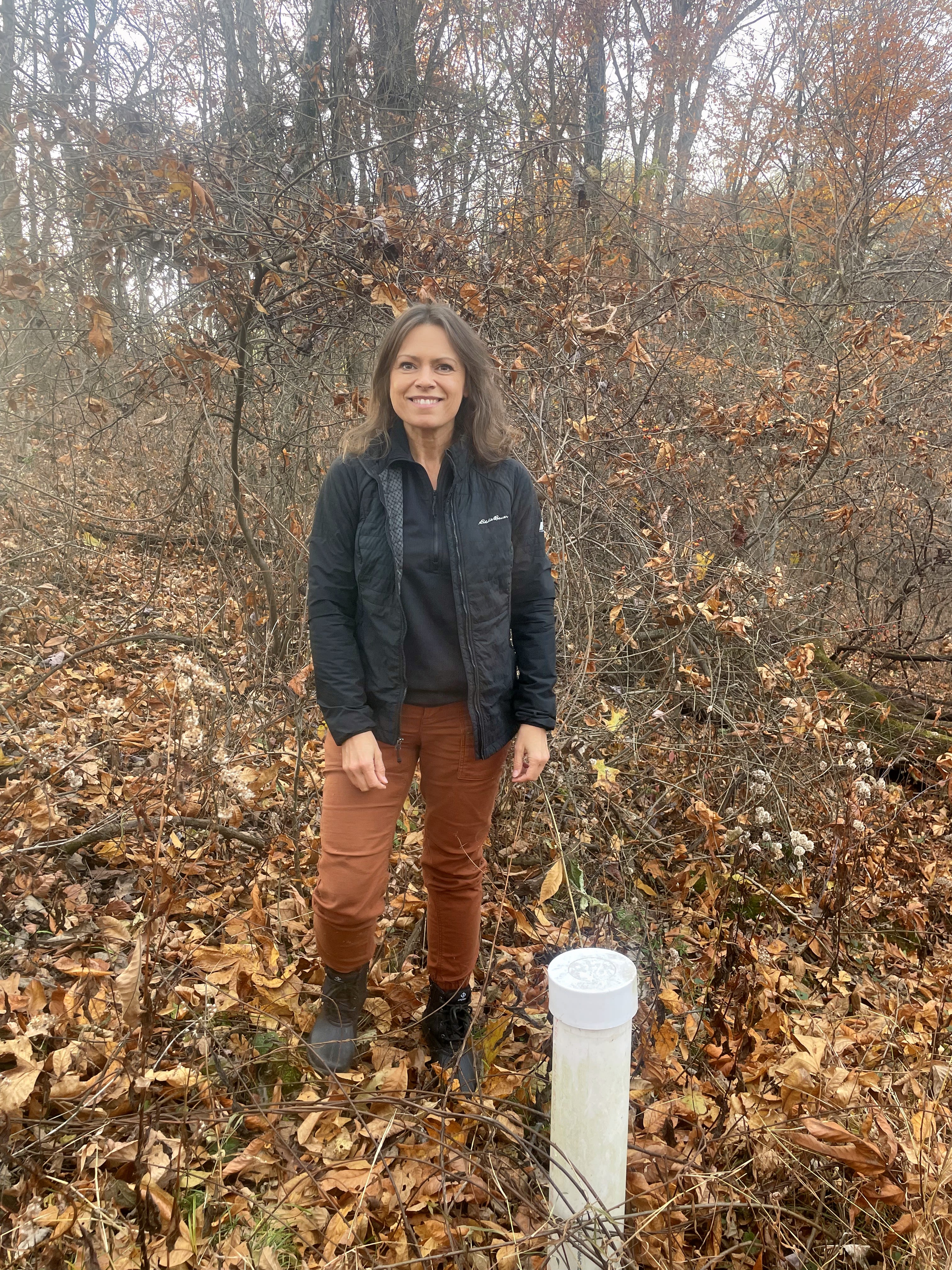
Shauna Weyrauch next to one of her homemade bobcat dens. Credit: Laurel Brown.
Shauna Weyrauch next to one of her homemade bobcat dens. Credit: Laurel Brown.
Weyrauch says that "bobcats are doing pretty well. They're recovering. And to their credit, they're very flexible. They're not super picky. But I think there is a potential lack of denning sites in some areas.”
Bobcats would naturally den in fallen old growth trees that were hollowed out. Since a county like Licking is covered in new growth trees, she is experimenting in creating den sites for the bobcat.
Weyrauch is an ecologist, conservation biologist, and bobcat lover. She teaches biology at Ohio State University Newark. When she’s not in the classroom, she’s out in the field. In 2015 Weyrauch and Andy Roberts started Project Wild Coshocton to explore bobcat population recovery in Coshocton and Holmes counties.
Over the past few years the program has expanded. Weyrauch and Roberts created four dens for the species in 2022 and are currently studying human reactions to the return of the bobcat.
In Weyrauch's office, her walls are covered with pictures of bobcats. A children’s book, The Boy and the Bobcat, written by Weyrauch and wildlife photographer Dutch Gordon, sits on her bookshelf. Her love for these big cats is evident. But it isn’t just displayed through decorations in her office. It also shines through her devoted conservation efforts in Ohio.
“I'm interested in ecology. I like to use ecological information to try to do something practical with it. So that's where the dens came in. You have the food, but you don't have the house. Where are they going to live?” said Dr. Weyrauch.
Bobcats were abundant across Ohio before European settlers began arriving in Licking County, according to the Ohio Department of Natural Resources (ODNR). But it was not long before settlement and logging practices destroyed any available habitat for the eastern bobcat.
"It takes a long time to grow a forest," says Doug Spieles, professor of sustainabillity and environmental studies at Denison University. " Something like a bobcat needs a forest that's probably 100 years old or more to get big enough trees, big enough habitat, big enough interior space to have a place to live. So, it's not like you can just wave a magic wand and say, ‘Oh, we want bobcat habitat here.’ Well, it might take you a lifetime, right? Or maybe a couple lifetimes to get it there."
Lindsey Krusling, a wildlife communications specialist at ODNR, told the Athens Messenger that the bobcat resurgence is due to habitat restoration efforts.
Tree cover in Ohio, which dropped as low as 10%, is up to 30% statewide. Weyrauch is in the community of conservationists responsible for gains in restoring health to the ecosystem.
Credit: Laurel Brown
Weyrauch has always been a cat person, but she hasn’t always studied bobcats. In college, she initially studied amphibians. When she read about bobcats being removed from the state threatened and endangered species list, she couldn’t help but get excited and look further into it. This prompted her transition into focusing on bobcat ecology and conservation.
“It just kind of happened. And I’m super happy that it did,” she said. “I mean, it's probably because, ever since I was in kindergarten, I have loved big cats. But, I love amphibians, too. It’s like asking what your favorite kid is.”
As an ecologist and animal lover at heart, Weyrauch started turning her passion into action. She began sharing her love for science and animals with students at OSU Newark when she began teaching there in 2003. Then in 2015, the idea for Project Wild Coshocton formed.

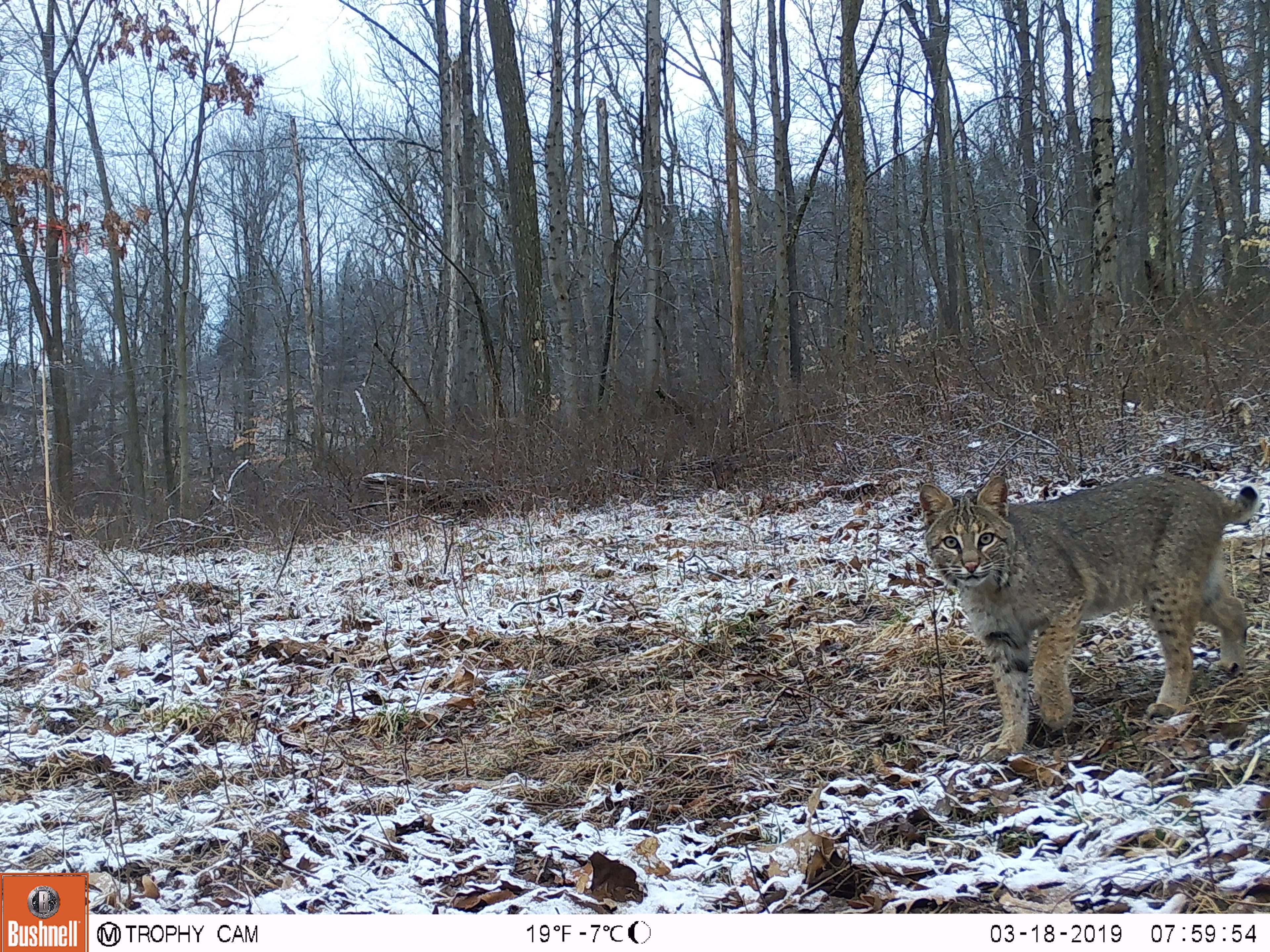

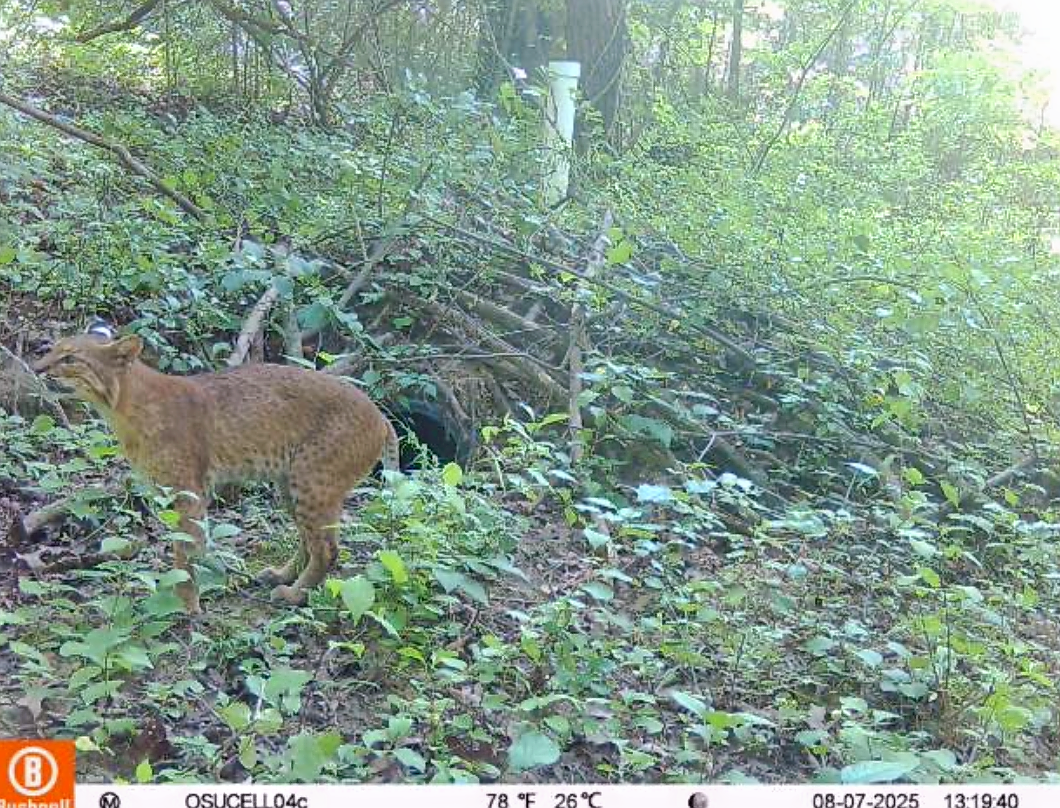
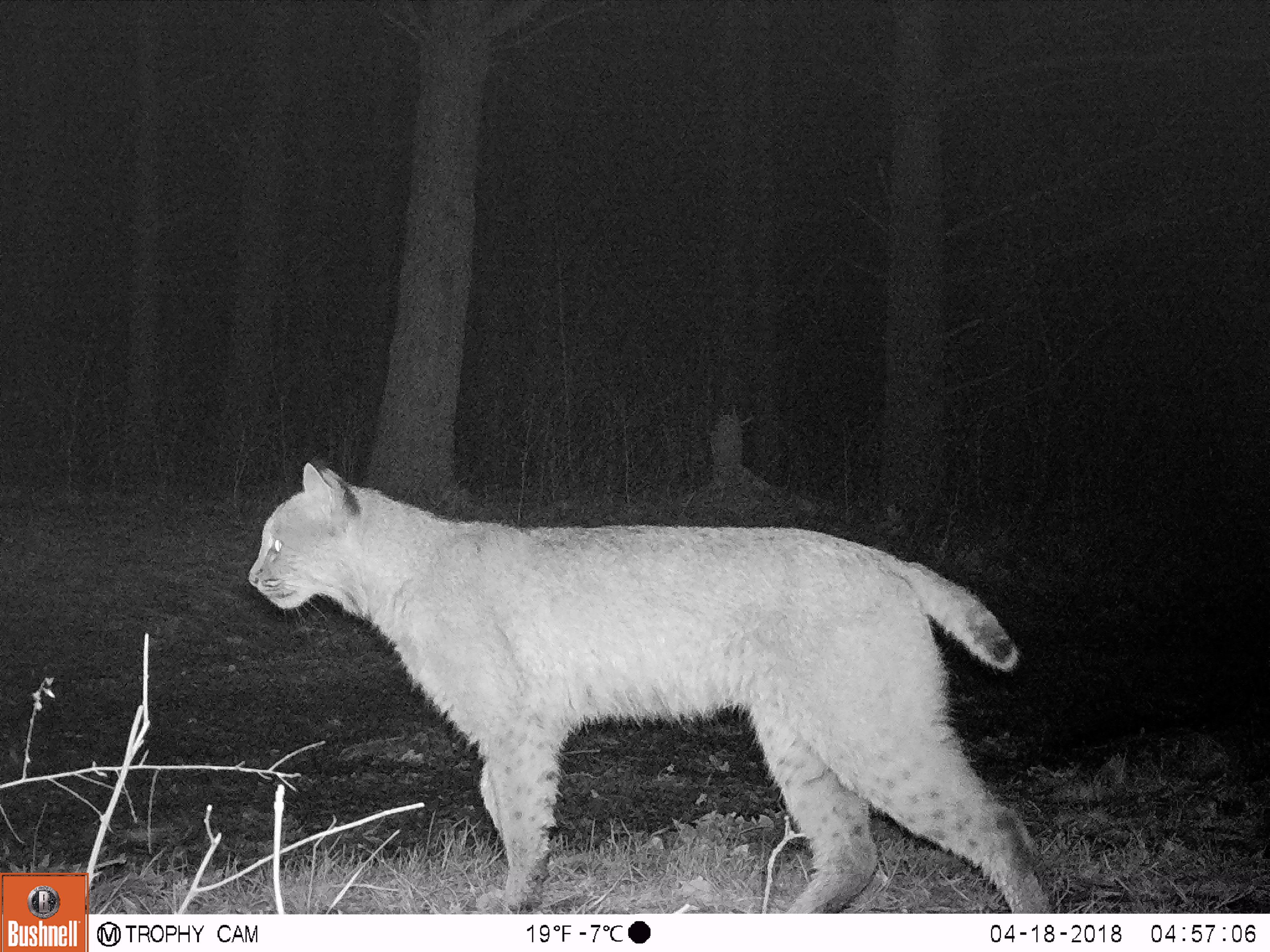

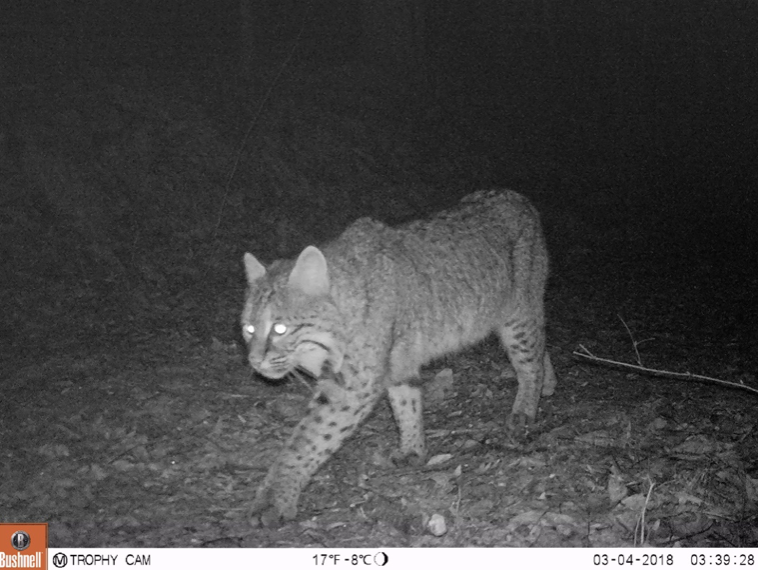

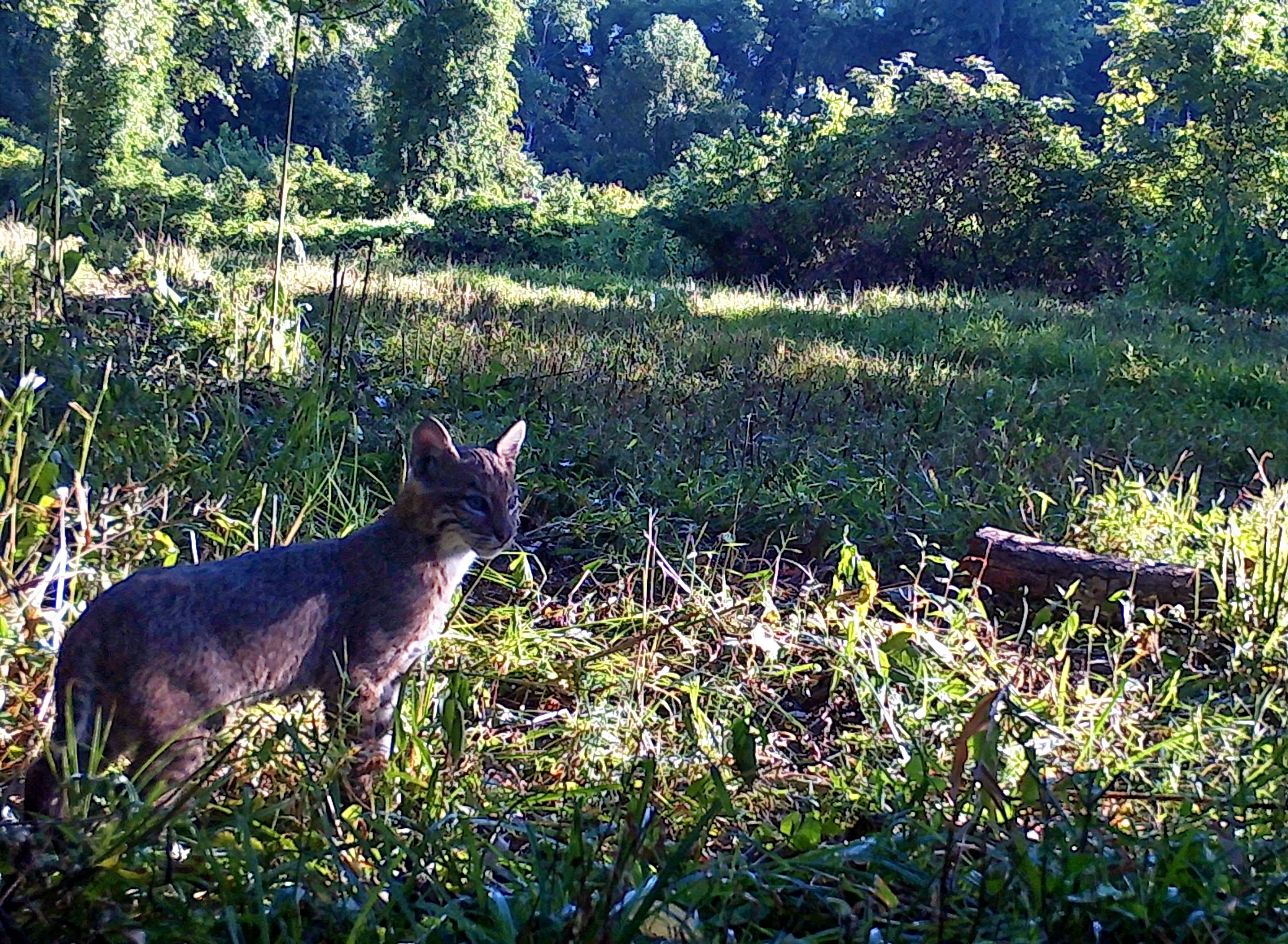

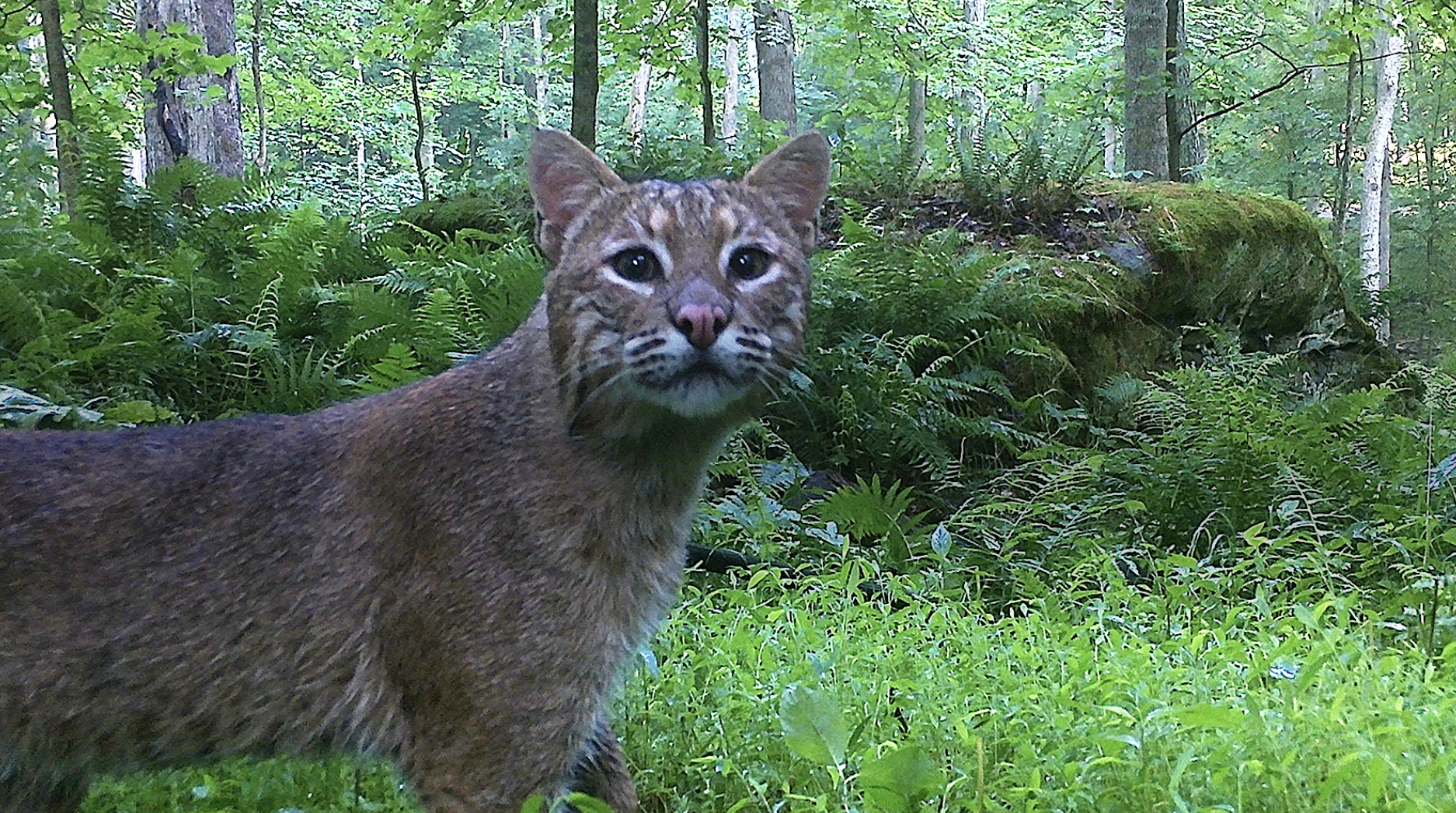

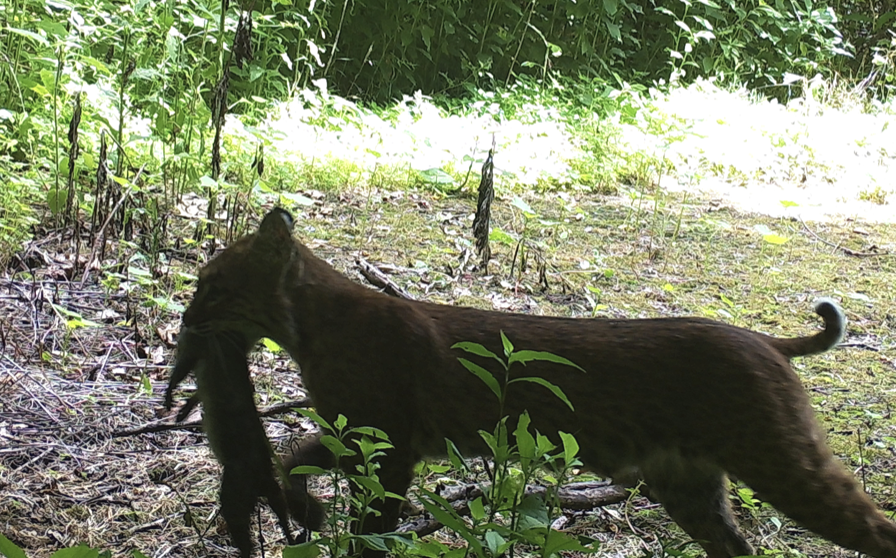
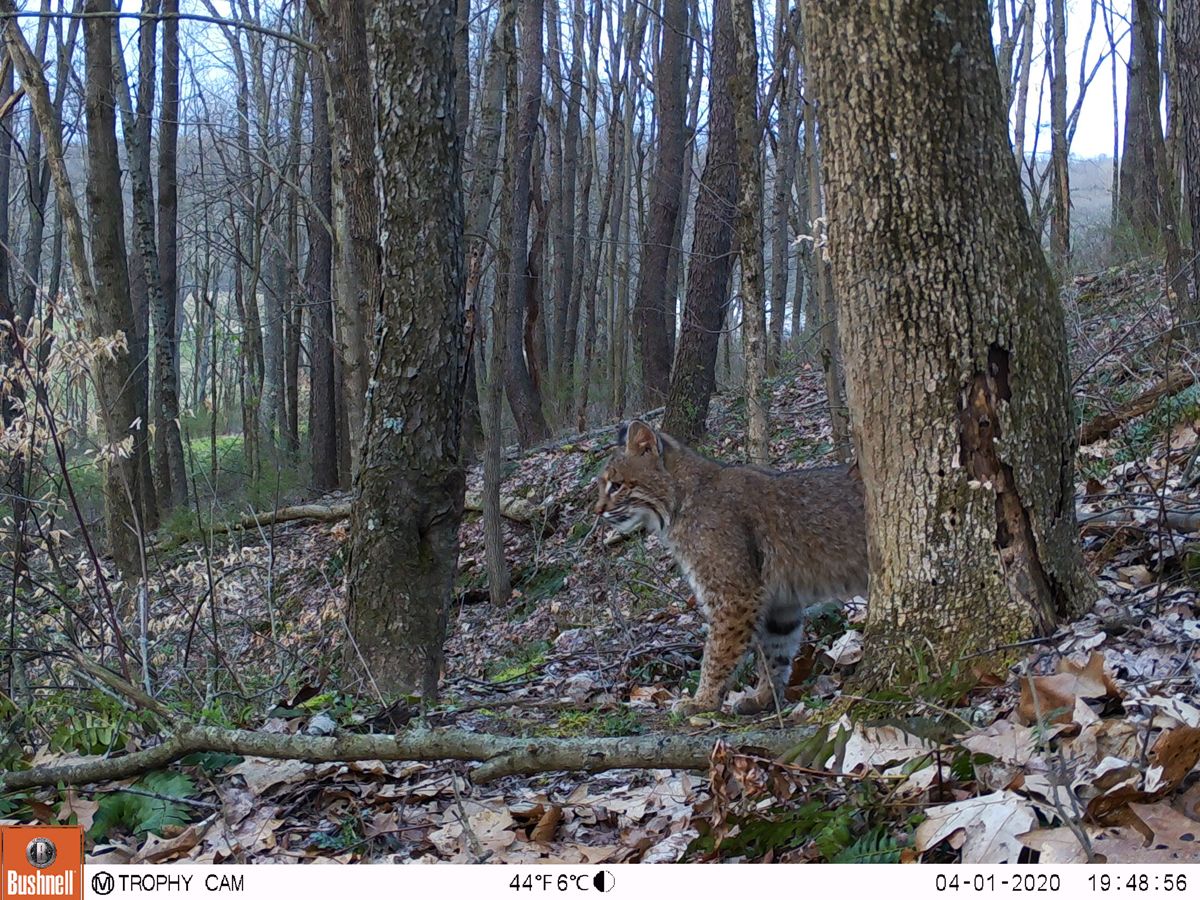

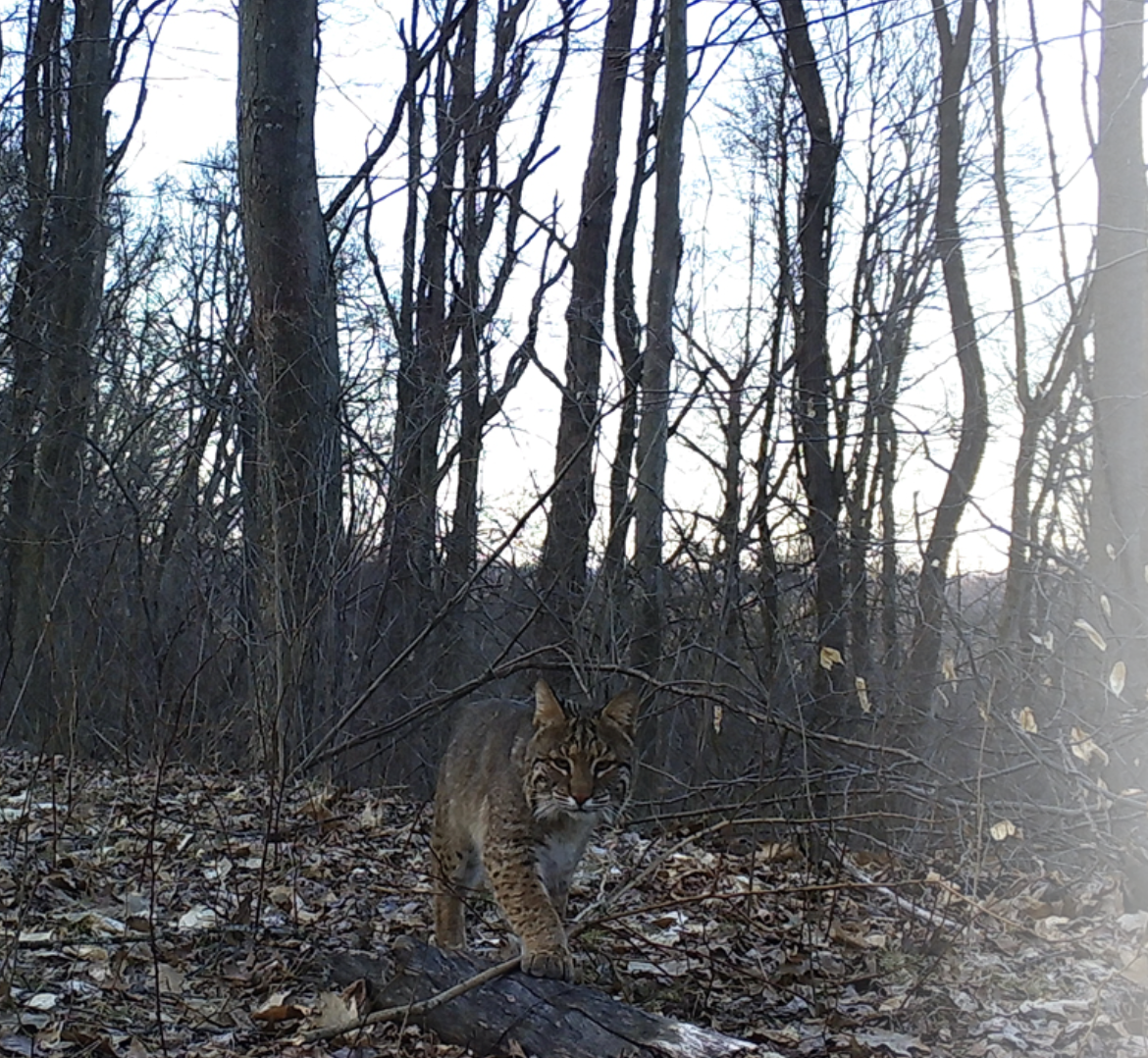

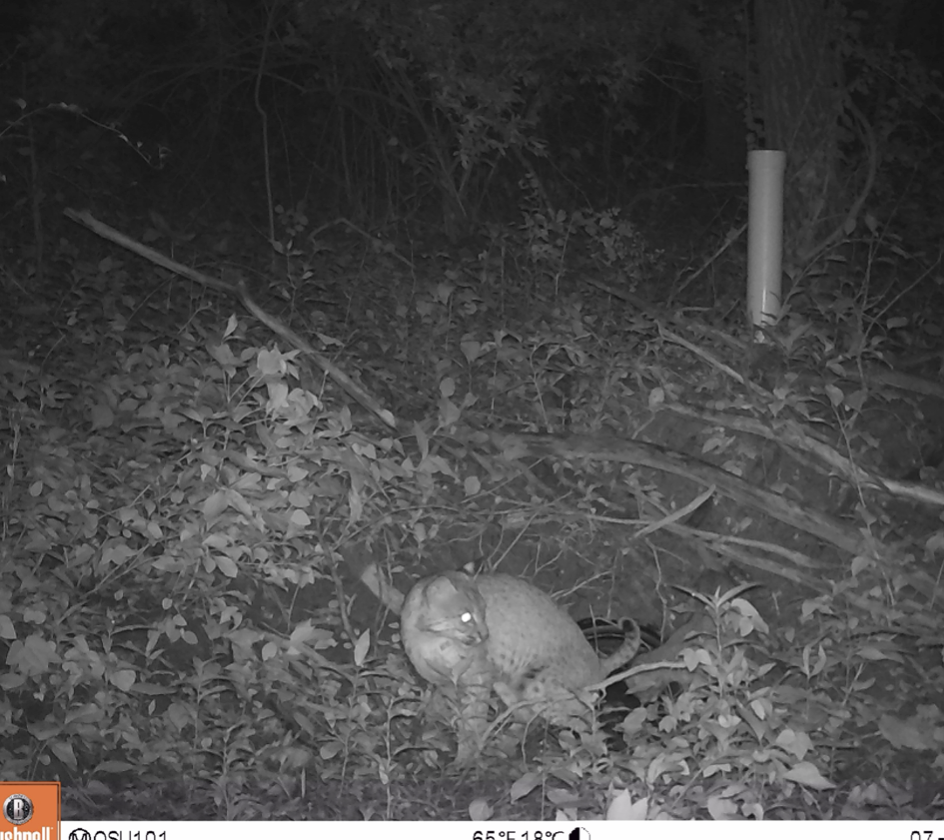
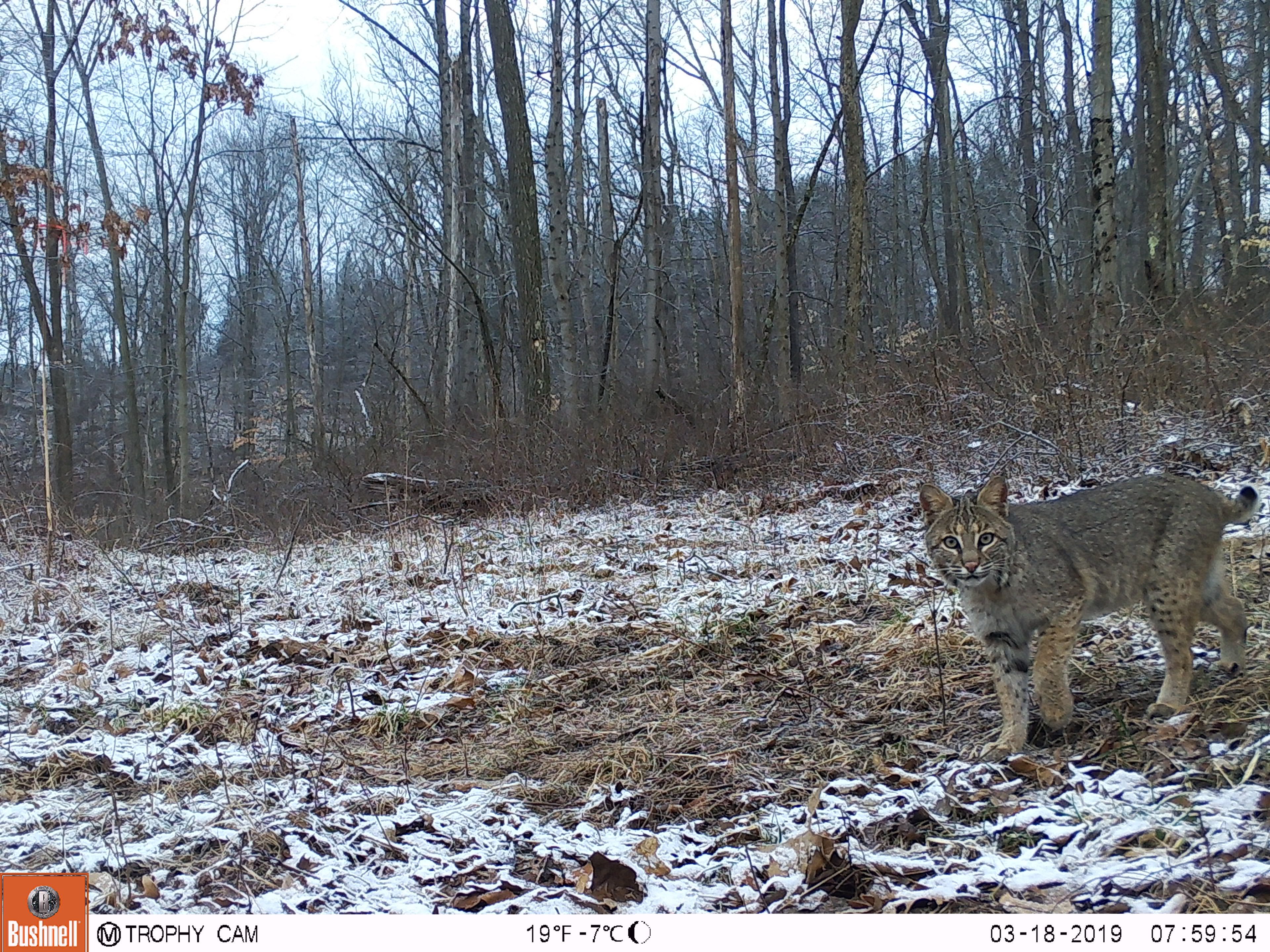
A collection of bobcats photos captured by the trail cameras in Coshocton County. Photos courtesy of Shauna Weyrauch.
A collection of bobcats photos captured by the trail cameras in Coshocton County. Photos courtesy of Shauna Weyrauch.
The initial emphasis of the project was to learn more about habitat requirements and the characteristics associated with bobcats living in certain areas. From 2018-2022 Weyrauch and Roberts conducted trail camera surveys in Coshocton County to study their occupancy patterns and interactions with other species. Weyrauch devoted a majority of her time to the study in its early days. It made her love for the species grow.
“When the surveys were going on, we were here every weekend, and our field days would start at the crack of dawn [and last] until sunset. It was brutal. It was a lot of work. But I'm kind of anxious to start that up again. I miss it,” she says.
She still remembers the first photo she caught on one of her trail cameras.
“It was foggy and you could barely make it out. But, yeah, I was like, ‘This is a bobcat.’”
Initially, they studied bobcat behaviors through trail cameras spread throughout the forest and data from local trail cameras that was shared with them. Weyrauch and Roberts went into the field at least once a week with students and volunteers to learn more about the return of the species.
“During that period of time, we were collecting roadkill deer and taking them into the woods. We would cruise this road and find a deer and pull over,” she says smiling. “I could just do field work all day.”

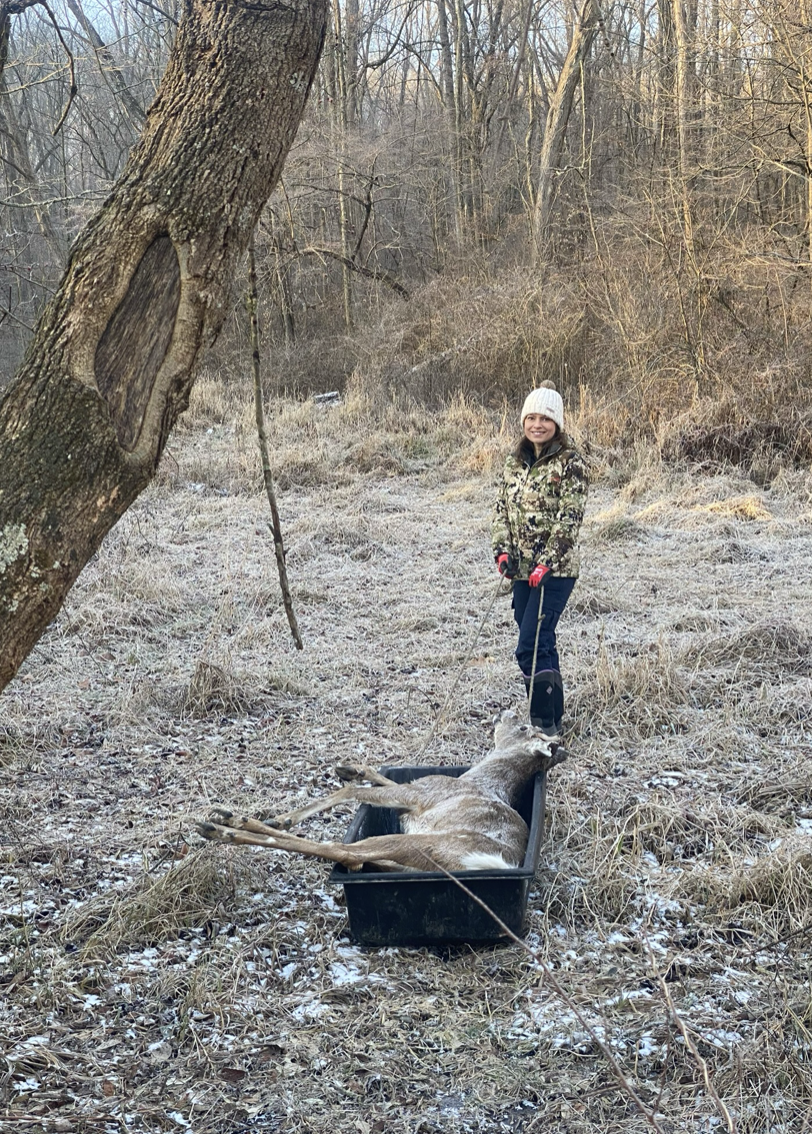
Weyrauch obtained a deer carcass to study how bobcats interact with other species. Credit: Shauna Weyrauch.
Weyrauch obtained a deer carcass to study how bobcats interact with other species. Credit: Shauna Weyrauch.
In 2020 the project expanded to survey areas in Licking County, and in 2022 they began constructing dens. They tested multiple variables such as habitat availability, road location, proximity of rivers, and abundance of predators and prey to determine which impacted bobcat occupancy the most. Her studies indicated that forest cover was the best predictor of bobcat occupancy. After learning about bobcat behaviors and their preferred habitat they began work to create more available habitats in hopes of implementing them in areas that may be lacking.
Weyrauch says, “I definitely want to move more towards Licking County. As far as trying to improve habitat, it makes more sense here, where available den sites are probably scarcer.”

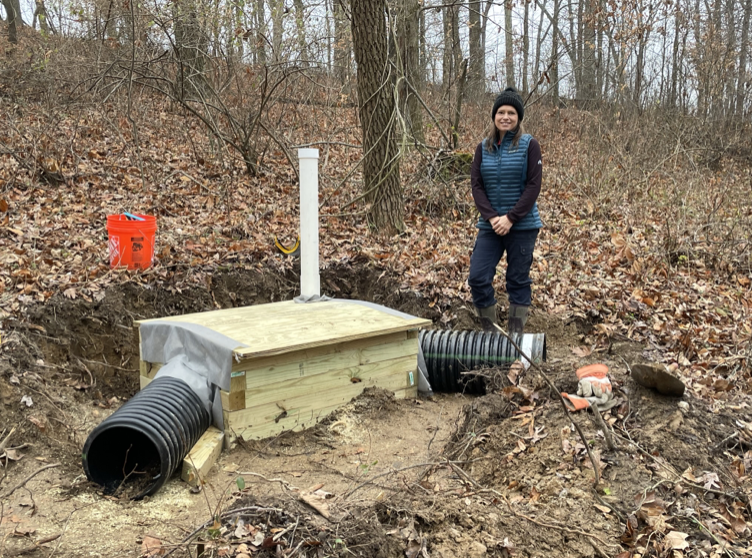
Weyrauch after constructing the den. Credit: Shauna Weyrauch.
Weyrauch after constructing the den. Credit: Shauna Weyrauch.
The human-made dens have piqued the curiosity of the bobcats, but they have yet to use them. This could be due to the design or the fact that the area already has suitable habitat. Dr. Weyrauch has only tested her initial design and plans to make changes in hopes that the bobcats will start to occupy them. When they perfect the den construction, she hopes to expand this conservation work across Ohio in areas such as Columbus and Licking County where forests are less dense and den sites may be a limiting resource.
Some people are excited about the return of the bobcat for different reasons. Some aren't happy about it at all.
Local trappers and hunters have been advocating for a limited bobcat trapping season. A Facebook post from WTRF 7News reads, “Local homeowners are alarmed after a bobcat targets their livestock.” In response, many users comment in support of a bobcat trapping season in Ohio.
Lois Carr says, “Best way is to use your right to bear arms and you will fix the problem.”
“It’s time the ODNR put a season on them. More and more complaints every year of them. I think the population has grown from being extinct and they’re safe again in Ohio at least,” says Chase Thompson.
Don Gayda replies, “Pew pew. Livestock killers are fair game.”
A local Facebook group called “Ohio Outdoorsman for the Management of Bobcats & Predators” also advocate for Ohio to legalize a bobcat trapping/hunting season. Various members comment and post in support of bobcat population control in the name of species protection.
Under a photo of a bobcat feeding on a deceased deer Chris Skrant says, “They’ve been on the common list in Ohio for since 2014… let them trap!”
These are just a few of the many posts complaining about the presence of bobcats and how this population boom impacts other species.
Although bobcats are no longer on the endangered species list, Weyrauch still doesn’t see a hunting/trapping season as necessary. She believes that trapping the animals is cruel and hunting them is unnecessary given their populations only recently recovered, their territoriality prevents them from over-populating, and the fact that they aren’t eaten the way deer are after they’ve been hunted.
“That's a fear I have. That they could be imperiled again. I think it would drop their population down significantly,” says Weyrauch.
In 2018, researchers at Ohio University were awarded a $250,000 grant to study the upsurge in bobcats, but before they had a chance to get halfway through their study, the Division of Wildlife proposed a trapping season on bobcats. While this proposal was ultimately denied, eager hunters are still a potential threat to bobcats.

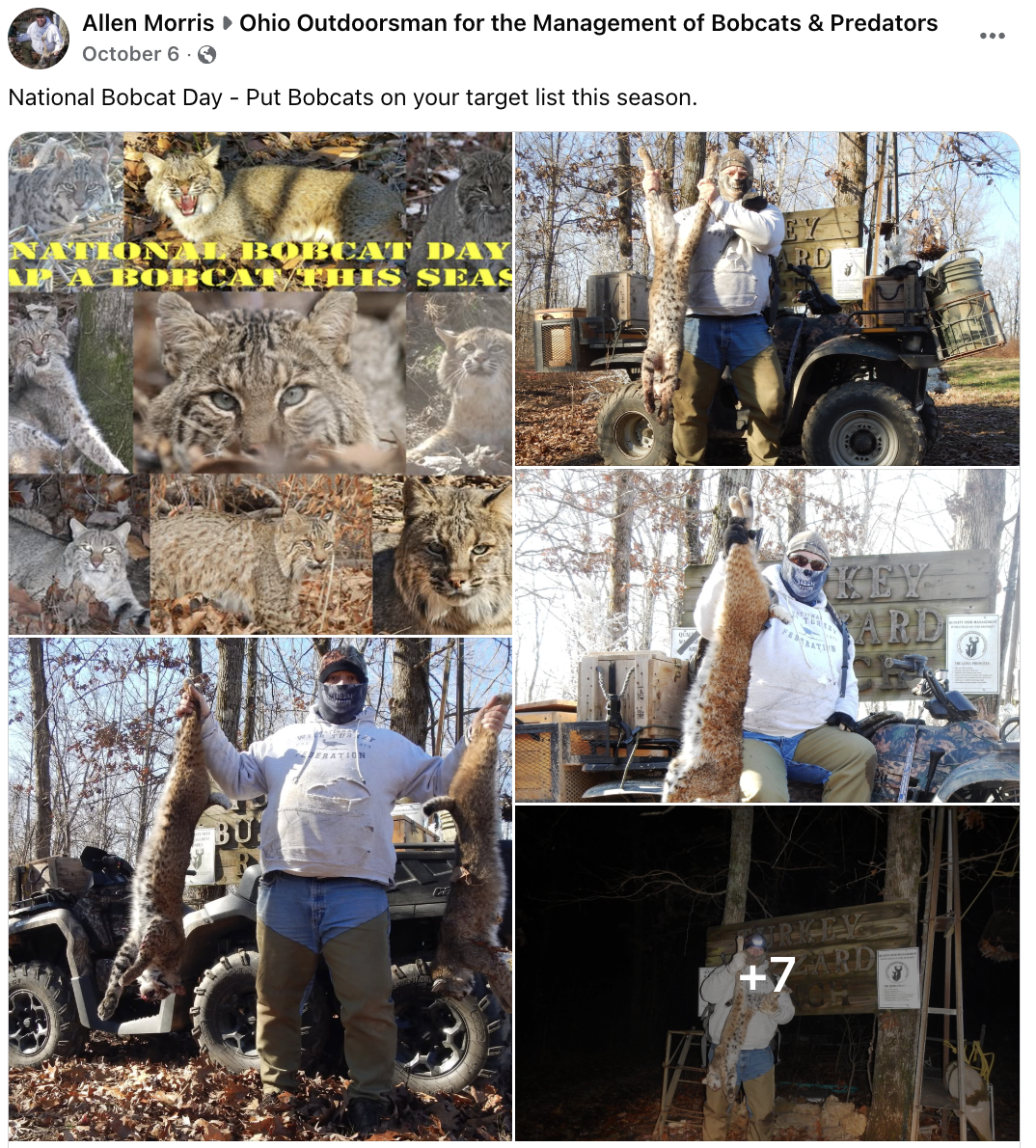
A screenshot from the Ohio Outdoorsmen for the Management of Bobcats & Predators Facebook group.
A screenshot from the Ohio Outdoorsmen for the Management of Bobcats & Predators Facebook group.

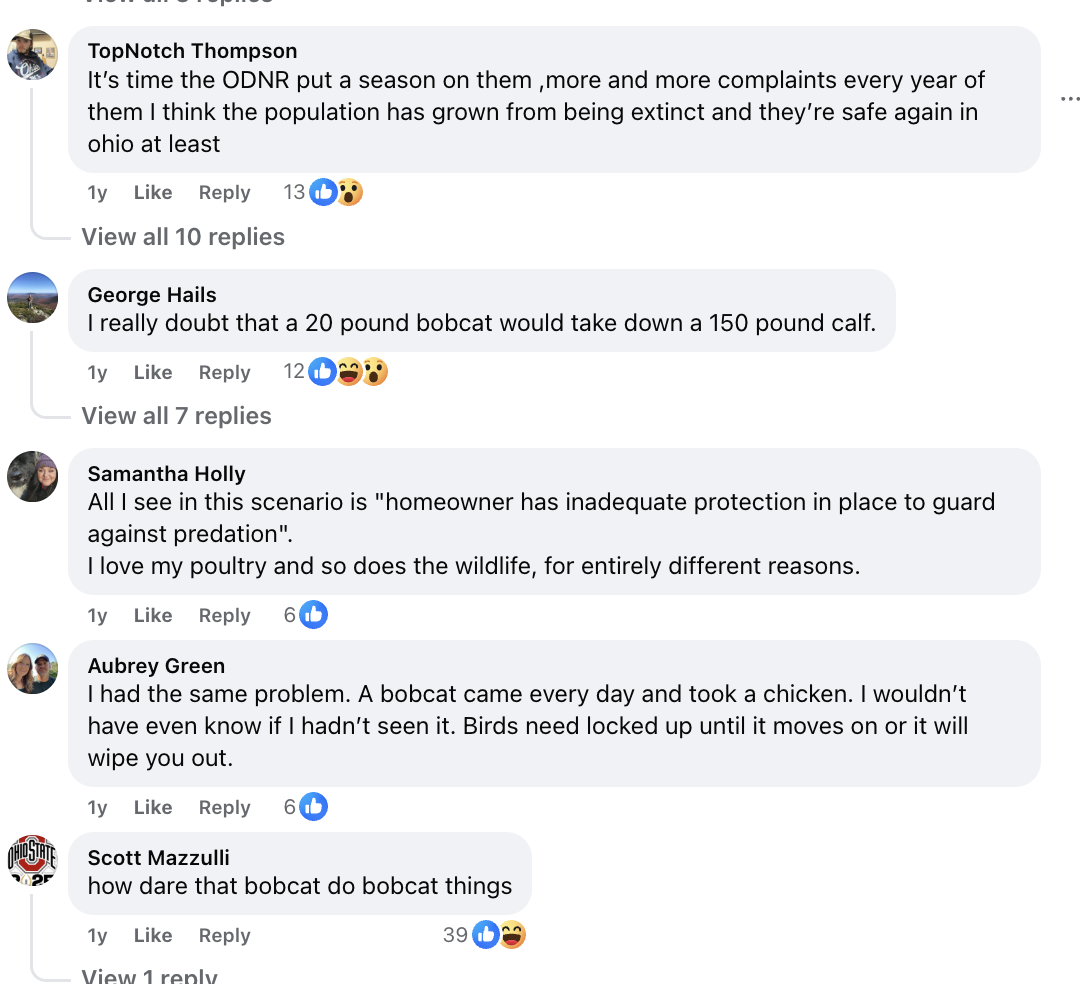
A screenshot of comments disagreeing about bobcats below the Facebook post by WTRF 7News.
A screenshot of comments disagreeing about bobcats below the Facebook post by WTRF 7News.
Bobcat hunting could potentially decrease popuations, according to the Ohio Department of Natural Resources, though proposals that support a trapping/hunting season include limits that would ensure bobcats wouldn’t be hunted to extinction again.
All states surrounding Ohio have a hunting and trapping season on bobcat, but they impose limits on this activity. In West Virginia, for example, hunters and trappers are limited to 3 bobcats between November 1st and February 28, according to the West Virginia Division of Natural Resources.
Some citizens express fear of the wild cat's return. Weyrauch explains that attacks on humans are rare, and there are no known fatalities. “You are more likely to be injured or killed by a lawnmower or taking selfies.”
Some worry about bobcats as a threat to their farms and homesteads, while others say they are a net benefit, controlling predators.
According to the ODNR, bobcats mainly consume mammals like rabbit, other small mammals, and deer, but "they may also consume other prey including insects, reptiles, amphibians, fish, and birds.
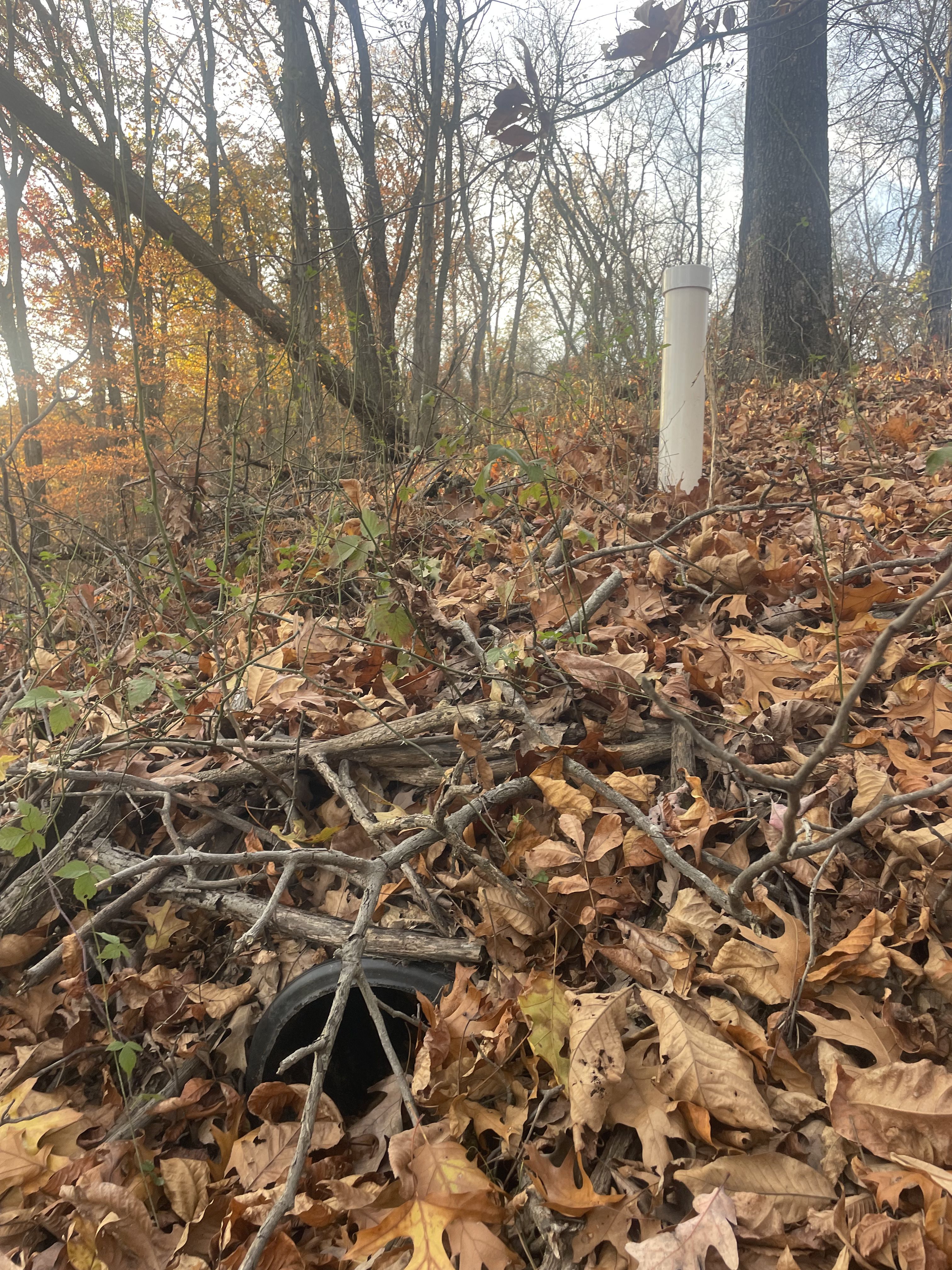
Weyrauch covers the dens with leaves and branches to encourage the bobcats to explore them. The trail camera is inserted through the white pipe. Credit: Laurel Brown.
Weyrauch covers the dens with leaves and branches to encourage the bobcats to explore them. The trail camera is inserted through the white pipe. Credit: Laurel Brown.

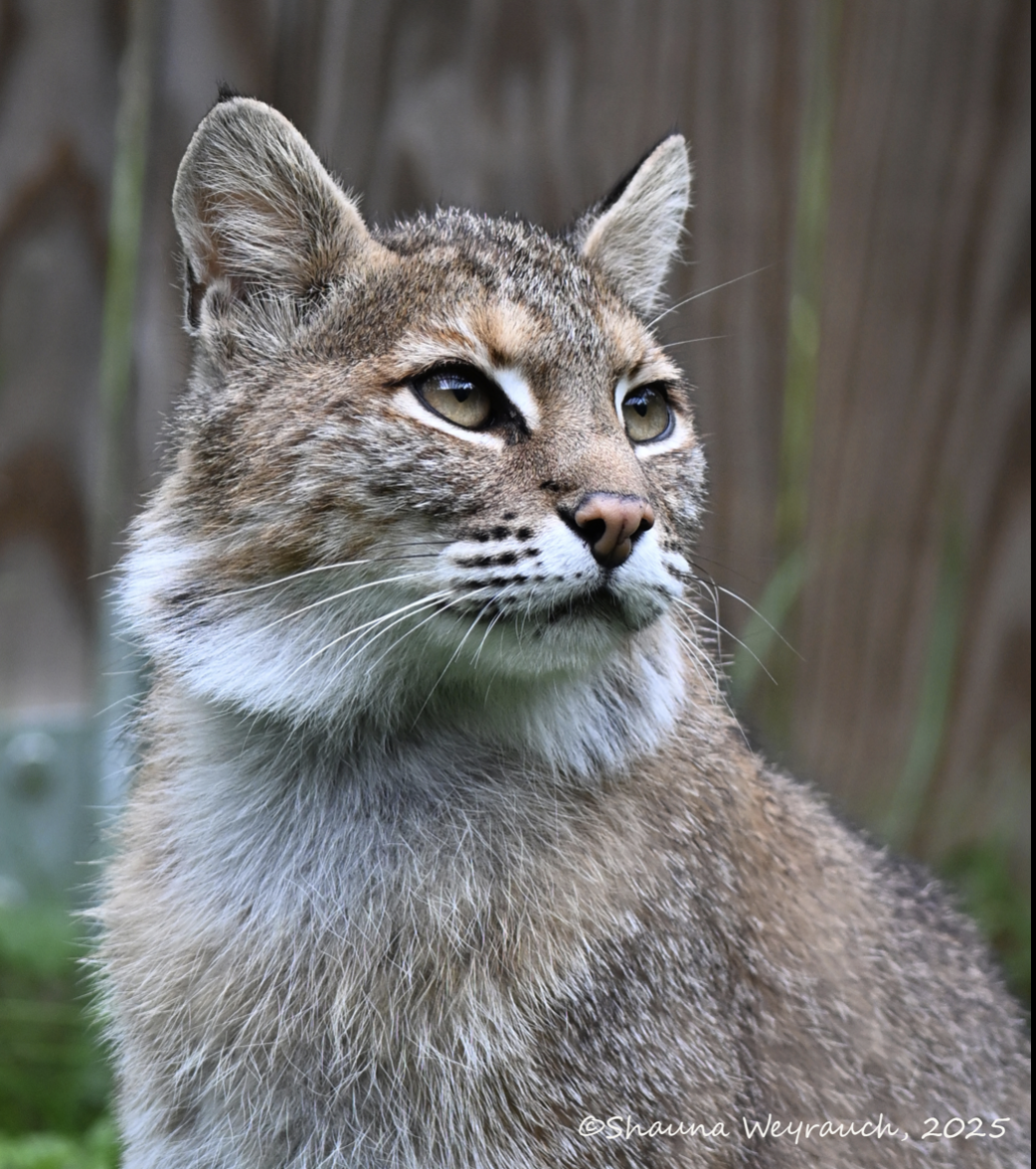
An eastern bobcat. Credit: Shauna Weyrauch.
An eastern bobcat. Credit: Shauna Weyrauch.
Weyrauch advocates for keeping bobcats protected. “We can do all this great work in terms of restoring forests, but if we then just turn around and trap them out again, it undoes all that good,” she says. “I would hate for it to be really, really rare to see a bobcat.”
Doing “all that good” may be the key to humans peacefully co-existing with nature, she believes.
Then, on her drive out of the Pomerene Forest Laboratory, she suddenly stops the car.
“Sorry, this is a little weird, but I have to do this.”
She sees a dangling spider that somehow found its way inside. She gently removes it from the rearview mirror and cradles it in her hand.
She opens the door, and releases the creature back into the wild.
 Built with Shorthand