
'You're bringing the swamps back?'
90% of Ohio's wetlands have been destroyed. Water quality is suffering. The Bloody Run Swamp restoration aims to help.
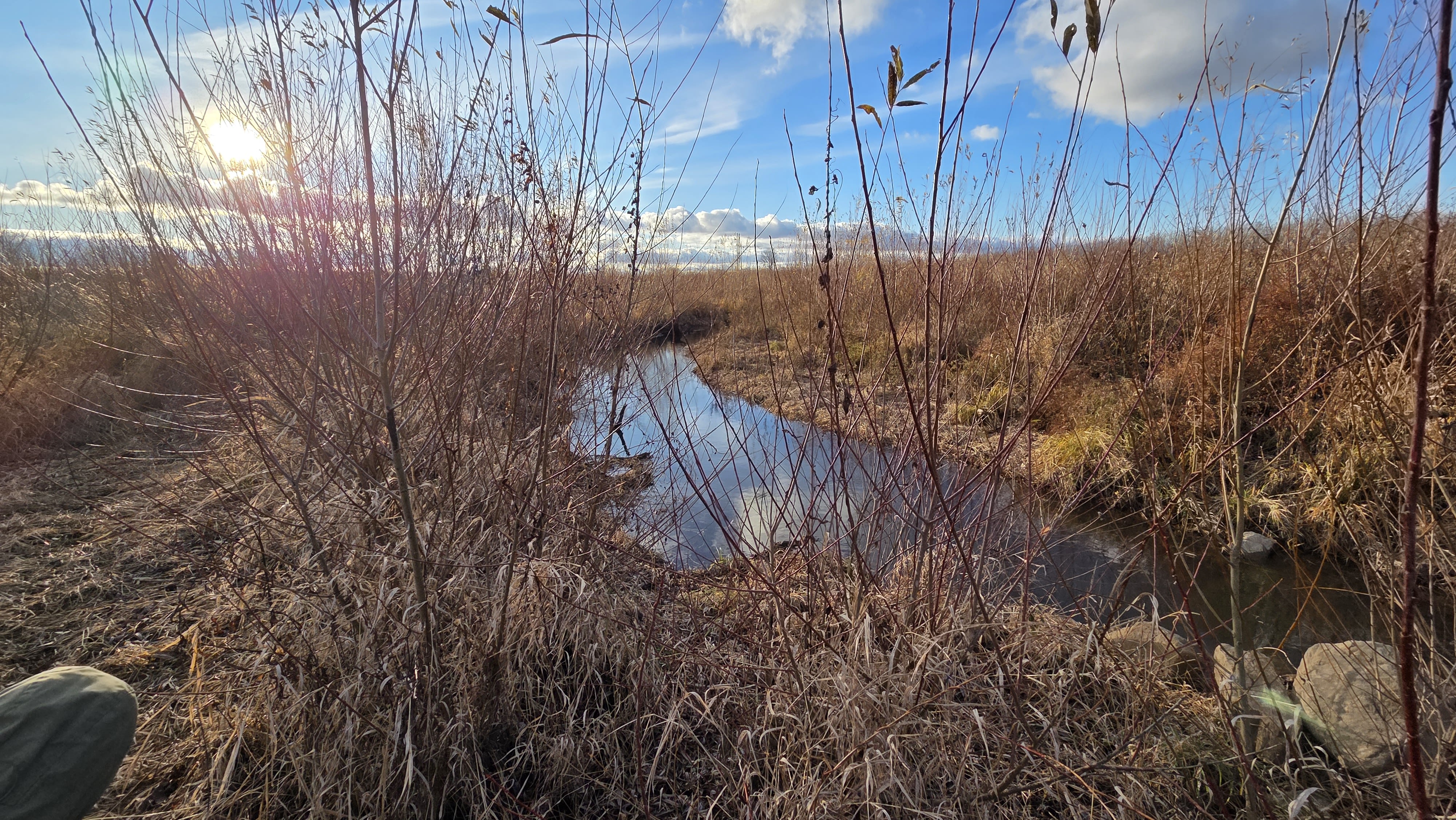

Chelsea Keefer’s grandmother-in-law asked what she did for a living. “I restore wetlands,” Keefer said.
Her response: “You’re bringing the swamps back?”
It wasn’t an encouraging reply. Keefer understands. Not everyone loves a swamp. And not all topics are OK to discuss over family meals.
She also knows that everyone loves clean water.
She remembers when she was pregnant with her second child, an algae outbreak in the Toledo area prohibited residents from using their tap water. It made an impression, and it motivates her work.

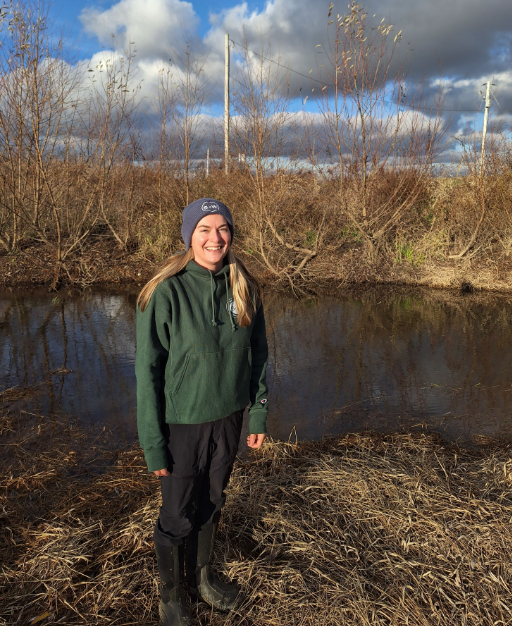
Chelsea Keefer, restoration biologist for Stream and Wetlands Foundation, in the Bloody Run Swamp restoration project. Credit: Luke Dunlap.
Chelsea Keefer, restoration biologist for Stream and Wetlands Foundation, in the Bloody Run Swamp restoration project. Credit: Luke Dunlap.
Keefer is a restoration biologist for the Stream + Wetlands Foundation, an organization that offers wetlands mitigation and restoration services. It works within state regulations related to Sections 401 and 404 of the U.S. Clean Water Act: developers who destroy a wetland in one place must pay to create a wetland in another place nearby. According to the Ohio EPA, wetlands are important because they are “nature’s kidney,” filtering out impurities from the water. They also help control flooding and erosion.
The federal EPA calls wetlands “the most productive ecosystems in the world, comparable to rain forests and coral reefs.”

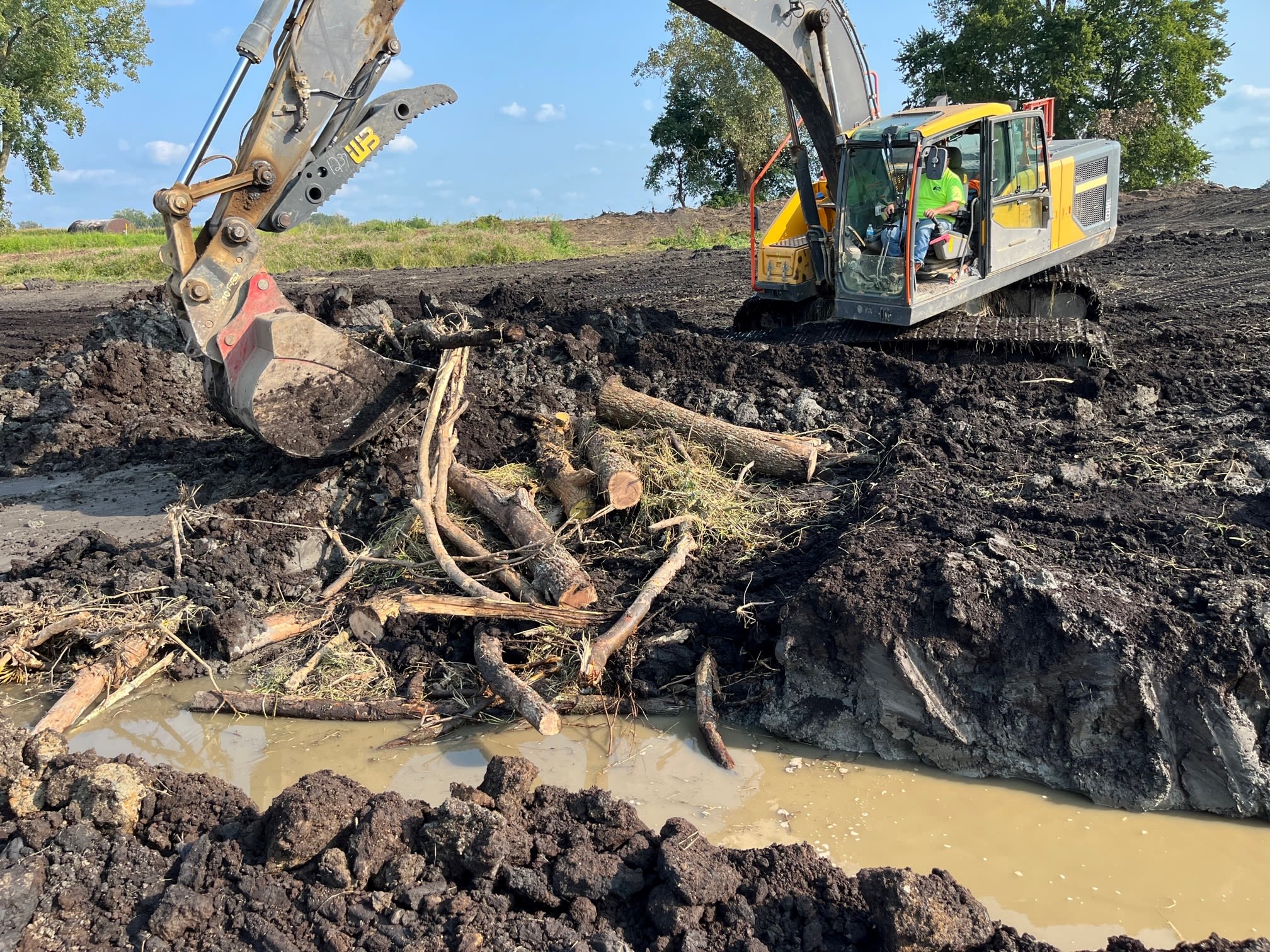
Beginning restoration of Bloody Run Swamp. Credit: Stream + Wetlands Foundation.
Beginning restoration of Bloody Run Swamp. Credit: Stream + Wetlands Foundation.
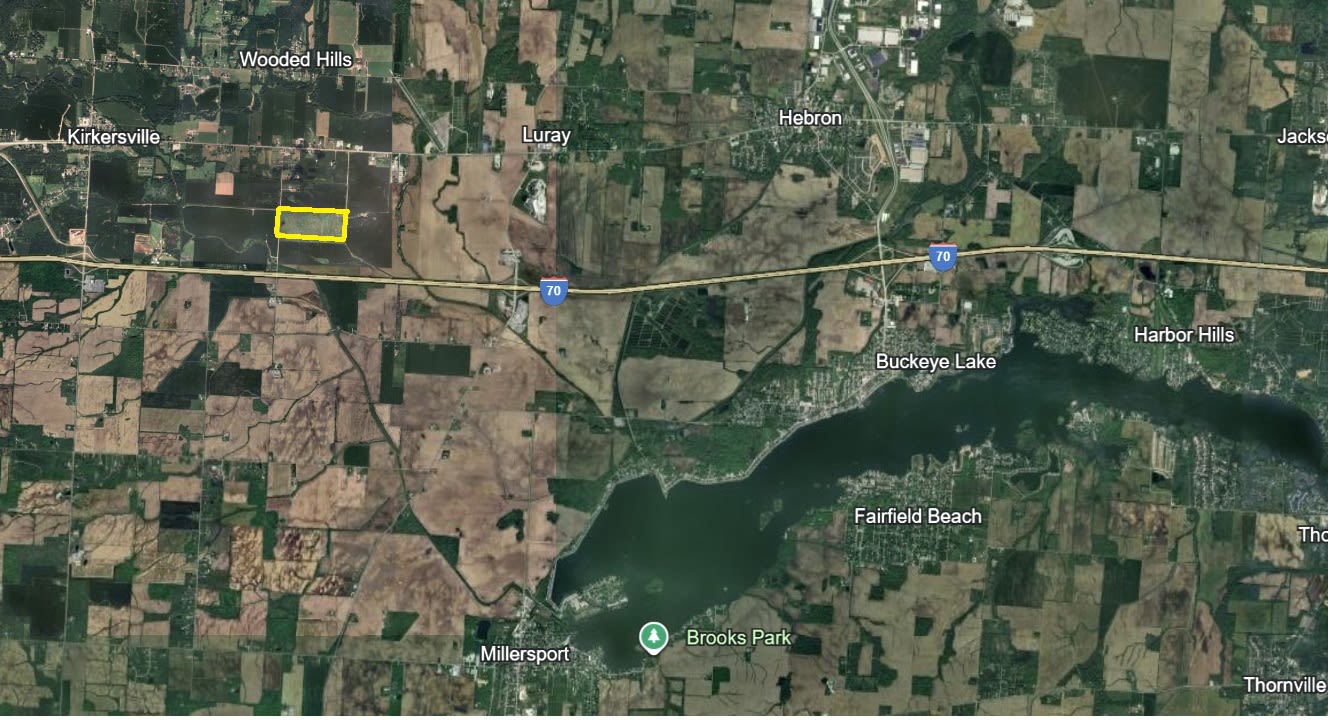
As part of this remediation program, the Stream + Wetlands Foundation purchased 80 acres of farmland near Kirkersville, Ohio, right in the middle of what used to be Bloody Run Swamp. (There is no known history on how it got that name.) They began restoration in fall of 2022, and finished in spring 2023.
The first step in the process was to remove tiling, an underground drainage system used by farmers. Then the land was contoured to be able to retain water. Once completed, the organization planted over 40,000 trees and shrubs, a wide variety of native species including willow, alder, winterberry and swamp rose. An equally wide variety of plant seed was spread, including swamp milkweed, bearded sedge and wild senna.

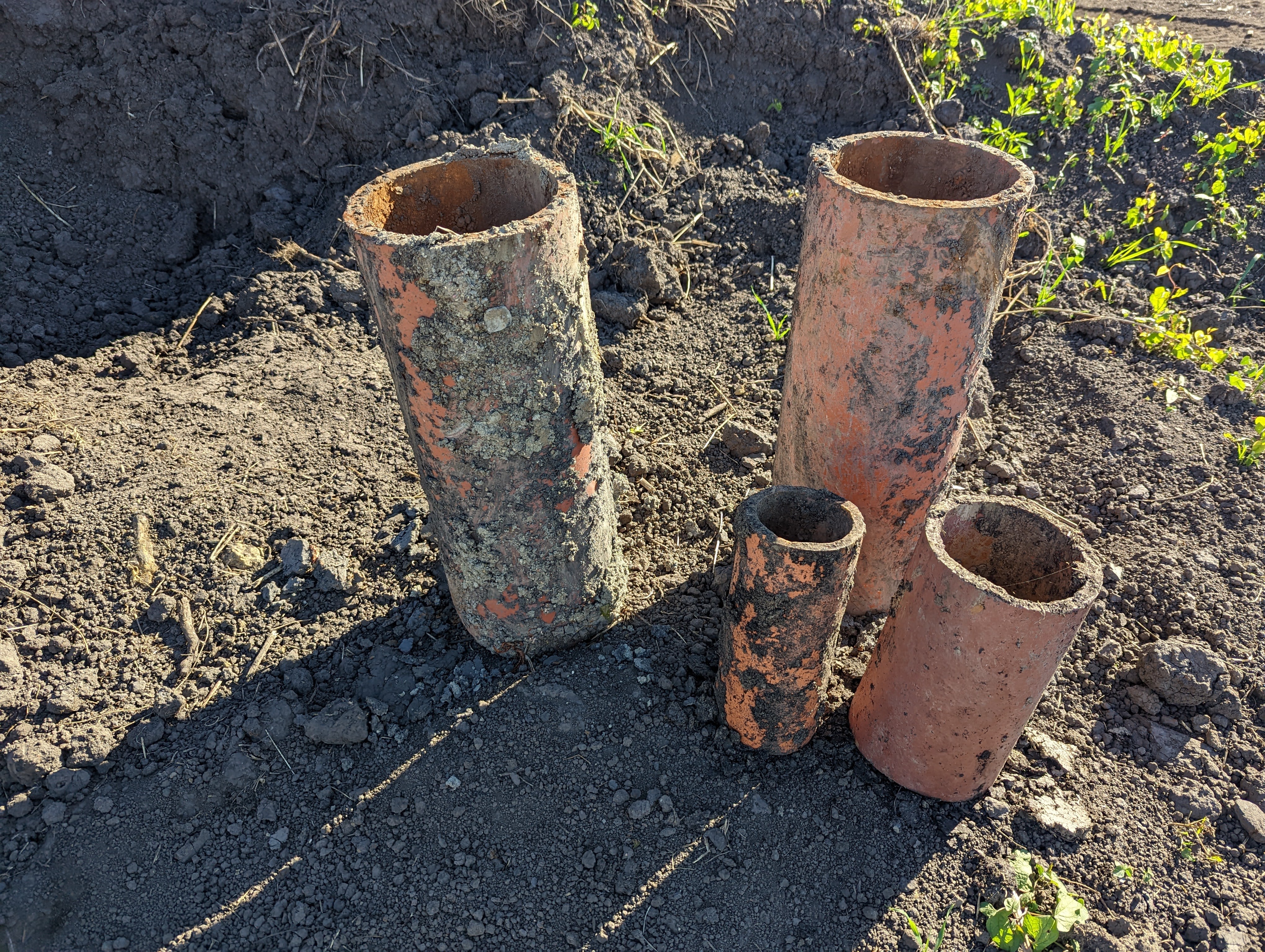
The tiling system used by farmers to drain soil was dug up and destroyed. Credit: Stream + Wetlands Foundation.
The tiling system used by farmers to drain soil was dug up and destroyed. Credit: Stream + Wetlands Foundation.
How to restore a wetland:
Create a meandering stream so that the water flows more slowly and has more time to filter out sediments.
Build pits and mounds, called “microtopography restoration.” The intent is to undo decades of farming that smoothed out the natural contours of the land and mimic a natural wetland system that would have had much more surface roughness.
Build several spillways to allow minor flooding events to drain off of neighboring farms into the wetland.
Plant bushes and shrubs on the high points of the topography. Over 40,000 were planted on these 80 acres.
Seed was cast for wetland plants over the whole property.
By the time water exits the wetland at its lowest point, it will have been filtered and cleaned. The channel exiting the property leads to the South Fork Licking River.
"In Ohio we have water quantity, but we need to protect and improve our water quality."
-Chelsea Keefer, restoration biologist
The Ohio wetland mitigation program seeks to maintain a “no net loss” status of wetlands in the state. But before the program was established, 90% of Ohio’s wetlands were destroyed.
That’s according to multiple sources, including the Ohio EPA.
They went on to cite "nutrient pollution," or an excess of nutrients that impact water quality, as a major water quality problem in the state, affecting lakes, rivers and streams. They attribute fertilizers and animal manure as major causes. The OEPA also mentioned that this is not just a local issue, but a national one.
Water drains from the Bloody Run Swamp location to the South Fork Licking River, and then into Buckeye Lake via feeder canals. The lake regularly yields warnings of algae blooms and other water quality hazards.

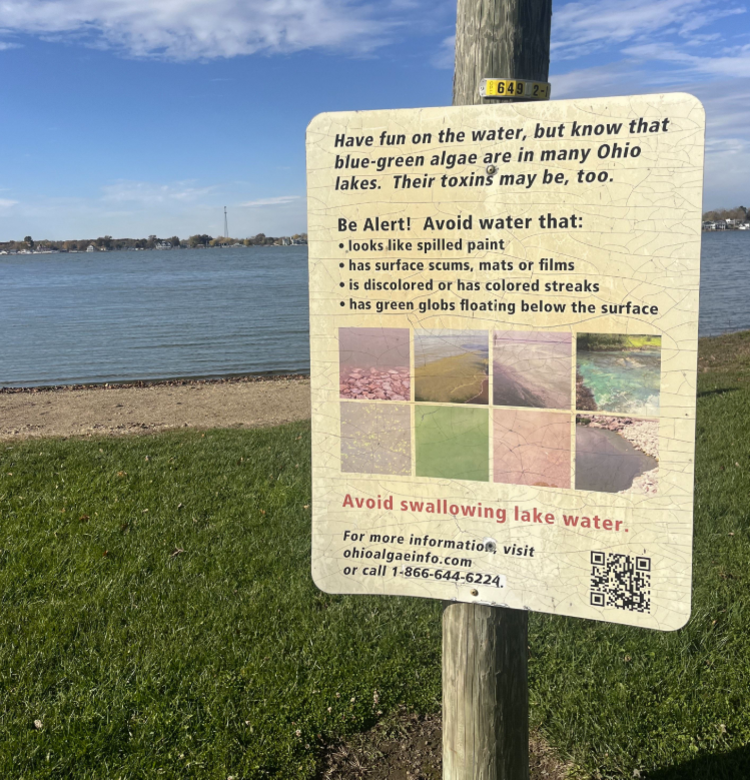
Warning sign on the beach of Buckeye Lake. Credit: Oliver Quinn.
Warning sign on the beach of Buckeye Lake. Credit: Oliver Quinn.
Jeff Bates is an associate board member for the Licking County Soil and Water Conservation District. He thinks restoring wetlands is a good idea, and the Bloody Run Swamp location is well chosen.
He explains that the land first held a post-glacial lake. It evolved into a swampy wetland that was heavily forested.
“You get a nice accumulation of organics” in the soil. Some scientists “actually call it a muck soil.” He knows that doesn’t sound like a very technical term, but it is one that is studied. And it's the kind of soil a farmer covets.
What this wetland did, and what Bates thinks it can do again, is sponge up water. “If you bring the wetlands back in, that is a repository for water,” and it will “minimize flooding downstream.”
The other thing a wetland can do is purify.
“As water passes through, especially off of farm fields, and there’s a lot of sediment and nutrients, and sometimes herbicides, and as they pass through wetlands, you have to almost think of it as a treatment process.”
Bates says that the Bloody Run Swamp remediation is “a fairly small wetland.” But he also says every little bit helps. “It can only improve the situation.”

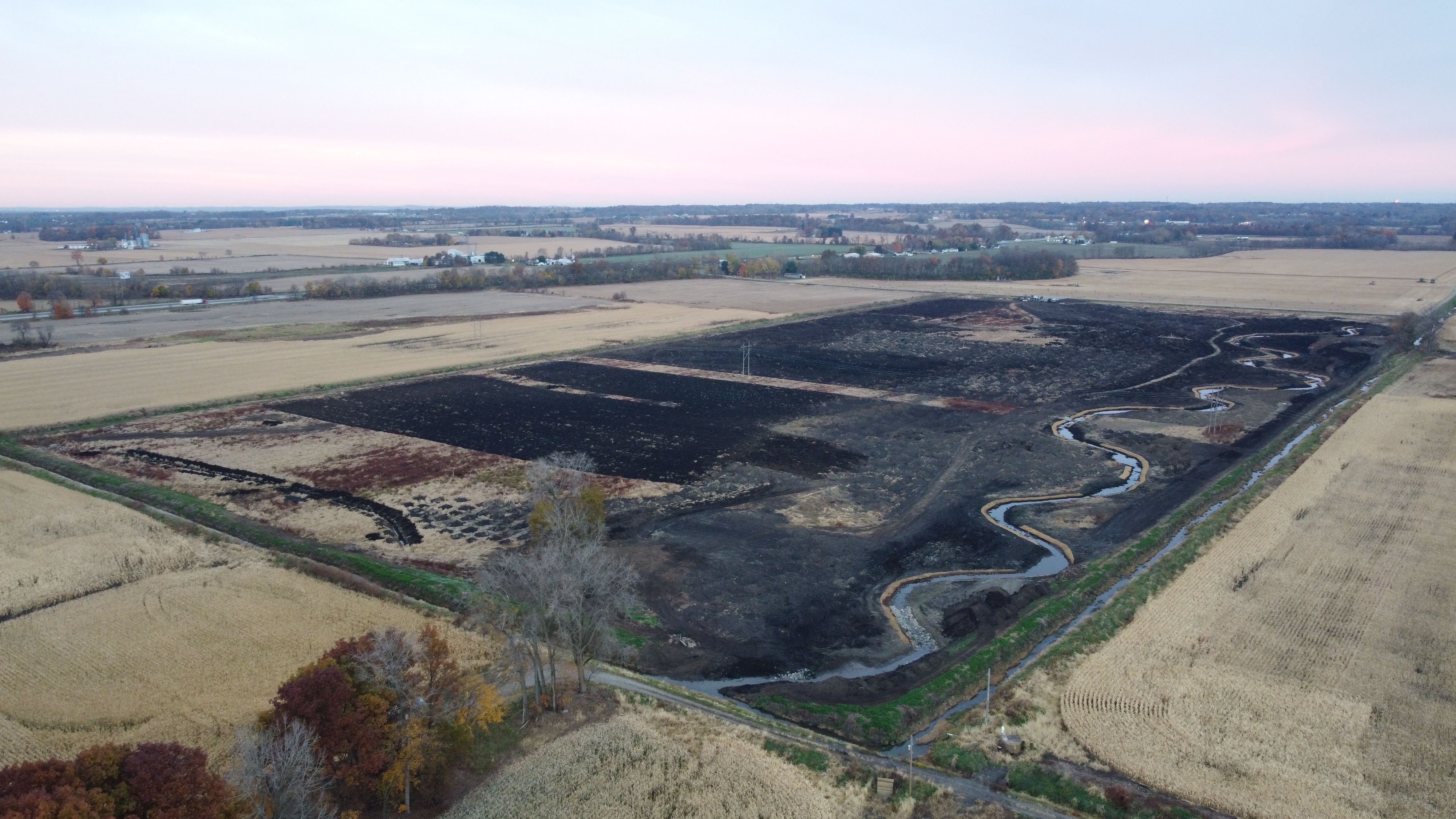
The 80 acres formed the "bowl," or center of the Bloody Run Swamp. Credit: Stream + Wetlands Foundation.
The 80 acres formed the "bowl," or center of the Bloody Run Swamp. Credit: Stream + Wetlands Foundation.
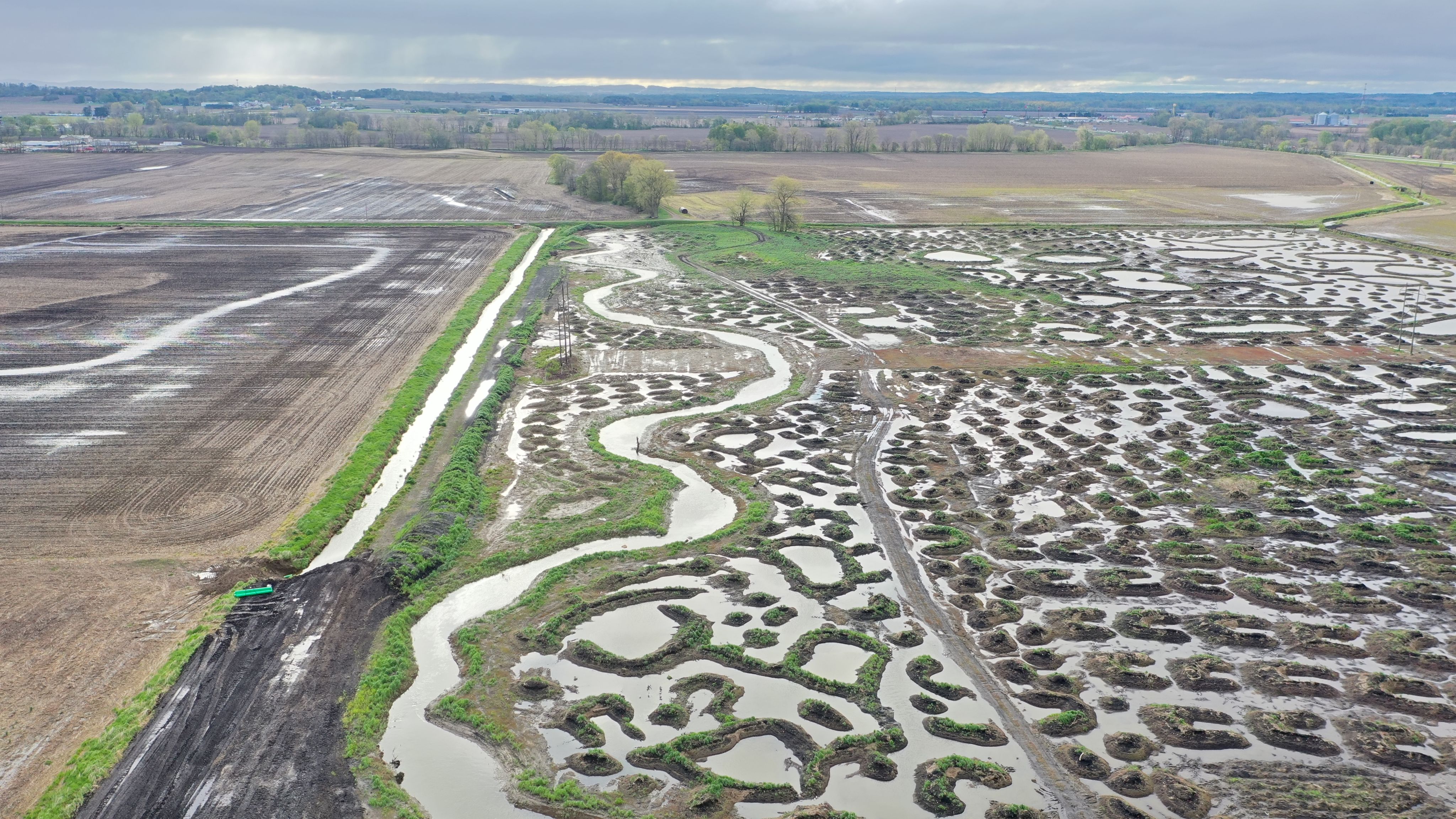
A wetland "sponges" up water and can mitigate against flooding. Credit: Stream + Wetlands Foundation.
A wetland "sponges" up water and can mitigate against flooding. Credit: Stream + Wetlands Foundation.
Rick Black stands in the parking lot at the restoration site. He sizes up the mounds of swamp grass and pools of water in front of him. “It’s probably the best use of that land.”
Black is a retired farmer who had land right up the road from the Bloody Run Swamp restoration. He’s a fifth-generation farmer in the area. He’s also a Licking County commissioner.

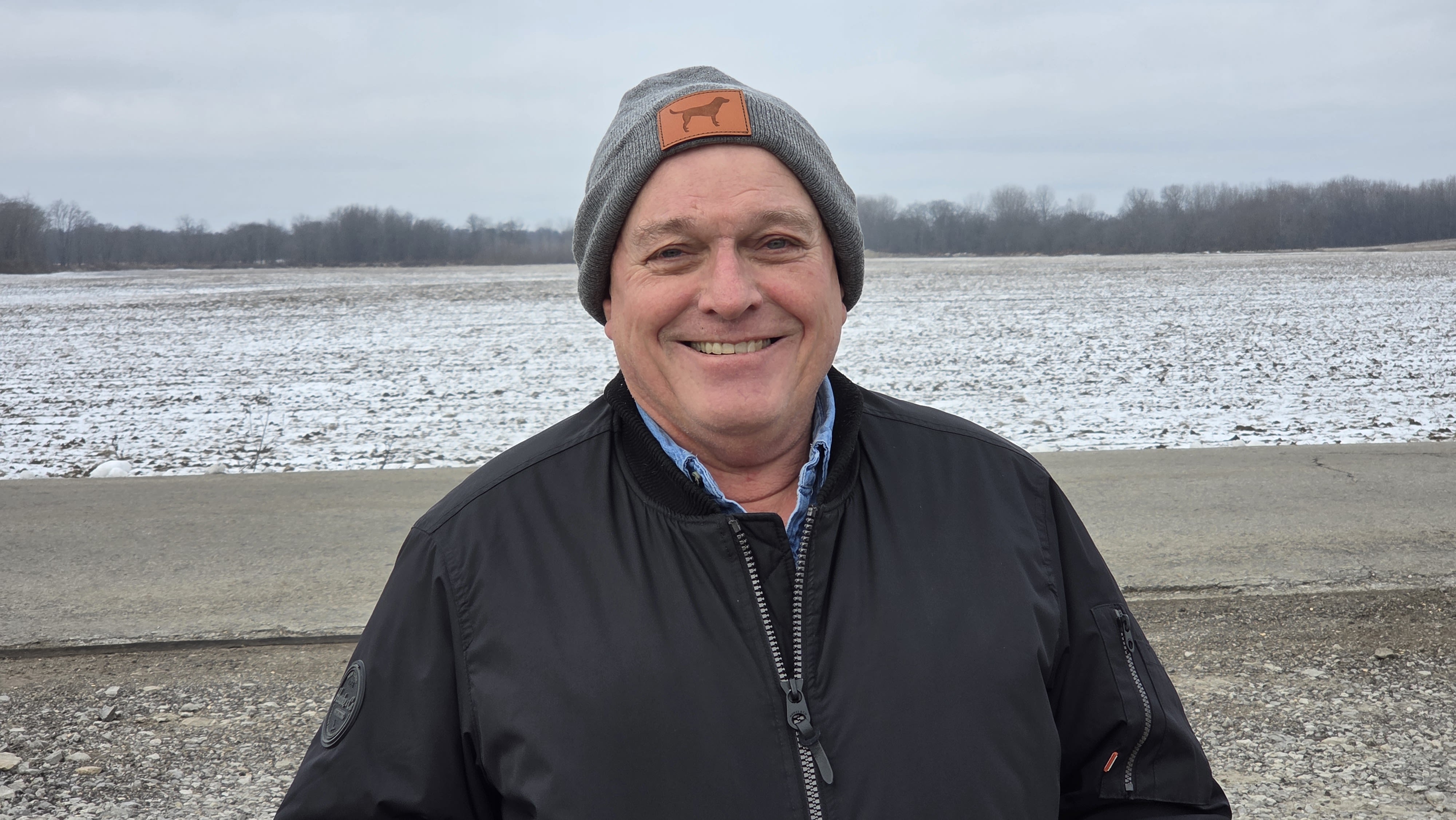
Rick Black, retired farmer and current Licking County commissioner, in front of corn and soybean fields. Credit: Doug Swift.
Rick Black, retired farmer and current Licking County commissioner, in front of corn and soybean fields. Credit: Doug Swift.
His biggest concern is that the wetland be maintained “so we don’t get a bunch of horrible weed patches and stuff like that over here.” He’s especially concerned about a nasty invasive called johnsongrass. “That stuff’s a pain in the butt.”
His concern about invasives is widely shared. In fact, it’s written into the mitigation program.
Keefer says that Stream + Wetlands are required, “as part of our mitigation plan performance standard to maintain a very low percentage of invasive plant cover.” She says Stream + Wetlands spent around $600,000 last year on invasive control. In this and other ways they try to work with their farmer neighbors.
Black knows some history about these 80 acres. They were always the wettest and hardest to farm in this floodplain, due to too much peat. Black’s dad told him that back in the days of horse-drawn plows, horses would “panic” since the ground wasn’t firm enough.
That’s why he’s OK with this particular plot going back to wetland. As for the rest of the land around it? Not so much.
He was thrilled, in the '70s, when he was able to move off of some hard clay soil in northern Union Township and move onto this black soil. He calls it some of the most productive farmland in Licking County, but it does come with some challenges.
“There are times this whole road we’re standing on is under water,” Black said. There are times it floods so badly that I-70 is closed.

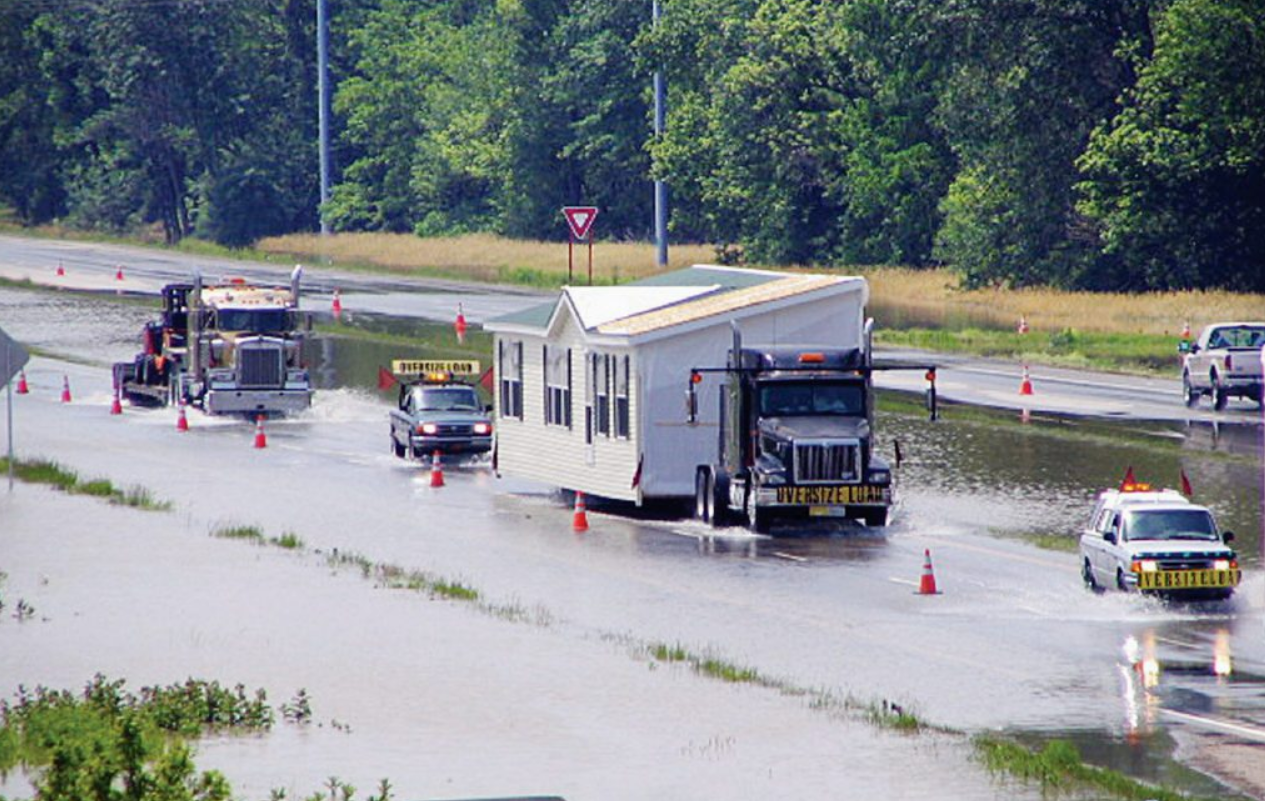
Flooding by Buckeye Lake in 2008. Credit: Buckeye Lake Beacon.
Flooding by Buckeye Lake in 2008. Credit: Buckeye Lake Beacon.
As recently as 2024, some exit ramps at the Rt. 79 and I-70 intersection were closed due to flooding, according to reporting in the Columbus Dispatch. Black says it's always the first place to flood.
Back in 2008, the Buckeye Lake Beacon reported on flooding that disrupted traffic and businesses. The headline said, "Same Old Story."
Back in 1959, Black says there was a major flood when they were building this stretch of I-70. It flooded so badly that it destroyed the foundation that had been created for the interstate.
But from a farmer’s point of view, he says he can live with floods.
“We figured about one out of 10 crops you’d lose to a flood. Most other years you had some of the best crops you could have.”
That's because of the richness of the soil and all those organics that were produced by the Bloody Run Swamp.
Morris Schaff recalled the Bloody Run Swamp in his pioneer memoir, Etna and Kirkersville, published in 1905.
It was a wild place, "a thickly matted growth of willows, young elms, water beeches and alders," Schaff wrote. "In the middle were several islands covered with big timber where the last of the wild turkeys roosted.”
When the water was high, it was a dangerous place, “so deep and treacherous was the mud.”
Schaff also remembered the passenger pigeons that were so numerous they could darken the sky, and which came to roost in the swamp at night. “The pigeons left the swamp about daylight— in vast columns several miles in length, and would fly off to their various feeding grounds, distant from one to over two hundred miles.”
If the birds were “startled while feeding, their sudden rise would sound like rumbling thunder.”

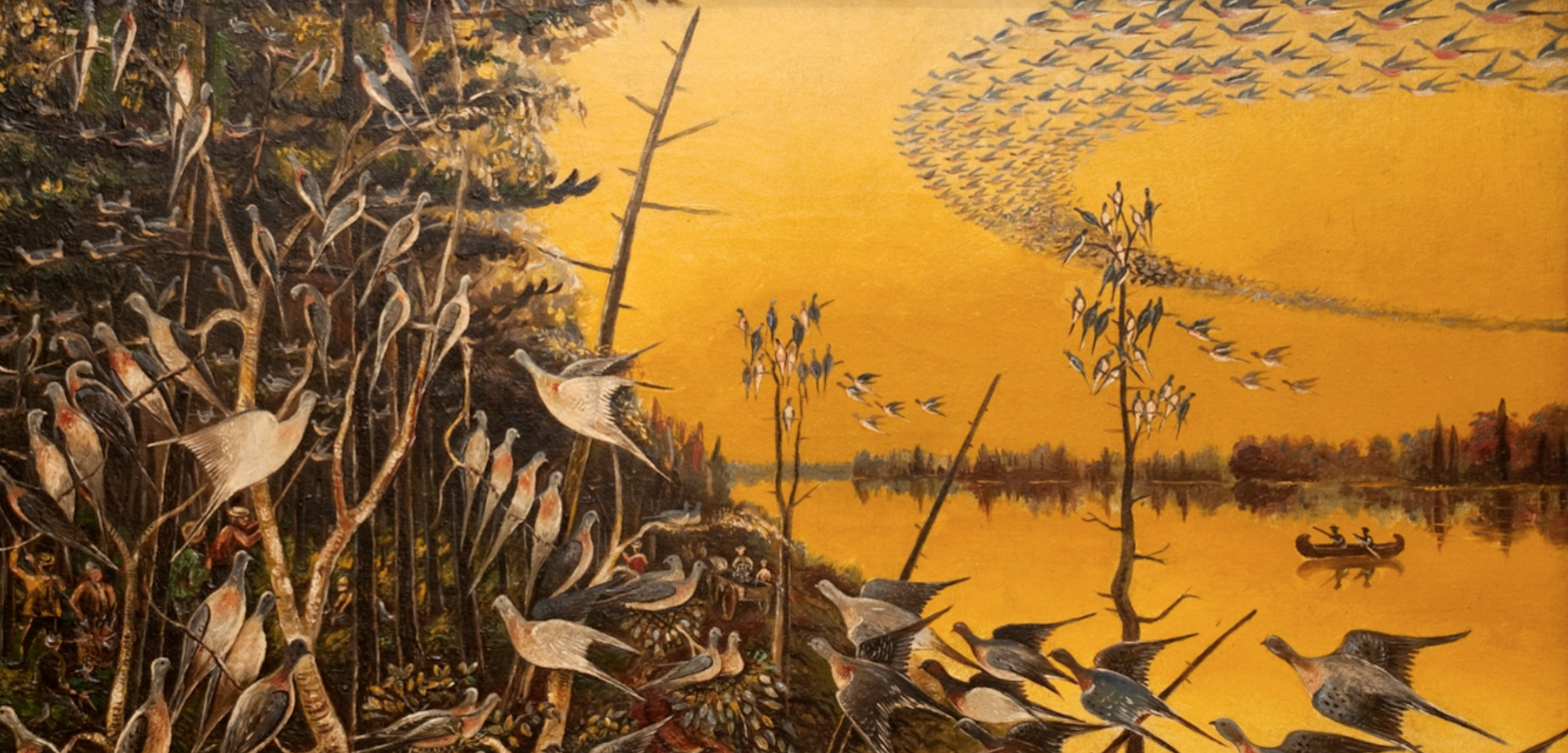
"Bird's Eye View of Passenger Pigeons Nesting," Lewis Lumen Cross, Grand Rapids Art Museum.
"Bird's Eye View of Passenger Pigeons Nesting," Lewis Lumen Cross, Grand Rapids Art Museum.
But his most vivid memory was of slaughter.
“It was late autumn, and a fleet of heavy clouds was sailing across a full moon.”
Young Schaff had joined a group of farmhands who were going out to hunt the pigeons, which had settled in to roost for the night.
The group was armed with single barrel shotguns and old percussion muskets. They were only about 50 feet into the swamp when “the men began to shoot.” It roused the birds, and then “the firing was like that of a closely engaged skirmish line."
The birds were so thick "no aim was necessary, or possible, for that matter. We carried away two large three-bushel bags full by nine o'clock, and doubtless did not get one half of what we killed. The owls and minks that infested the swamp lived on what we left. By ten o'clock the firing ceased, and the poor creatures could then find peace for the rest of the night.”
It was this kind of hunting, as well as industrial culling, that led to an extraordinary collapse of the species nationwide. The last wild passenger pigeon was shot in 1902. The species became extinct by 1914.
The loss of one species has ripple effects throughout an ecosystem. One possible connection is that the loss of the passenger pigeon helped facilitate the spread of Lyme disease.
Some biologists and epidemiologists suggest the prevalence of tick-borne Lyme disease in the last few decades can be credited to the exponential growth in the population of the white-footed mouse, a species which feeds on the same “mast,” or seeds of oak, beech and chestnut that the passenger pigeon did. With almost no competition for food, the white-footed mice — the ideal hosts for the ticks that carry Lyme disease — thrived.

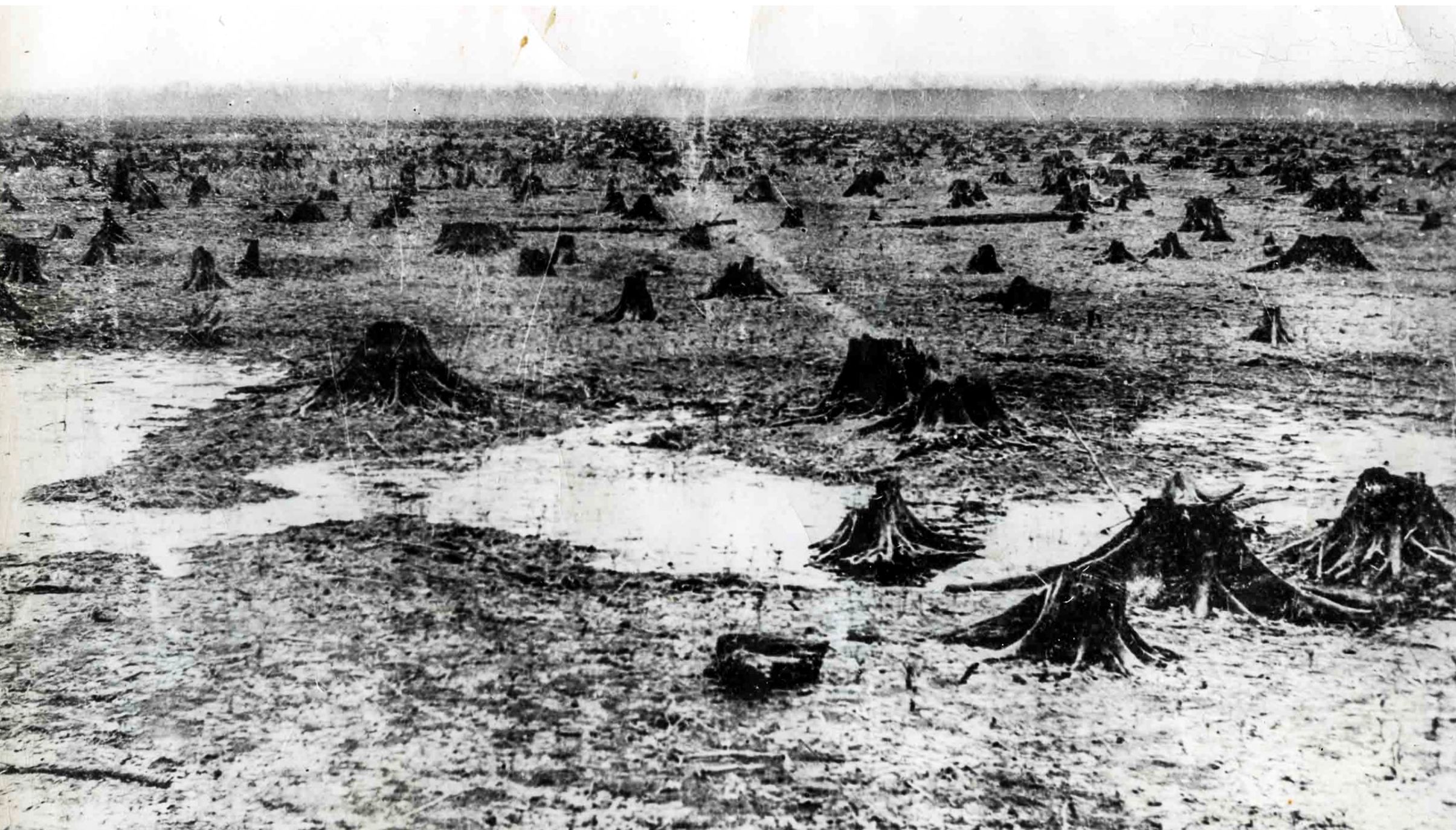
Circa-1890 photo of the destruction of the Great Black Swamp in northeast Ohio. Bloody Run Swamp was drained and cut earlier. Credit: Center for Archival Collections, Bowling Green State University.
Circa-1890 photo of the destruction of the Great Black Swamp in northeast Ohio. Bloody Run Swamp was drained and cut earlier. Credit: Center for Archival Collections, Bowling Green State University.
Concurrent with the loss of the pigeons was the loss of their local habitat. Channels were dug to drain Bloody Run Swamp, and the timber was chopped down. The drained soil was perfect for celery growing, according to Bates and accounts from the early 1900s. Over time, farming evolved into its modern industrial practices.
The biodiverse ecosystem of long ago continues to provide benefits to farmers today in the form of its nutrient-rich soil more than a hundred years later.

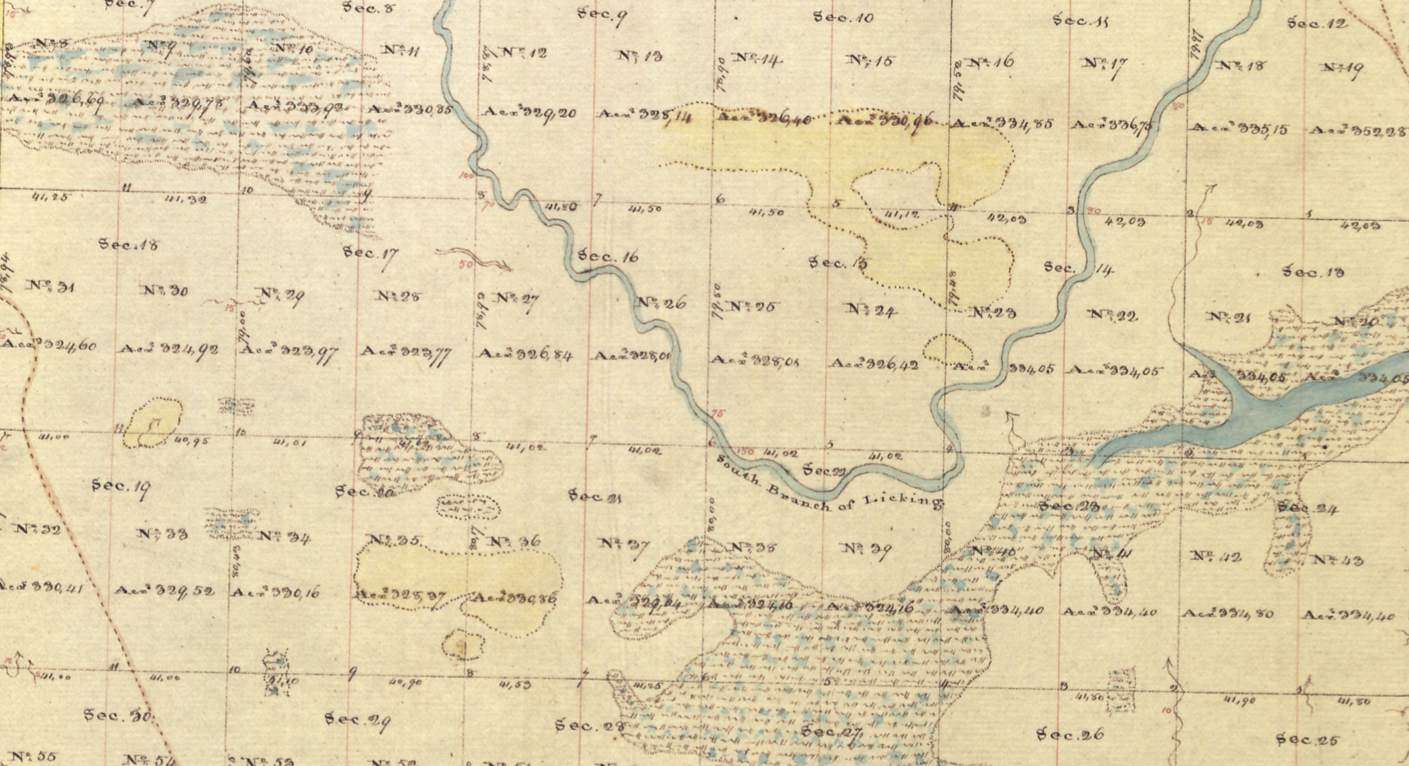

An 1801 platte map shows the Bloody Run Swamp, upper left, which was drained for farmland, and the Great Swamp, bottom, which was dammed and turned into Buckeye Lake. Both actions eliminated the natural water filtration and flood control systems of the region.
The same area today, showing farmland and Buckeye Lake. The Bloody Run Swamp restoration project is outlined in yellow. Image by Google Earth.
Keefer understands the need for progress and development.
"We're trying to find a balance with development that needs to happen, and we all need homes and hospitals and roads, but we also need to protect what we have left," she said.
Bates is cautious about the outcome of this restoration, especially if it were to be measured against the goal of cleaning up Buckeye Lake.
"I don't think anyone could specifically say, 'Hey, we put in this fairly small wetland. Is it going to replace exactly what Bloody Run Swamp used to be with big trees and other things?' No. But it could only improve the situation."
Black is similarly cautious. He's taking a wait-and-see attitude in terms of what the wetland reconstruction will accomplish. As for Buckeye Lake, he's seen a lot of water quality measurements. It's his view that "the water coming into the lake is far cleaner than the water in the lake." He attributes this to decades of dumping solid waste into the shallow lake, which itself was swamp before it was dammed to be part of the Erie Canal system.
As for Keefer, she sees impacts already.
"Typically if you build it, they will come." She's referring to the animals that are part of a biodiverse ecosystem that makes for a healthy wetland.
"And they do—I mean, they show up almost immediately.
"There's obviously the usual suspects—muskrats and little minks and mustelids and all that. There are actually some fish showing up in the stream, too."
She mentions that this area never stopped being a hot spot for birders. But now sightings have taken off. "If you ever go on eBird and those sites, there will be hits at the Bloody Run Swamp all the time.”
Granville-based birder and photographer Brad Imhoff agrees. But he says there's a change in the kinds of birds that can be seen. Before, he says the site was a hotspot for waterfowl during wet seasons, and they were easy to see. Now "the restoration project has created habitat for many different types of birds aside from waterfowl, though viewing is much more difficult due to the extensive mounds at the location."
Imhoff adds that he's "very excited to see how the property evolves and how it impacts the biodiversity of the area."

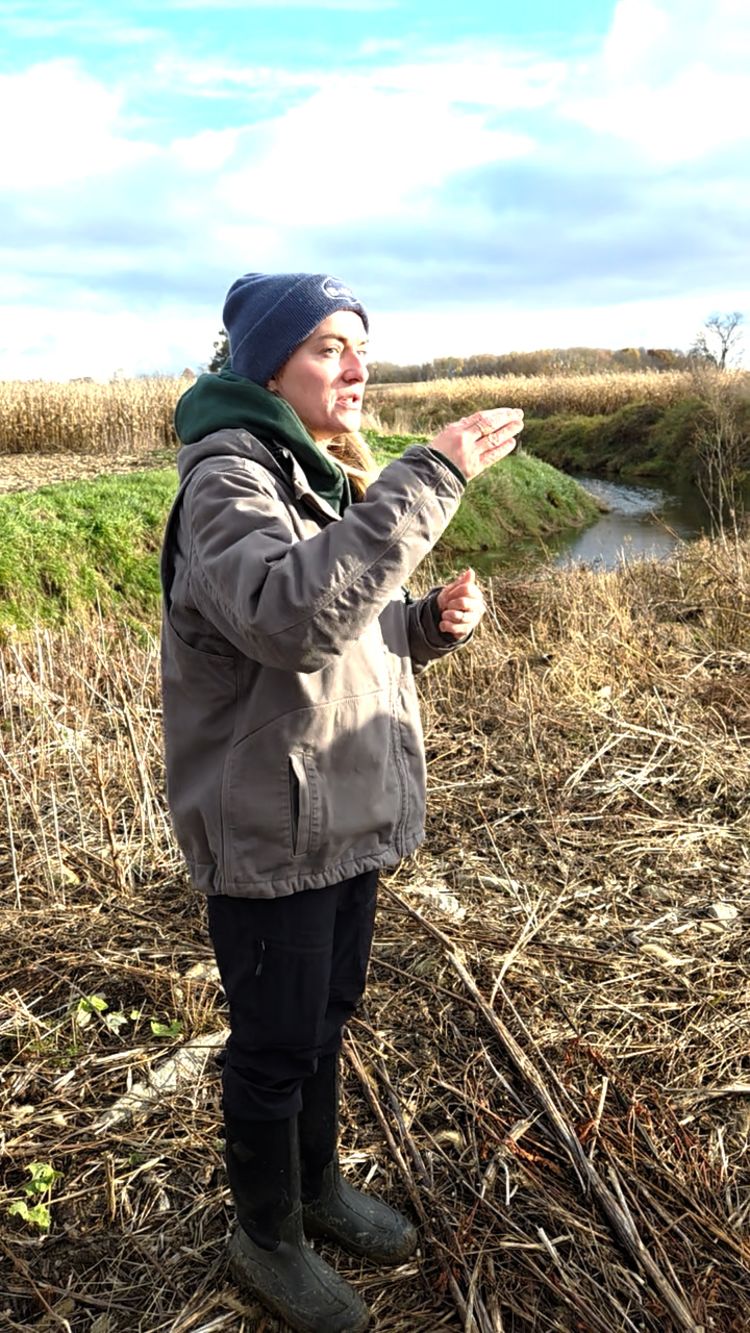
Chelsea Keefer stands at the lowest point of the property. Water that leaves at this point will be cleaned. Credit: Doug Swift.
Chelsea Keefer stands at the lowest point of the property. Water that leaves at this point will be cleaned. Credit: Doug Swift.

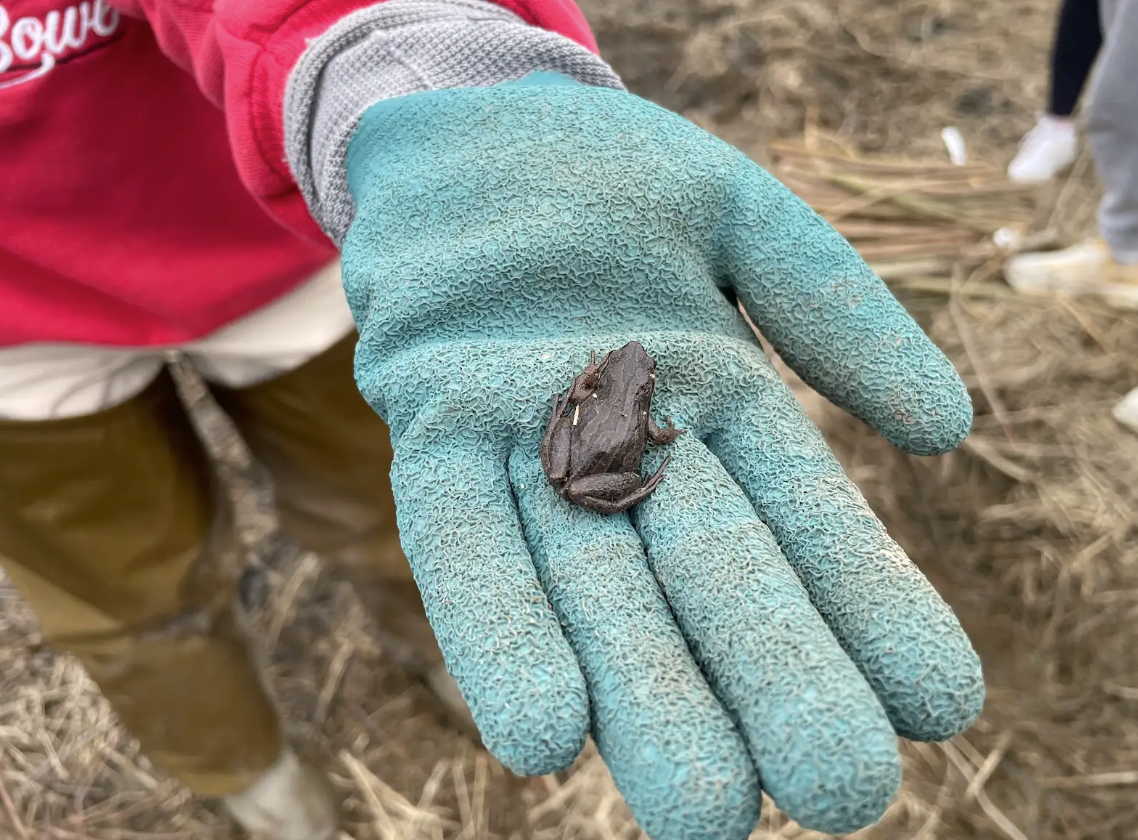
Volunteers planting willow trees chance upon a frog. Credit: Alan Miller.
Volunteers planting willow trees chance upon a frog. Credit: Alan Miller.
Birds photographed on-site since wetland restoration

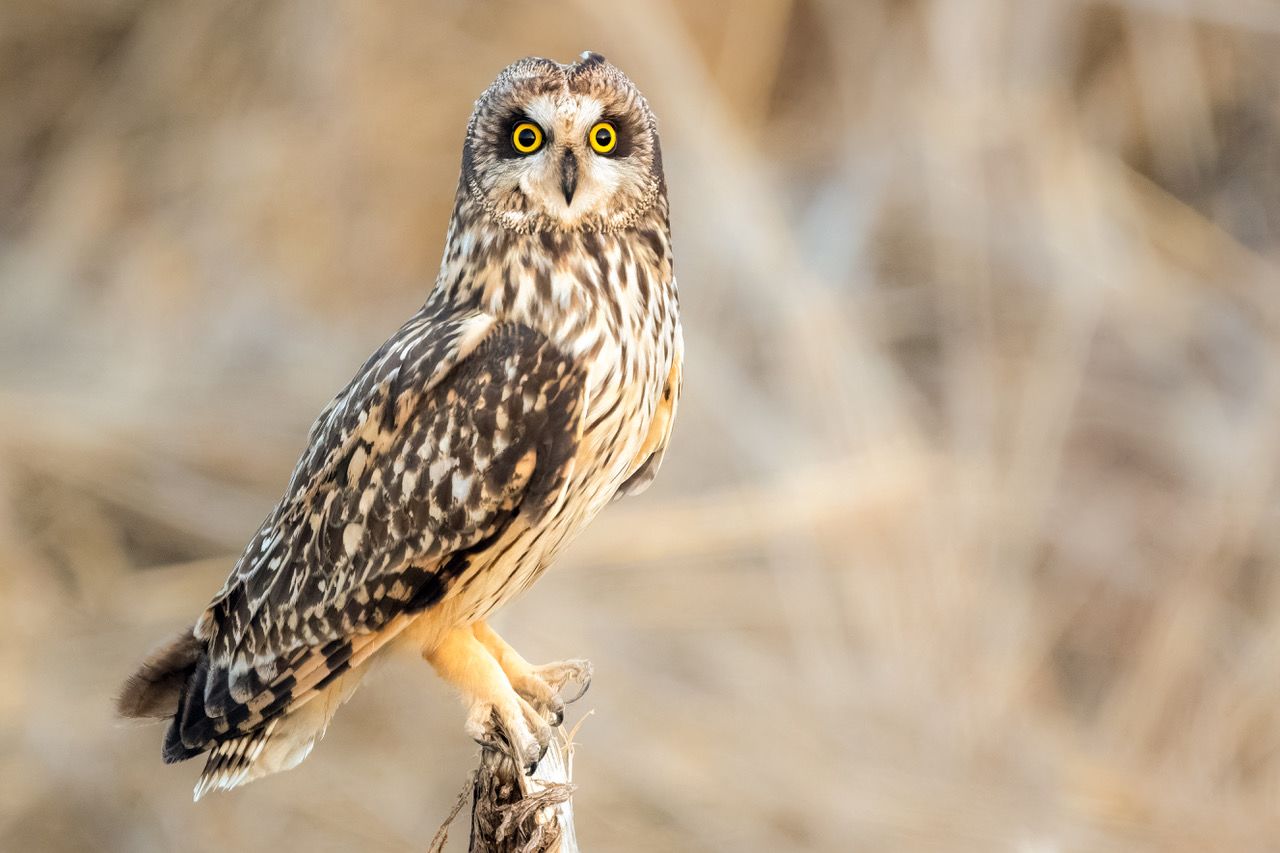
Short eared owl, Bloody Run Swamp. Credit: Brad Imhoff.
Short eared owl, Bloody Run Swamp. Credit: Brad Imhoff.
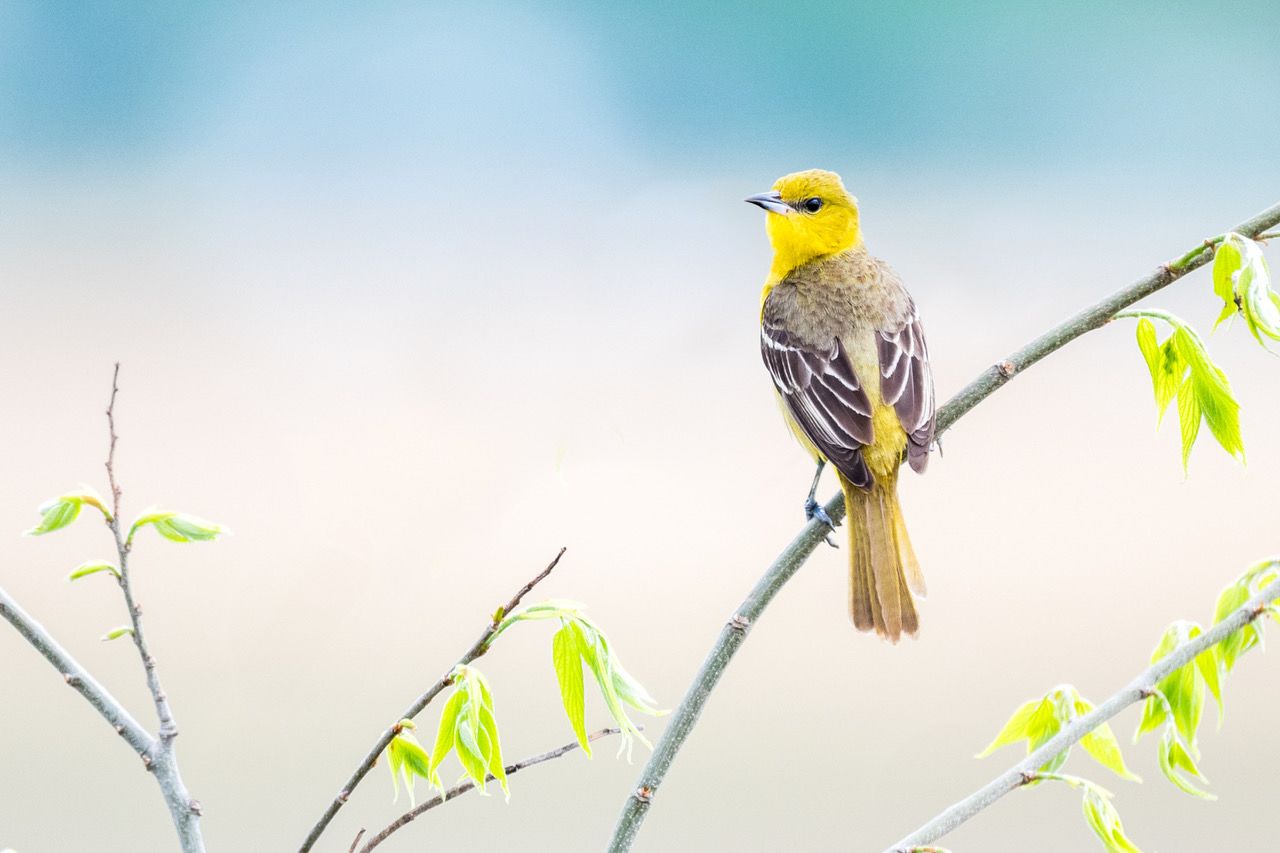
Orchard oriole, Bloody Run Swamp. Credit: Brad Emhoff.
Orchard oriole, Bloody Run Swamp. Credit: Brad Emhoff.
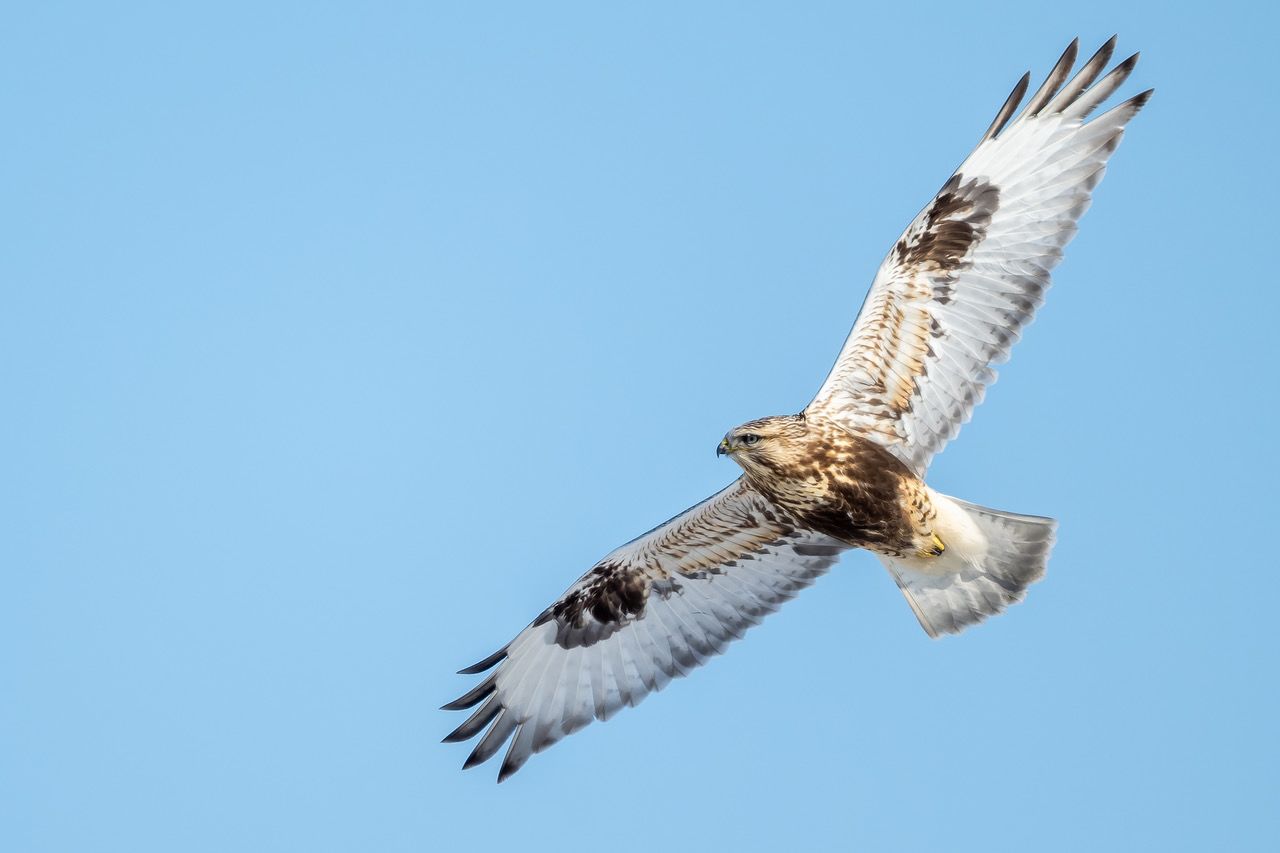
Rough-legged hawk, Bloody Run Swamp. Credit: Brad Emhoff.
Rough-legged hawk, Bloody Run Swamp. Credit: Brad Emhoff.
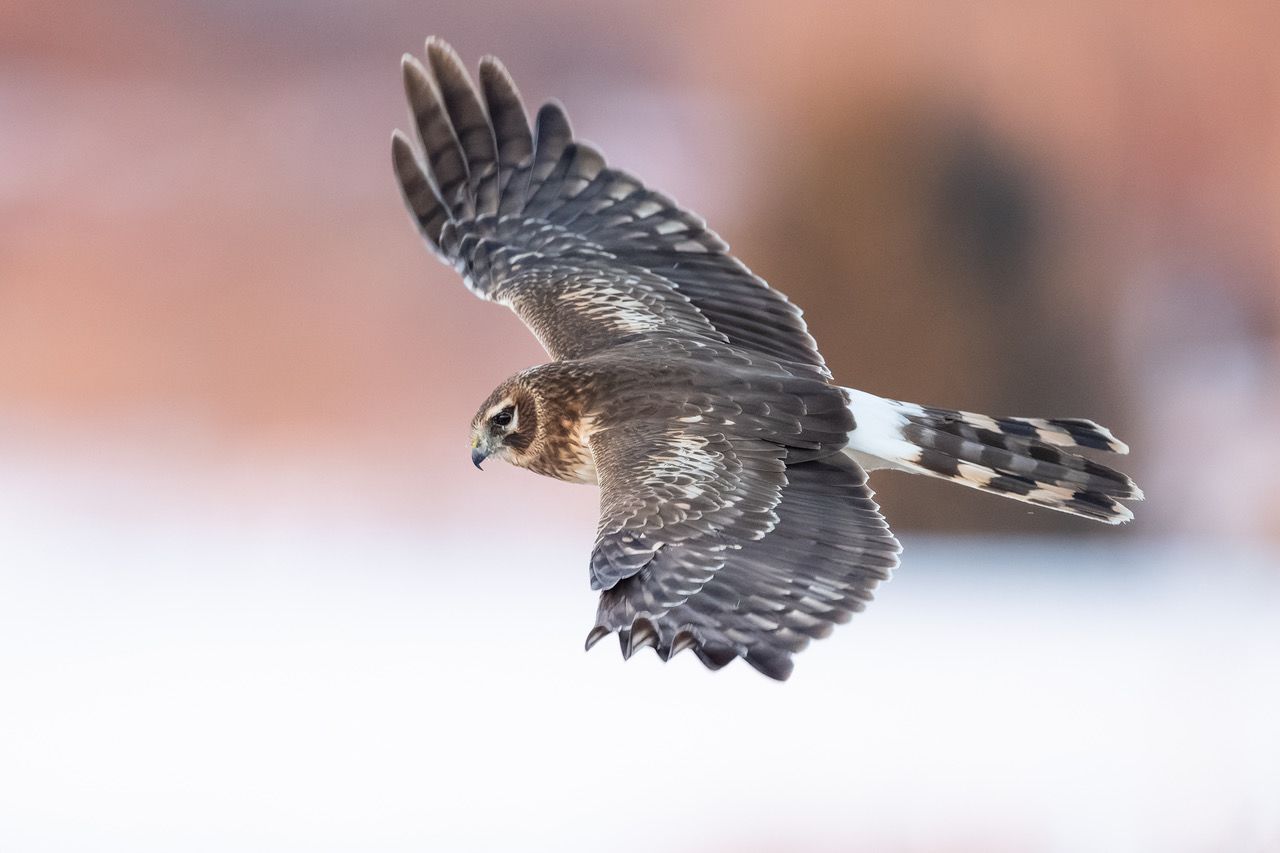
Northern harrier, Bloody Run Swamp. Credit: Brad Emhoff.
Northern harrier, Bloody Run Swamp. Credit: Brad Emhoff.
Keefer has walked every step of the 80 acres broadcasting seed by hand. It’s time-consuming work, so she listens to audiobooks like Ben Goldfarb's Eager: The Surprising, Secret Life of Beavers and Why They Matter and Zoë Schlanger's The Light Eaters: How the Unseen World of Plant Intelligence Offers a New Understanding of Life on Earth.
The Stream + Wetlands Foundation has recently purchased 80 more acres just north of the present site. They have submitted their mitigation plan to the proper authorities, and hope to start work in early 2026.
That will mean more earth to move, trees and plants to grow, more birds to identify and audiobooks to listen to.
And more clean water flowing down the South Fork Licking River.

 Built with Shorthand